
Recently a letter was published in the Press calling for the States to give up on net zero. I’m grateful for the opportunity to explain why the States is pursuing this goal.
Guernsey has a clear and credible pathway to decarbonisation because it is in the island’s long-term economic, public health and environmental interests, and because such a commitment is a requirement to establish international trade agreements that we rely on as an island jurisdiction. A net zero commitment results in better outcomes for our island in many ways.
The States agreed in May last year on a pathway to net zero which focuses on making changes that positively impact on our way of life, that would make life more affordable for our islanders, that improve health and wellbeing and enhance our natural environment.
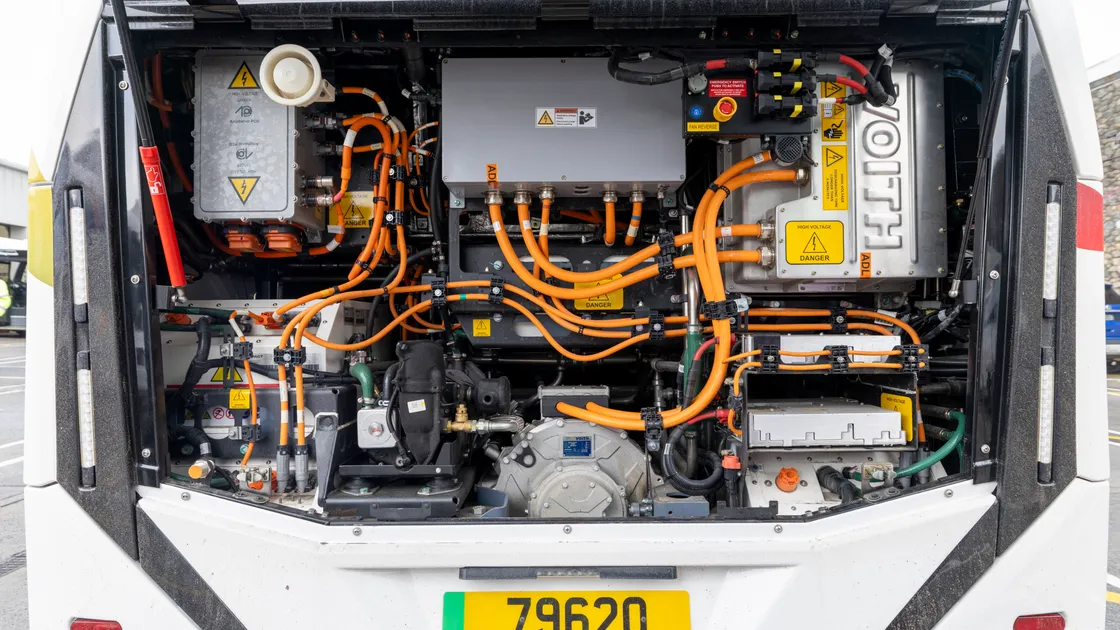
An example of that commitment being delivered is the recent purchase of two net zero-emissions electric buses. Not only is the cost of these buses lower over the lifetime of ownership than a diesel equivalent but replacing diesel buses with electric ones immediately reduces exhaust emissions, improves air quality, and creates quieter streets – benefits that directly affect public health, particularly for children, older residents and those with respiratory conditions.
It’s an example of a change that reduces emissions, yes, but also makes financial sense in the long run.
Another example of the broader benefits of our net zero commitment is the delivery of electricity for the future. As an island we need to respond to an increasing demand for electricity and a need to ensure energy security. We can choose to retain our reliance on the on-island power generation capacity, or we can invest in a second electricity connector to provide low-carbon electricity, costing in the region of £200m. less to consumers over time compared with continuing with the status quo. Yes, that results in lower carbon emissions, but importantly it is cheaper to do so and reduces our exposure to fluctuating and higher energy costs arising from fossil fuels and geopolitical shifts.
As I hope I have set out in this response, our net zero pathway is not about ideology; it is about security, resilience and a licence to operate on the international stage. It is most importantly about improving the quality of life for all islanders in a sustainable way. That must always be our priority.
So, to conclude, I agree that Guernsey’s net zero commitment will not materially support a global shift to net zero, but it does bring many other benefits that are set out in this response. If the community and health benefits articulated are not sufficient justification for action, then adapting to the well-established energy transition across the globe should be. We purchased electric buses not only for cost, health and environmental benefits but because there is a limited number of combustion engine providers in the market, suitable to our roads, because the energy transition is underway across the world.
A net zero pathway is not about overnight radical changes but about sensible, measured steps that protect and improve Guernsey’s environment, economy and quality of life. Acting now ensures the transition is planned, affordable and fair – rather than delayed, disruptive and imposed later. By committing to net zero and investing in ways to reduce emissions, Guernsey strengthens its reputation as a forward-thinking, well-governed jurisdiction.
Deputy Adrian Gabriel
President of the Committee for Environment & Infrastructure





You need to be logged in to comment.