

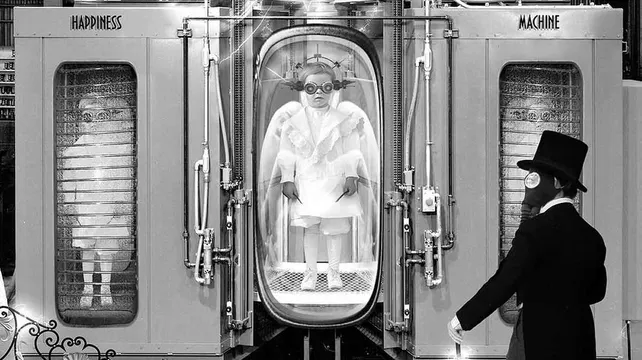
If you haven’t seen it yet, I would thoroughly recommend watching the latest series from the chap who brought us the Detectorists, Mackenzie Crook. It’s called Small Prophets and has a rather unlikely plot-line about a man who grows magical creatures in glass jars called homunculi. The homunculi can forecast the future and he wants to use them to find out what happened to his wife who disappeared seven years previously. Weird yes, but delightful all the same.
Now, when I wrote to this newspaper in 2018 about the plans to restructure the civil service, I wasn’t trying to be a prophet, small or otherwise. I was simply pointing out what seemed obvious to anyone who had spent more than five minutes inside the machinery of government. That is, if you muddle accountability, overload roles, and pretend that senior staff can be shared like the office stapler that everyone swears they returned, things will eventually fall over.
And fall over they did, with all the grace of a Windows 95 machine trying to run a modern app, but at considerably more cost. So, when the chief executive recently announced the return of chief officers, it wasn’t smugness I felt, but relief.
I wrote the letter when I was president of the Committee for Health & Social Care and at the time was accused, along with others including my The Long And The Short Of It co-host Michelle Le Clerc (then the president for Employment & Social Security), of being resistant to change, protective of silos or insufficiently enthusiastic about civil service reform. None of that was true then, and it certainly isn’t true now. Indeed, far from working in silos, much of the progress we made that term was through joint working between our respective committees.
What we questioned was not the aim of reform, but the structure chosen to deliver it. Matrix management is where senior officers are organised around functions or themes rather than committees. It promised to break down silos, encourage collaboration and ensure consistency across government. In large organisations with deep management capacity, stable leadership and a clear corporate centre, it can work. In Guernsey, however, the theory collided with the practical realities of scale, committee mandates and constitutional convention.
Matrix management meant the end of chief officers answerable to committees. Why did this matter? Well, let’s start with the basics. Government only works when political leadership and senior civil servants have a clear, functional relationship. In 2018, I highlighted Rule 56(3), which still exists today, and states that ‘the senior officers of a committee are accountable to that committee in respect of policy direction.’
That rule wasn’t written for fun. It exists because accountability matters. Committees need someone who understands their mandate, their pressures, their priorities and who is accountable to them, not to three other committees and a theoretical organisational chart.
Under the changes, instead of chief officers, we had ‘strategic leads’. One was called the head of people policy, a classic UK local government title which everyone thought meant they headed HR, which they didn’t. These ‘strategic leads’ stretched across multiple committees spinning plates with one hand tied behind their back. The result? Confusion, delays, and a sense that no one quite knew who was steering which ship.
Instead of getting rid of silos it has created new, functional ones, detached from the political mandates the civil service is meant to serve. Committees have felt like customers rather than leaders, while officers have been left navigating competing instructions and priorities. That is not empowering for anyone.
Bringing back chief officers restores some clarity. It gives committees a senior partner who is focused, aligned, and answerable. It means decisions can, in theory, be made faster, responsibilities are clearer, and the political-civil service relationship can function as it was intended.
As I warned at the time it would be, matrix management has been particularly unhelpful for IT projects in the States of Guernsey. Programmes like MyGov and Revenue Services don’t fail because technology is difficult, although it is. They fail to a large extent because leadership, accountability and governance are unclear. When no one is quite sure who owns a project, who signs off decisions, or who is responsible for delivery, things drift. Costs rise. Deadlines slip. And before you know it, you’re explaining to the public why a system that was supposed to transform services is still stuck in testing, or worse. If everything is everyone’s job, then nothing is anyone’s job.
Bringing back chief officers won’t magically fix IT, but it will provide something we’ve been missing – clear ownership and more than just by giving an overstretched civil servant the title ‘responsible officer’. Someone who can say, ‘This is my project, my responsibility, and my job to deliver.’ That alone will save time, money, and a lot of collective headaches.
This is incredibly important today as government is more complex now than ever. Health and social care, education and infrastructure, to name just a few, aren’t small portfolios. They require senior officers who understand the detail, the context, and the political direction.
If government restructuring teaches us anything, it’s that we should never underestimate the ability to reinvent the wheel and occasionally make it square. The model that was tried looked modern. It sounded modern. It had the word ‘strategic’ in it, which always helps. But sometimes the old ways work for a reason. Chief officers aren’t a relic of the past; they’re a practical necessity. They’re the difference between a committee having a dedicated partner and having to book time with someone who is also juggling three other committees, two transformation programmes, and the kitchen sink.
It’s a step towards a more functional, accountable, and effective government. It recognises that clarity matters, that committees need dedicated leadership, and that major projects, especially IT, require strong, focused oversight.
That said, restoring chief officers to committees is not, on its own, enough. Structure can support good governance, but it cannot deliver it by itself. Clear reporting lines will not suddenly produce better decisions if the underlying culture remains cautious, opaque or overly procedural. Changing the structure without changing behaviour is rather like a football club building a brand new stadium and expecting that will be enough for their results to improve. As a Spurs fan, I know only too well that it isn’t.
This inevitably brings us to the structure and role of the senior leadership team, or SLT. If accountability is to be meaningful, the SLT must exist to support committee leadership, not to block it. Its role should be to coordinate, challenge and enable. To use another footballing analogy, you want the team to work together to push the ball forward towards the goal, not endlessly kick it backwards and sideways. In a jurisdiction the size of Guernsey, an overly large or ambiguously defined leadership team risks slowing progress and blurring ownership at exactly the moment when clarity is most needed.
Restoring chief officers to committees is therefore an essential step, but only the first one. If we want better outcomes, we also need a senior leadership team that is lean, decisive and comfortable with taking responsibility.
Back in 2018 I said how change needs to be done with committees, not around them. Bringing back chief officers is a good start. With open dialogue between committees and the centre, and a shared commitment to learning from what has gone before, the next phase of reform can be both ambitious and grounded. That is a challenge worth embracing, and I forecast that if the chief executive does, it will be a success. However, I am mindful that I am not a small prophet living in a glass jar. Come to think of it though, growing homunculi would make an interesting difference from tomatoes this year.




You need to be logged in to comment.