
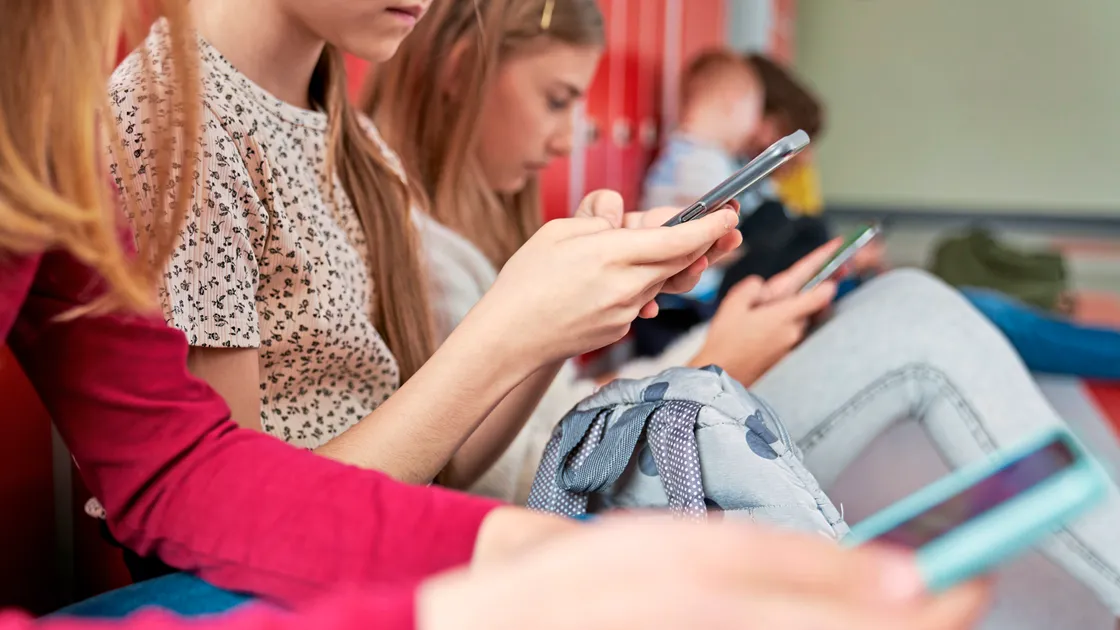
Last month, a government-commissioned report by former Labour health secretary Alan Milburn, warned that Britain is at risk of writing off an entire generation.
Nearly 957,000 young people aged 16–24 are not in education, employment or training, the highest level in over a decade. Milburn’s report points directly at smartphones and social media as a key driver, describing today’s young adults as a bedroom generation permanently connected to digital platforms but increasingly disconnected from face-to-face interaction, work and real life.
‘A rising tide of mental ill health, anxiety, depression and neurodiversity – driven in significant part by the psychological impact of constant digital engagement – is reshaping how young people function socially and professionally,’ the report said.
And that same week, the Academy of Medical Royal Colleges, representing every branch of medicine from general practice to psychiatry, paediatrics to surgery, submitted a landmark report to the UK government as part of its national consultation on children and the online world. Their conclusion was unambiguous – what is happening to children online is a public health emergency.
The question is no longer whether smartphones are harming our children, it is what we are going to do about it?
Current local discussions around smartphone-free schools are focused on two approaches – the Blackout app and Yondr pouches. The simplest, cheapest and most effective option, a brickphone-only policy, has barely been considered. We believe this is a serious mistake.
SFCG has always said the same thing from day one – this is not a school problem. It is a community problem, and it needs a community answer.
Restricting smartphones between 9am and 3pm and calling it solved is not protecting our children. It is protecting them for six hours, and leaving them exposed for the other 18.
School-hour restrictions address the symptom in the most limited way possible. They do nothing to change the culture, nothing to support the parents who feel powerless, and nothing for the children whose home life offers them no shelter from this at all.
We have always asked for more than that. We are still asking.
Schools are where we reach every child – including the most vulnerable
Schools are the most powerful environment in a child’s life outside the home. This matters enormously because school is also where we reach the children who do not have strong parental guidance at home. The children who will never attend a community event or read an open letter. The children most exposed to harm, and least equipped to navigate it.
Children with additional learning needs, attention disorders and neurodivergent needs are disproportionately affected. Excessive screen time compounds attention difficulties, disrupts sleep and increases anxiety in children already navigating significant challenges. For these children, a smartphone-free environment is not a preference. It is a safeguarding issue.
A States-wide policy is the only approach that reaches every child equally. Schools should not underestimate the scale of their influence, or their responsibility, at this moment.
This is not a decision for individual schools. It is a decision for the States of Guernsey.
Leaving each school to choose its own approach creates a fragmented, unequal landscape. England legislated. France banned nationally. Australia acted at government level. In every case, meaningful progress came from the top down. Guernsey is small, connected and uniquely placed to move quickly. The States of Guernsey can set a clear, island-wide standard and SFCG is calling on them to do exactly that.
Comparing approaches and why paying for solutions is not the answer
The Blackout app would cost about £19,000 in year one – that is £10 per pupil across the States secondary schools. That cost could escalate to £130,000 over the course of the next five years of escalating subscriptions, IT support and training.
There are multiple ways that the app can be bypassed, and the protection offered is not equal. It relies on parental consent.
There are also risks relating to data protection, with installation on personal devices – legal challenges have already been raised in the UK, and a high dependency on one company and risks of costs escalating.
Yondr pouches would be expected to cost £38,000-£57,000 for pouches and unlocking stations across the three high schools, with costs mounting towards £160,000 over a five-year period.
The pouches can be bypassed with cheap magnets, or a child can put a cheap phone in the pouch and keep their smartphone in their pocket all day. It is already happening in schools in the UK. Children are only protected equally for school hours only.
A brickphone policy costs nothing – enforced at the school gate means every penny stays in local education, with no data protection concerns or technology lock-in.
At a time when Guernsey’s public finances are under pressure, spending six figures on a tech contract that children can bypass doesn’t seem like an effective use of taxpayers’ money. Nor will it deliver the community-wide safeguarding we need to protect our children.
As taxpayers, we are asking the government to implement a community-wide policy, and invest in a solution that safeguards every child, not just at school.
Come and hear from someone who has implemented a brickphone-only policy
On Saturday 20 June, David Smith, headteacher of the first UK state secondary school to go fully smartphone-free, comes to Guernsey. His school now sits in the top 2% nationally for GCSE results. Two years in, he says he has zero regrets and any challenges have been easily surmountable. States deputies, education leads and Guernsey families will be in the room
‘Unplugged – raising a smartphone-free generation’ takes place at Les Beaucamps High School on Saturday 20 June from 10am-noon. It is free to attend but please book here. For more information contact sfcguernsey@gmail.com.





You need to be logged in to comment.