

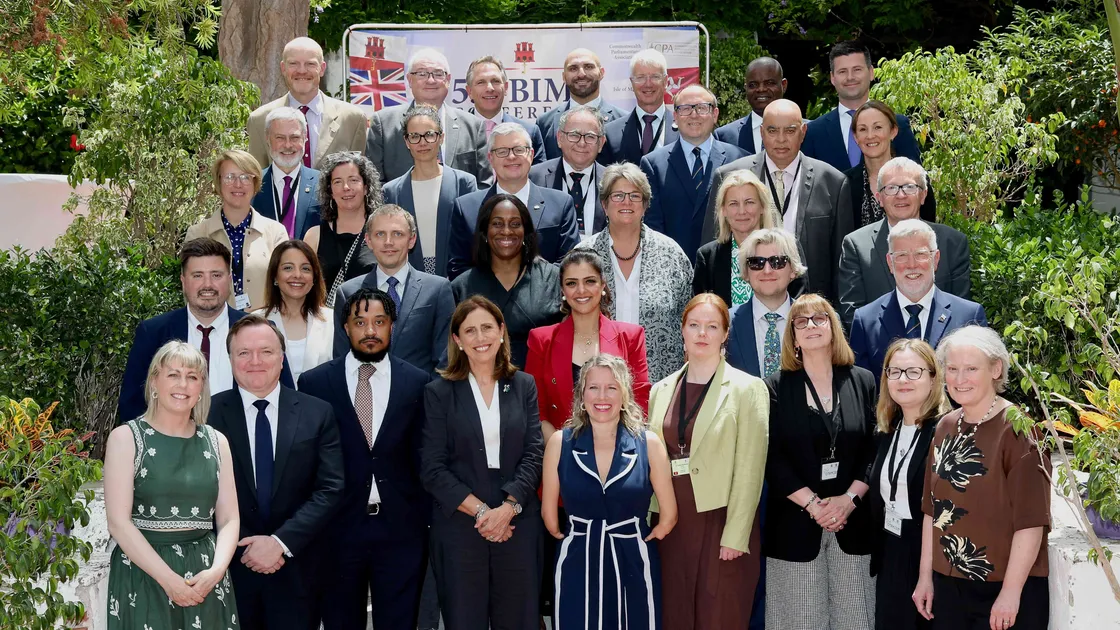
I’d never been to Gibraltar. The hotel was lovely. It even had a pool. The food was excellent. We had a short tour of the Rock thrown in. I thoroughly enjoyed the trip. It certainly sounds like a jolly.
That is how Deputies Gabriel, Collins, Ozanne and I spent two days together in June. We were guests of the Gibraltar parliament at the Commonwealth Parliamentary Association’s 55th British Islands Mediterranean Region Conference.
With the greatest respect to my colleagues – and I’m not remotely offended that the feeling will be entirely mutual – 48 hours in their company is not my first choice for a jolly time. Neither would I choose to lose half a weekend travelling home in my own time. So, for me, there has to have been a good reason to travel.
In my first two terms, while occupying senior roles demanding of my time, I didn’t play any part in CPA events. In my third term, operating primarily as a parliamentarian on the backbenches, it felt appropriate to engage with the CPA. Consequently, with an open mind, I joined a delegation to an annual Commonwealth Parliamentary Conference. Frankly, it was a revelation to have the opportunity to engage with other Commonwealth parliamentarians. I quickly realised how woefully under-supported Guernsey’s parliamentarians are compared to pretty much every one of the 180 or so other Commonwealth jurisdictions – with the possible exception of our smaller neighbours, Sark and Alderney.
While some may have cars, drivers and well-staffed offices that we obviously don’t need, we expect our parliamentarians to function without support. Any support. Not even a phone. Just a laptop. No offices, other than for the chief minister. No admin support, again with the only exception being the chief minister, who has access to a fraction of an individual to help them. Certainly nothing like a research assistant – just whatever AI can drag up and that’s a recent development.
We are also one of a handful of jurisdictions that don’t even have a place to meet – a parliament – of our own. We share space with the courts and the judiciary, who have first call. We are not even grown up enough to have our own presiding officer, relying instead on our most senior judges to discharge a role that the judiciary are barred from undertaking everywhere else in the Commonwealth (except Jersey). We have managed to evolve a system in which our elected officials are guaranteed to under-perform their full potential and pretty much assured to be out-gunned and outmanoeuvred by the other parts of our system.
In this environment, going to a CPA event can sometimes feel like being taken into Harrods to be shown all the things you can’t have. But it would be naive, arrogant or stupid to think there is nothing that can be learned by doing so.
The official agenda in Gibraltar included a session on youth parliaments and how to help ensure democratic continuity in the 21st century. If there is one thing that often gives hope, it is engaging with the energy and ideas of the next generation to enter the democratic arena. There were also sessions on inclusion, including simple changes to parliamentary procedures which don’t require anything more than an open mind to effect. One of our number, Deputy Ozanne, presented. It was fascinating to learn too of the experiences of some finding AI hallucinations being inadvertently relied upon by parliamentarians which then becomes part of the public record via the Hansard record of proceedings, which then becomes a validated source of future ‘truth’.
But for me, the greatest value comes from all the conversations around the main event. For example, I learned from Gibraltar’s deputy chief minister that Gibraltar continues to have an over-supply of teachers who are keen to get jobs and experience before suitable vacancies open up for them back on the Rock. I was able to use that conversation to connect all the interested parties to revisit the opportunities that may exist for us to tap that talent pool.
I learned about the similarities between our two small jurisdictions – the car has an outsize place in Gibraltarian society and politics. I was fascinated to learn how a population half our size has nurtured a political system with three well-established, competing political parties for over half a century.
The tiny land mass also shares the experience of having a housing crisis. It has addressed it with aggressive publicly-supported building projects. Gibraltarian youth can join the queue for a new development as soon as they turn 18 and when their ticket comes up, they can afford to enter the property market (which makes ours look cheap) with 50/50 equity shares.
Finally, I thoroughly enjoyed chatting to the present speaker of Gibraltar’s parliament (and one of her predecessors) to learn how parliamentarians choose their presiding officer, following which the States’ Assembly & Constitution Committee has invited the present incumbent to remotely join one of our future meetings to share her thoughts and experience. I know that my three colleagues all had similarly beneficial conversations.
It is right, of course, that like any public expenditure, these kind of trips should be kept under review and scrutiny – and I’ve no doubt that the media will continue to do just that in the future. How much did all this cost taxpayers? £1,880, or £470 for each of the four deputies who made the trip. That’s a bargain for two days’ training or continuing professional development in any job. Like any such on-the-job experience, it will not be transformative on its own, but we’d be foolish in the extreme to lose the opportunity to engage with and learn from others facing similar or identical challenges to our own.



You need to be logged in to comment.