

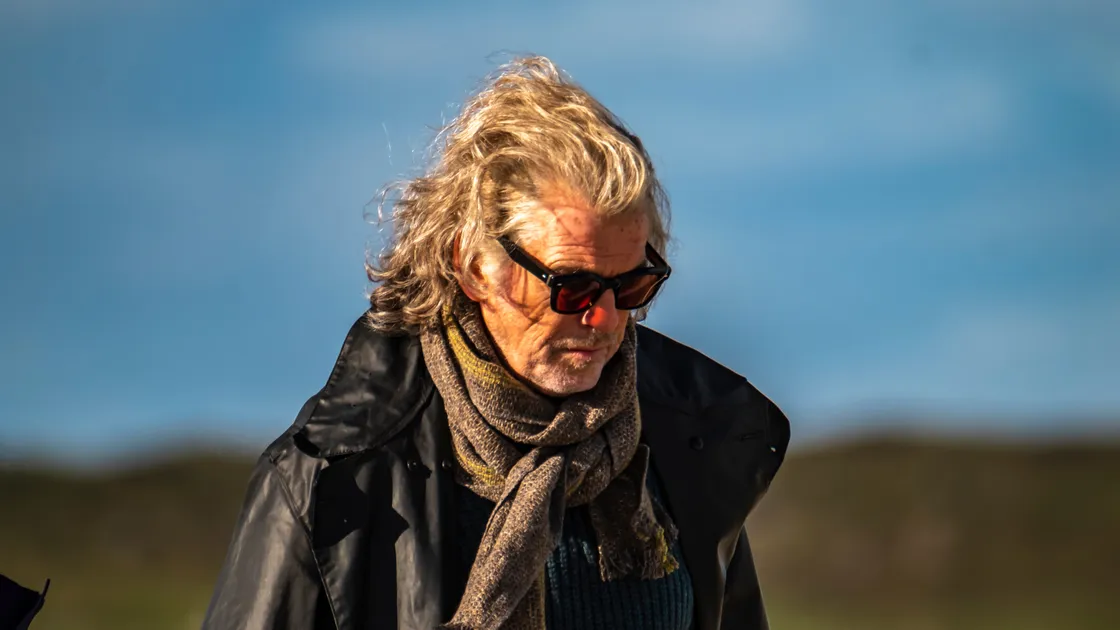
Scrolling through Instagram the other day, I came upon a video by the actor Pierce Brosnan marking World Environment Day. He said that climate change was not only a scientific question, it was a moral one too which involved us all.
I sent it to my sister with a thumbs-up emoji.
But is he right?
Time and again people tell me the responsibility falls on governments and major corporations, not on individuals. I can’t do anything to change the facts, so let me get on with my life.
Morality is about the oughts and shoulds that direct our behaviour. Its most basic premise is the ‘no harm principle’. We shouldn’t act in ways that hurt other people, and when we do, our actions merit judgement. So, Brosnan’s point is this – if the way we live contributes to environmental damage which affects others, we have a moral obligation to address that behaviour.
It isn’t easy, of course; morality never is. If I want to buy an electric car, I’m going to have to make financial sacrifices that will restrict my life. If I want to stop using heating oil, I am going to have to make even greater ones.
Perhaps that’s as it should be. Morality is not only about the shoulds of behaviour, it’s about justice too. Is it fair that I enjoy the benefits of high consumption while others bear the costs of the resources I use? Climate change is impacting all of us, but it is impacting the poor communities more.
Then there is the question of future generations. I look at my niece’s children and wonder at the world they will inherit. If a parent has the moral responsibility to care for her children, then perhaps we have a moral responsibility towards the people who are yet to come. They have had no say in the decisions we’ve made and yet they will suffer the fall-out.
And what of the natural world? How wide is our circle of moral concern? If the natural world has an intrinsic value independent of what it gives us, then it should be included. Bentham (father of utilitarianism) wrote in 1789, ‘The question is not, can they reason? nor, can they talk? but, can they suffer?’ The answer is ‘yes’, and since animals and ecosystems can’t vote or campaign or speak for themselves, our actions should consider their wellbeing too.
In other words, care of the environment is not an optional ‘other’; it is integral to how we live and how we ought to live.
Yet, there are many who challenge this position. Some scientist object to the question being framed as a moral one. Science is about evidence: what is happening, why it is happening and the likely consequences. The statement ‘the climate is changing’, is a fact, not a moral claim. To move from there to ‘I must therefore change my behaviour’, requires something else to be added. I might say ‘do not harm others’, but that is just another moral statement which needs defending, and as a result I end up arguing in circles.
Then there are people, like Marc Morano, the founder of ClimateDepot, who insist that turning the problem into a moral issue is just another way for governments to limit our individual liberties. Or Alex Epstein, a former fellow at the Ayn Rand Institute who believes the only moral imperative is human flourishing. Restricting fossil fuels will impact the poor in the developing world by depriving them of hospitals and clean water. It may help the environment but cheap energy is important for economic development.
Others, like the philosopher Walter Sinnott-Armstrong, agree that climate change is a serious moral issue but you and I have no duty to stop it. I can buy an electric car, I can fly less and use less energy; I can consume less as well, but these actions won’t make any difference to the world’s climate. The power to influence emissions rests with governments and major corporations. It is unfair (i.e immoral) to place the same burden on everyone.
These arguments are important and have value, but I still agree with Brosnan that climate change is a moral issue. As long as we accept the ‘no harm principle’, and as long as our actions affect the lives of other people, future generations and the natural world, we can’t avoid questions of responsibility and justice. It is, however a complicated one. Not everyone is equally guilty and not everyone shares the same responsibility. Nor does it mean that every proposed environmental policy is automatically right.
And in the end, morality is not only about the other, it is also about the self. What type of person do I wish to be? That was Aristotle’s question. Do I want to have self-respect and moral integrity? If I do, then I need to live by the beliefs I hold to be important and true.
Grass-root movements are powerful, they can change government policy, and they begin with each person taking responsibility for their own actions. How we choose to express that responsibility is up to each one of us.

You need to be logged in to comment.