
Recently, I (along with hundreds of others), ran the Butterfield Half Marathon. I’ve always been relatively ‘in’ to running but not in a competitive way. More in a ‘this is something I can do without much effort and it keeps me fit’ way. As a result of this laissez-faire approach to what is actually a super technical sport, about 10 years ago I thought: ‘Hey I know, let’s enter the ballot for the London Marathon for fun.’
When I was lucky enough to get a place, the fun feeling quickly morphed into the one you get when you accidentally hit the ‘like’ button on a photo when you’re five years deep on your crush’s Instagram. I had no idea how to train properly. I just tried to add distance every week for months and my body made it to the starting line held together by KT tape and best wishes. Long story short: I finished it, it took me six hours, and I said: ‘Never again in my entire life.’ (Quick shout-out here to my friend who started the run with me that day and, despite briefly knocking himself unconscious in the middle of it, still managed to cross the finish line before me.)
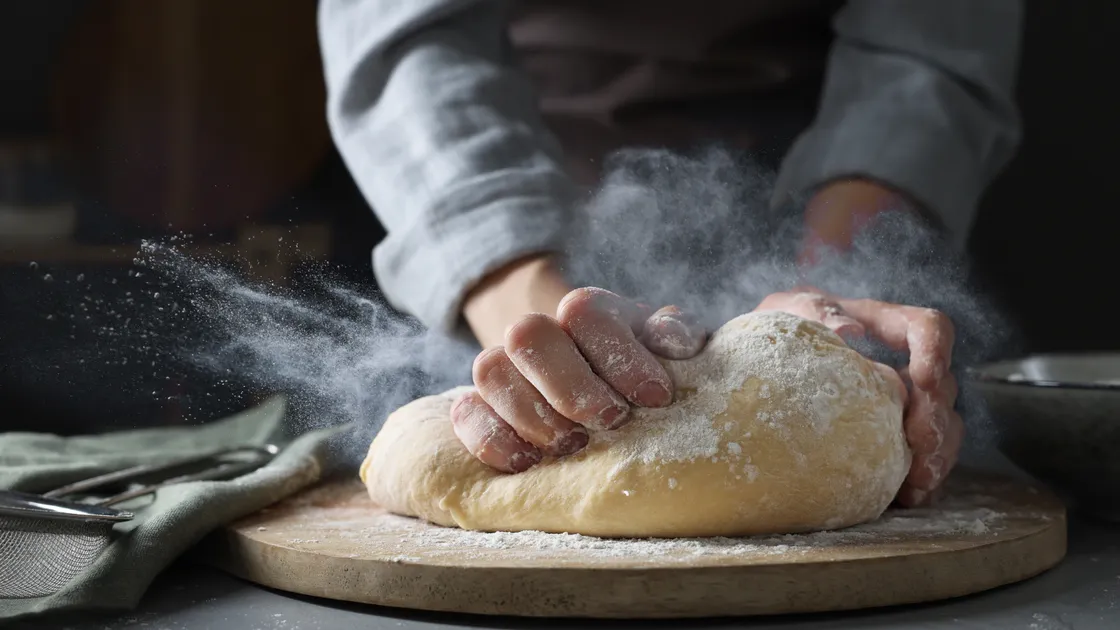
Since then, I’ve stayed true to my word and have yet to run another marathon, but this year I’ve rediscovered my love for running. In the process, running has become more attached to my identity. Now, according to the gentle ribbing I’ve been getting from my online algorithm, I’ve discovered that ‘running a half marathon’ (along with taking up gardening, sourdough bread-making and joining CrossFit) seems to have become something associated with a sort of ‘millennial crisis’.
I’ll happily own that but, regardless of the humorous stereotypes, people do make big changes at different stages of their lives (or small changes that have big impacts) and I’m curious why these are labelled as ‘crises’ of identity. Are we not allowed to discover new parts of ourselves and shape our identity however old we are? My hunch is that the changes get labelled that way because they can seem sudden or drastic.
Mostly, I think they’re misunderstood and if we see someone shifting lanes after spending a long time in cruise control, we presume something’s wrong. Of course, sometimes it is and the changes we make are necessary to improve our lives. But other times, we might just realise we’re stuck; content but unfulfilled and change is risky but rewarding.
With all the changes I’ve made recently, I wonder if I might be the walking definition of ‘identity crisis’ so I thought I’d write about it. What happens when we change something about our lives, and it changes how we see ourselves? What if we’re forced to question who we are when we lose fundamental pillars that helped shape the stories we tell about ourselves?
I’ve felt my identity challenged in a few ways recently but particularly when it comes to my career. For many of us, who we are professionally is important to who we are as people. So, what if we spend a large portion of our lives building a career and get to a point where we question if it’s really what we want to do? Or need to pivot unexpectedly when life does its thing? Since I was young, the only careers I’d considered were world-famous pop stardom or being a psychologist. When the former sadly didn’t transpire (despite a successful stint singing at the bowling alley with my teen girlband, Fate) I chose psychology. Over the last 20 years, I’ve studied, trained and worked in forensic psychology. Up until this year, I hadn’t given much thought to doing anything else, but moving home with such a niche area of professional expertise has forced me to consider giving my career up entirely. This has been scary because I’ve spent my whole adult life so far training to do this very specific thing. Would it make my whole professional life a complete waste if I stop now? On a deeper level, being a psychologist has become so fused with my identity that I’m not sure who I am without it. This is confronting in itself – if my job is the main thing that makes me feel important, perhaps it’s time to move on.
First, I need to address how entangled being a psychologist is with my self-worth. Since coming home, I’ve been stuck whilst trying to figure out how to move forward without giving up my career. Without being able to do my job properly, I’ve had space to really question who I am and what my purpose is. I’m still not there yet with fully accepting that I might have to give it up, but I’m working on finding purpose in other areas of my life. When it comes to the day-to-day feeling of stickiness, I need to keep finding the balance between movement and sitting still; tolerating the discomfort of the unknown but taking intentional steps each day to live aligned with what I value. I’m still not sure how things will work out so instead of focusing only on a future vision that feels impossible to achieve, I’m trying to focus on the smaller things I can do each day that contribute to me feeling good in the present. On a deeper level, I’m trying to integrate more of what I value into my assessment of self-worth. If my friends or family were asked to sum me up in a few words, they’d probably say ‘cats, wine, cats and pizza.’ No but seriously, I need it to become less ‘I’m a psychologist and that’s what makes me a worthy human’ and more ‘I’m a writer, I’m a runner, I’m a hiker, I’m a singer, I’m a poet, I’m a cat-mum, I’m a good friend…’ and so much more that makes me valuable.
So, I think change can be a beautiful thing. At any age, making changes to how you live your life doesn’t have to mean that you’re having a ‘crisis’; perhaps you’ve just decided that something no longer serves you and it’s scary but ultimately a privilege if you can change your situation for the better. Or if we find ourselves in a position where change isn’t easy or is forced upon us, it’s ok to sit still for a while, feel the stickiness and then start to move ever so slowly. The smallest steps are often the most powerful. If I think about all that’s happening globally and the collective powerlessness, outrage, ignorance, uncertainty, fear, guilt and loss all contributing to a fundamental helplessness at the core of humanity, it seems impossible to think that we can move forward. But people everywhere are. People in so much more difficult, scary, life-uprooting, life-threatening and deeply traumatising situations are moving forward every day, not staying stuck but using the stickiness of their situation with purpose; to better themselves, their loved ones, their communities.
Perhaps that’s the point of the stickiness; it’s there to teach us to carefully ride the tension of both accepting and being grateful for the present and slowly taking steps forward, no matter how high the mountain looks.

You need to be logged in to comment.