

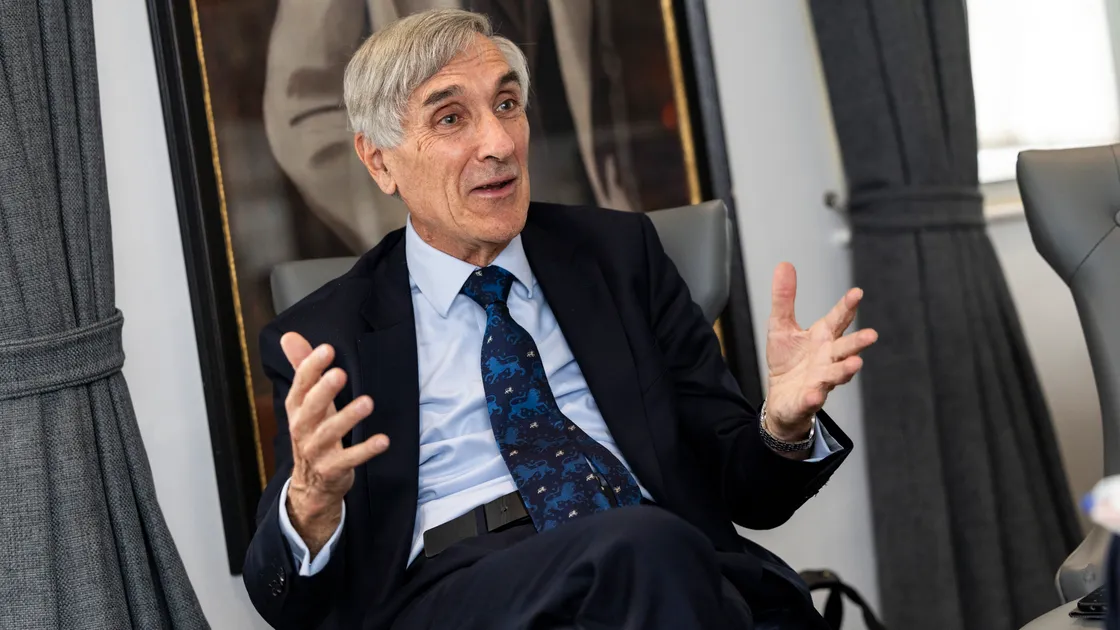
When John Redwood was trying to oust his leader, John Major, Times columnist Matthew Parris memorably wrote that Redwood was ‘a new creature, half-human, half-Vulcan, brother of the brilliant, cold-blooded Spock’. That leadership bid, 30 years ago this summer, was quickly defeated, but the caricature endured, savagely but amusingly capturing Redwood’s intellect, appearance and delivery. He was perhaps the greyest of all the Tory Party’s men in grey suits, a monotonous, monochrome figure, the very antithesis of the era then emerging of colourful, sentimental, touchy-feely Cool Britannia.
I expected him to be smart and confident and courteous, which he was, and to talk about Brexit and privatisation and immigration, which he did, trenchantly and eloquently. I didn’t, however, expect him to seem closer to tears than any other politician I have interviewed, but here we are, his voice faltering as he recalls a formative memory of his childhood.
‘I can remember, as quite a young child, being first aware of war, and that shocked me. I couldn’t believe that these grown-ups did what they seemed to do in wars. In my home city of Canterbury, beyond the city walls where you would expect there to be some development, there was a wasteland. One day I developed some inquisitive thoughts and asked why it was like this. My mother, looking very uncomfortable, said it was a bomb site. I hadn’t a clue what a bomb site was, and she said only so much because she thought she needed to protect me, but she said enough to make me absolutely appalled that people called Germans had tried not only to destroy the houses, but that people were in the houses. I just couldn’t believe that.’
We are talking about his childhood, as much as about politics, because Redwood has a remarkably long memory, with vivid recollections of being a toddler and even a baby. He can remember being in a pram and a high chair and rattling his cot, and not just in the sense of having fleeting images in his mind, but he can remember how he felt at these times and how he viewed the world around him. He says he realised only a couple of years ago that not everybody, indeed almost nobody, has memories stretching back so far into infancy. He has now written a short book based on his recollections of early childhood, What Do Boys Want?, which explores how adults often fail to recognise or understand what the child sees or thinks. ‘The bulk of the book is about being a little boy and then a slightly bigger boy in an adult world and how incredibly difficult it is, and why the adult world looks and feels so bizarre.’ He writes about problems learning to walk, the need to go mountaineering on furniture made for giants, and the frustrations of not being able to do things he wanted to do and of responding to grown-ups who, while trying to be nice, were patronising or asking him questions he found impossible to answer.

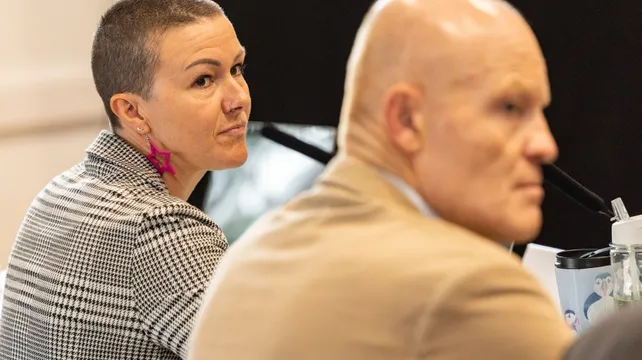
He draws links – possibly a little far-fetched, but he certainly believes in them – between his childhood memories of a world controlled by grown-ups, and his politics as an adult. ‘I’m going to introduce my talk at lunch with this,’ he says. He is here as the guest speaker at an event hosted by the local group Gpeg. ‘We’ve got this phrase now from the Democrats in America and from the EU and quite a lot of the British establishment that you need grown-ups in the room, and you need a grown-up government. I’m going to look at how the so-called grown-up theories are usually very damaging, and why do we all believe in this grown-up theory? By the way, when you’re a child, yes, the grown-ups know a lot more than you do and you’ve got to learn from them, but there are also some wrong’uns and some very bad advice and some maltreatment.’
‘The establishment’ – supposedly liberal, or worse woke, and self-serving and overwhelmingly metropolitan – has become a sort of totemic enemy for some right-wing politicians who curiously often have impeccable establishment credentials themselves: fee-paying schools, the city, property, long careers in politics. Redwood went to a private school in Kent, read modern history at Oxford, built a lucrative career in investments, and ran the Number 10 policy unit for Margaret Thatcher, before being elected in 1987 as the MP for Wokingham, a seat he held until retiring from parliament at last year’s general election. But his sense of himself as something of an outsider is not entirely confected. He was born in a council house. For most of his time as an MP, post-Thatcher, he never quite seemed to fit in, retaining a certain independence and detachment even from his own party leadership, against which he not infrequently rebelled. He was often seen on television expressing views which were far less fashionable than they are now about the EU, conservative social policy, immigration and public spending. Incidentally, he is much less wooden and has more warmth than those television appearances made out. He didn’t lack ambition, twice standing for the Tory leadership, but climbed no higher than being secretary of state for Wales for just two years. He and the ‘grown-ups’ were equally sceptical of each other.
Tellingly, Redwood the rebel wishes he had toed the party line even less. ‘I regret quite a few of the votes I made out of loyalty. I don’t regret any of the rebellions. It’s curious to decide that maybe I should have rebelled more. What I believe is that you’ve got to work in an organisation you believe in, you’ve got to be entirely positive, you should never be wrecking or undermining.’ That final point may surprise some of his former party leaders. Major once famously bemoaned Redwood and other Eurosceptics as ‘the bastards’ within. William Hague sacked him from his shadow cabinet, though he brought him back a few months later.
I think what Redwood means is that in politics one should play the ball, not the man, and his approach has been serious, substantial and high-minded. He may not appreciate the comparison, but he has been a sort of Tory Tony Benn, concerned only with ‘the issues’ as Benn used to put it, maintaining often maverick opinions, undoubtedly with great principle and no little courage, but with an innocent disregard for the damage left for colleagues to clear up.
After his moving childhood anecdote about the bomb site near his home, which he says led to ‘developing a sort of passionate hatred of war’, it is unsurprising that his biggest regret in politics was over a military conflict. ‘I was wrong in not standing out against the Iraq War. I deeply regret voting, when Iain Duncan Smith was our leader, with Labour over Iraq. That was wrong.’
His perceptions of war influenced the views about Europe and the EU for which he is probably best known. There was a time, two decades ago and more, when the most hardline opponents of the UK’s membership were known as Europhobes, in contrast to their slightly less unyielding friends, the Eurosceptics. In later years, Brexiteers were often heard insisting of their fondness for Europe but disgust of the EU. Redwood has always sounded authentically Europhobic.
‘When I read history at Oxford, I mainly wanted to do economic history and science and technology history, which is what I specialise in, but everybody had to do European history, and that just absolutely appalled me. There was just one war after another for no good purpose, and our country getting dragged in all the time. Why are we doing this? This doesn’t make any sense whatsoever. I was very anti-Europe. I read Churchill’s History of English-Speaking Peoples, which was the best effort at it. It seemed to me that we did a lot more with and had a lot more in common obviously with Australia, New Zealand, Canada and America but also with the wider Commonwealth. I felt much more affinity to Jamaica and South Africa and these sorts of places than I did to France or Spain, whose history taught me that the French spent 200 years trying to blow us up and invade us, and the Spaniards spent 100 years trying to do that. You had to be a bit careful, you know.’
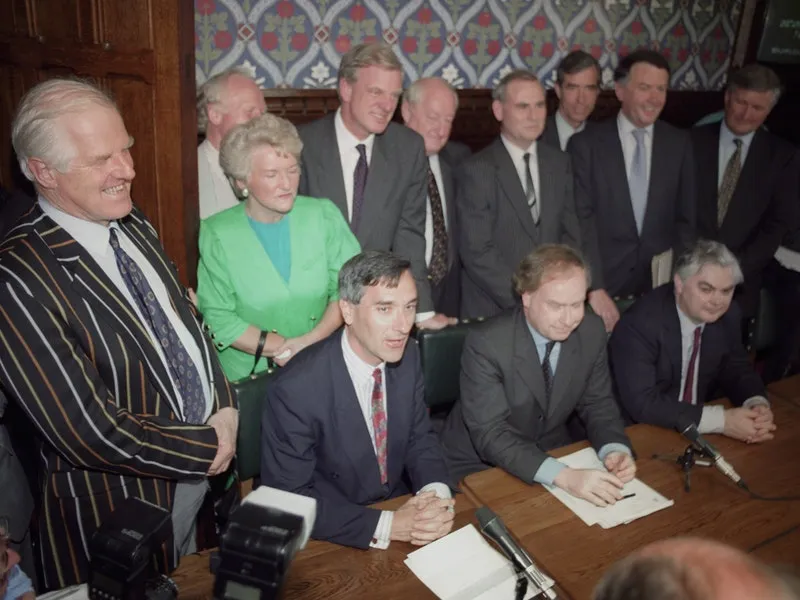
One of the first votes Redwood ever cast as a young man was for ‘Leave’ in the original 1975 referendum on what was then known as the Common Market. He had to wait 40 years to see his dream realised. I didn’t expect him to be repentant about Brexit and of course he isn’t. He claims to be even more convinced now than ever, which may not be very accurate because he has never once indicated a scintilla of doubt. ‘I’m now far more determined and certain than I was. As a young man, it was quite difficult taking on so much of the establishment. But we haven’t had Brexit because the establishment stifled it.’ His outsider versus establishment perception runs deep. And here, too, are the parallels with the Bennites on the Left: essentially, our ideas are correct, but they have been betrayed by not being implemented with sufficient purity. In fairness, he does a decent job of arguing the point.
‘They haven’t completely stifled it. Clause 38 of the Withdrawal Act is absolutely critical. It is the fundamental assertion of United Kingdom sovereignty. Now, government, please use it, don’t give it away, don’t wreck it. We’ve had quite a lot of wins already which the establishment won’t talk about. Even though they haven’t grasped it and done all they could do and made the success of it I wanted, we’re still better off out. There are so many opportunities if only we had a government to take them. But just take the wins already. First of all, we have saved the £15bn or so a year. They gave too much of it away getting out, but we are now not paying any of that money. Thank God we’re not paying it because we can’t afford anything else.
'We have ducked the most almighty debt bomb because the EU is just completing 800bn euros of borrowing, and our share of that would have been 120bn effectively, although you’re collectively liable. We can’t afford another 120bn of debt. We can’t afford what we’ve got. We have also managed not only to roll over the free trade agreements the EU had which they tried to say we couldn’t do, but in certain cases we have added service sector agreements to them because we are service sector exporters and the EU never looked after them. Then we went off and did a really big deal with the Trans-Pacific Partnership and Labour has just finished off the work that was largely done under the surface with India. We have greatly extended the billions of people we can now trade more freely with, and we have opened up services rather more. It would be completely bonkers to try a referendum on going back in. The whole thing would fall to bits because it’s so laughable.
'Why on earth would you volunteer to go back into prison? Isn’t it great to be out? You know, you haven’t used your freedom very well, you’ve sat in your armchair and been grumpy, but you could go out and have a good day, or you could go out and earn some more money, and that’s what Britain’s got to get used to. We’re out of prison, have a decent life, Britain, enjoy yourself, get on with it, put some energy into it.’
Redwood knew some pretty dark days as a Conservative MP during the Blair/Brown hegemony, but the party has never been less popular in opinion polls than it is now. Just this week television news has been full of images of apparently mostly empty halls at the Tories’ annual conference. At times they seem to be fighting not so much Labour as irrelevance. Labour has decided that Nigel Farage’s Reform is now its biggest threat. Perhaps ironically given his frequent clashes with party leaders who actually won elections, Redwood thinks the current leader, Kemi Badenoch, is broadly heading along the right lines. He doesn’t favour an alliance with Reform and, though he agrees with Farage on Europe and immigration, he can’t understand his apparent recent conversion to ‘big state’ ideas normally associated with the Left.
Not understanding is a theme Redwood returns to more than once. He holds many of his political views with such conviction that he struggles to see how others could possibly disagree. ‘I find it so difficult to understand why all these other intelligent, well-educated people can’t see the obvious,’ he says.
By the end of our interview, his candour and conviction have left me admiring him more than I did, and liking him more than I thought I would, but still slightly relieved that he never got the chance to run the country the way he wished.





You need to be logged in to comment.