
A few years back I was in a wine bar in Paris run by an expat Brit I’d met on a wine trip to Australia. We became friends and he invited me to pop in if I ever found myself not far from the Louvre.
So I did.
He always had various bottles open in the bar so he brought me over two glasses of red wine and asked me which I preferred.
A quick sniff and a slurp and I decided that the one on the left was much better – more open, softer and more harmonious.
He grinned.
‘They’re the same wine, it’s the shape of the glasses that are different.’
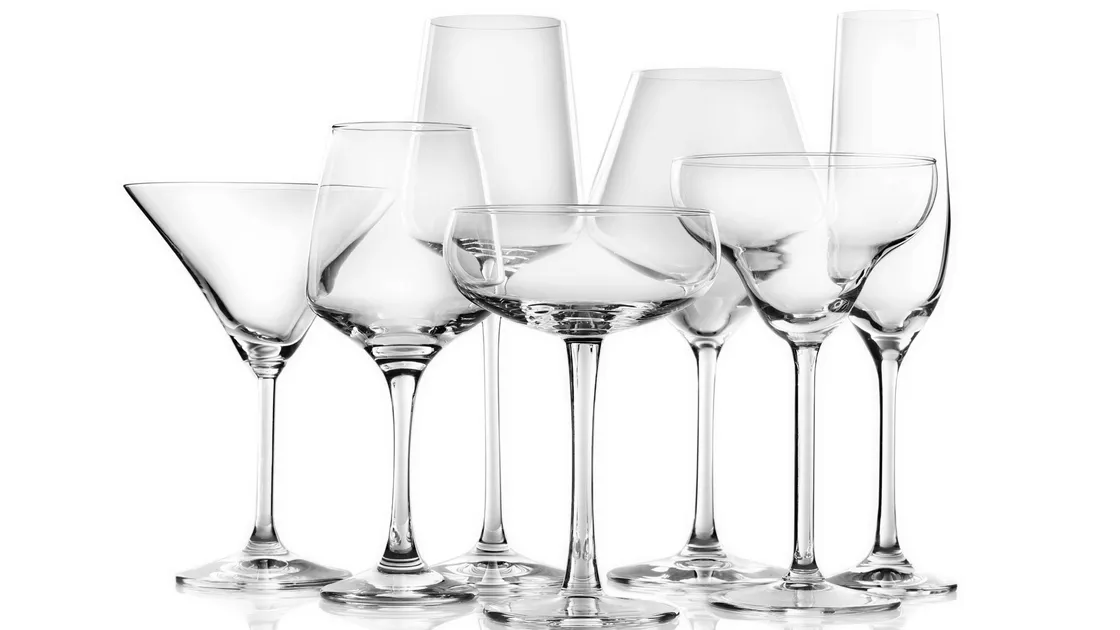
My flabber was somewhat ghasted. It turned out that he was trialling a glass for the Austrian winemaker Riedel. One glass was a standard wine goblet and the glass holding the ‘much better wine’ had been designed to match the syrah grape variety – the wine he served came from the northern Rhone, home of syrah.
Riedel made a name for themselves by producing glasses to match different grape varieties – and at the top end, for individual wine regions – so you buy a sauvignon blanc glass, a chardonnay glass, a pinot noir glass, a burgundy glass – and so on.
I had taken this with a pinch of salt but after my Damascene moment in the French capital I immediately went about ordering Riedel glasses to match the wines and grapes I like to drink – I still use them daily.
So let’s get this first myth out of the way.
Myth: The quality of your wine glass doesn’t matter, you can serve it in a jam jar and the wine will taste the same.
I was amazed not long ago to walk into a restaurant that was serving its wine in a glass I hadn’t seen since the eighties – it looks like a tennis ball which has been cut in half horizontally and then placed on a stem. The waiter then pours the wine to the brim so you have absolutely no chance of swirling the wine around to release its aromas.
You don’t have to spend a fortune on glasses, just make sure you buy a glass that is shaped like a tulip and large enough to swirl the wine around in.
On a personal note, I really hate the current trend (mainly in hipster wine bars) of serving wine in tumblers. It might be what they do in Italian trattorias but it does nothing for the wine in my opinion. Keep the tumblers for water.
One final thing – if you are a champagne lover, forget the ‘coupe’ that were allegedly said to have been modelled on Marie-Antoinette’s breasts – the sort that Babycham came in.
Champagne is best in decent flutes – though for vintage champagne you can use the same glasses you use for white wines.
Myth: The more pronounced the ‘legs’ are in a glass of wine the better it is.
The ‘legs’ in a glass of wine are the clear rivulets that you see running down the side of the glass after you have drunk it. They are a result of the alcohol in the wine and all they prove is that the wine had alcohol in it. If the wine has the alcohol, fruit, acid and tannin in balance that’s fine, the wine should be good. However, if the alcohol dominates and you cannot taste any fruit and the wine tastes flabby because of a lack of acidity and tannin, then even if the wine has more ‘legs’ than a centipede it isn’t a good wine.
Myth: You should only use a decanter for wines that have thrown a sediment.
Rubbish, you can decant any wine if you have a nice decanter and you want to use it. Yes, some wines throw a lot of sediment as they age (not just reds) and these will need to be decanted if you don’t fancy drinking cloudy wine and straining the sediment through your teeth.
However, the £5.99 bottle of pinot grigio you bought for Wednesday night’s dinner will come to absolutely no harm if you put it into a decanter. Young reds that are a bit tough and tannic will definitely be improved by being decanted even if they haven’t thrown a sediment. Decanting helps oxygen mix with the wine and it is this that softens the wine and makes it more pleasant to drink. If you are organised enough, do this several hours before you intend to drink it.
Even if you don’t have a decanter you can decant wine. Just pour it into a jug, rinse out the bottle, then pour the wine back into the bottle – your wine, like you, needs air.
Myth: You should serve red wines at room temperature.
Unless you happen to live in an unheated castle this is balderdash. Most of us feel most comfortable when the temperature in our flats and houses is 19 degrees or more. If you serve red wine at more than 19 degrees it will lose any focus and become what is known in the trade as ‘soupy’.
The instructions to serve red wine at room temperature came about well before central heating was invented.
Most reds are best served around 16 degrees – some even cooler than this.
To a certain extent the temperature you choose is personal preference but please don’t stand your bottle of red on a radiator to bring it to the temperature of your sitting room (yes, I have seen this done several times).
We’ll continue our myth-breaking series next week.









You need to be logged in to comment.