

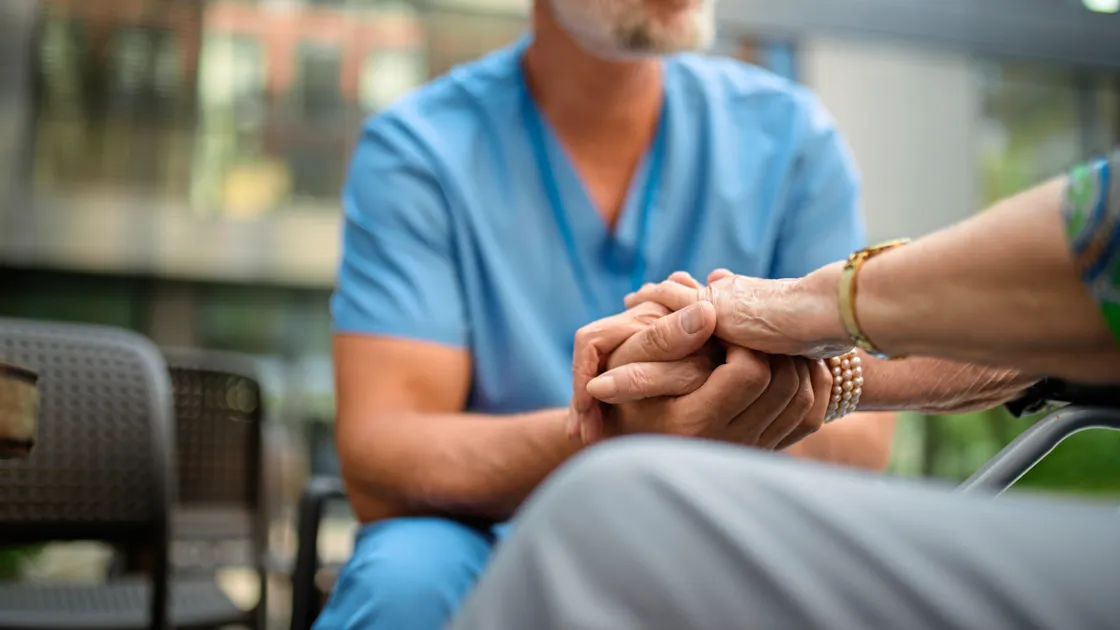
Death and dying are topics which often provoke fear or anxiety, despite the openness which has developed in other areas in recent years. Even doctors or nurses can feel uncomfortable having conversations with patients about these issues which result in the subject being avoided or skirted around until events overtake them.
There is, however, continuing progress toward addressing these challenges through the work of the palliative care and hospice movement, who seek not only to provide better services, but also to improve understanding of how to best care for those affected by life-limiting illness toward the end of life.
Palliative care is a term derived from the Latin word ‘palliare’, meaning to cloak or cover, with the goal of shielding or cloaking patients from suffering by providing comfort, relief and improved quality of life, as opposed to focussing on cure. It was established as a multi-disciplinary concept in 1967, but its roots go back centuries.
At the beginning of the 20th century Dame Cicely Saunders was born and she was to become a key founder and activist for recognising that care for the dying required a unique approach, in the form of what we now know as palliative care. She studied politics, philosophy and economics at Oxford, trained as a nurse during the Second World War, later became a social worker and ultimately graduated from King’s College as a medical doctor. She had personal experience of loss having twice fallen in love with dying patients. This, with her multi-faceted career, fuelled her enthusiasm to promote collaboration among different groups of professionals to provide holistic care to patients and families with incurable life-limiting disease, and campaign against the medicalisation of death.
Palliative care is a medical speciality in which doctors can train or describes a specialist service provided by hospices such as Les Bourgs Hospice in Guernsey. As a concept palliative care covers a spectrum which includes pain relief, normalises dying, neither hastens or postpones death, supports families of those affected and enhances quality of life by providing support to enable people to live as actively as possible until death.
A key element of all of this recognises the importance of knowing our patients and understanding what is important to them, in its widest sense. General practitioners, especially in Guernsey where we still have the privilege of continuity of care with our patients, are especially placed to understand the emotional, psychological, social and spiritual needs of patients facing end of life. We work closely with community nursing and palliative care teams to ensure that people receive the right care at the right time from the right person. In our practice we have a palliative care (GSF – Gold Standards Framework) meeting every month where we meet with the community and palliative care nurses to discuss the progress of patients receiving palliative care. Patients in such a position are prescribed ‘just-in-case’ drugs to have available in the house to ensure there is no delay if their condition worsens and they require injections for pain control, nausea or agitation. We are fortunate to have Les Bourgs Hospice on the island, completely funded by charitable donations, which provides in-patient care for respite care, symptom control and end of life. Our own Dr Jocelyn Aitken in Healthcare Group is a director of Les Bourgs and is an invaluable source of guidance to help us refine and improve our delivery of palliative care as GPs.
The Gold Standards Framework was developed by Professor Keri Thomas, who was a GP and was inspired to improve palliative following the premature death of her first husband when she was only 25. She has been instrumental in ‘mainstreaming’ palliative care into general practice, resulting in the monthly multi-disciplinary meetings I mentioned earlier, which take place in all practices across the UK. The framework supports training and research into developing palliative care across the country.
‘A good death’ may sound a contradiction, and no-one wants to have cancer or other incurable progressive disease, but it can provide an opportunity to prepare for death, for patients and their families. This week my own mother passed away following a protracted and painful illness. Two months ago, I sat one evening with my mum and dad, when we calmly and unemotionally discussed how she wanted her funeral to be conducted, in great detail, down to the colour of lettering she wanted on her headstone. Looking back, I now feel lucky to have had this experience, as I think for us all it marked a level of acceptance of what was ahead, which was unsaid but sat between the words. Beyond the obvious sadness, during her journey I have been continually impressed by the care, kindness and compassion shown to her by clinicians, and how expertly this was communicated. As a family we will carry very good memories of how well we were all looked after during her final days in hospital, indirectly thanks to the pioneering work of Dame Cicely Saunders and others.
Work continues to improve palliative care and we are not complacent, but it can be one of the most rewarding aspects of our work as GPs. If you wish to find out more, or donate to the charitable work of Les Bourgs Hospice, please visit lesbourgshospice.org.gg.








You need to be logged in to comment.