
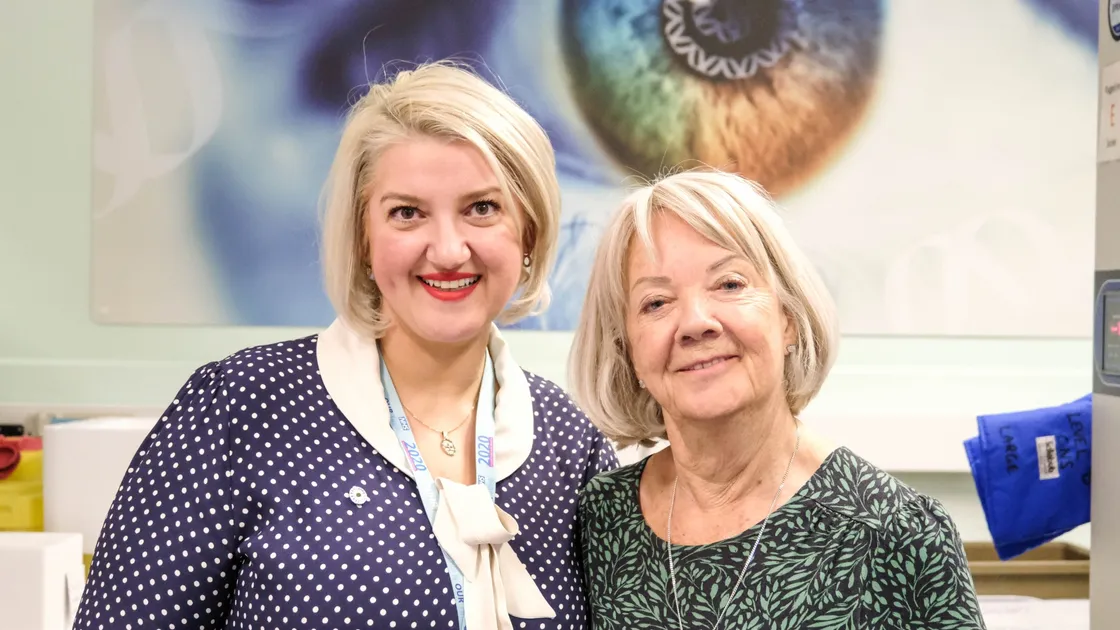
The research – a four-year project – is being undertaken by PhD student Maria Patsiamanidi, who will use AI and machine learning to analyse thousands of retinal images to better understand how age-related macular degeneration progresses from its early stages to the late, sight-threatening stage.
‘My research aims not only to help clinicians identify patients at risk, but also to translate these insights into clear, patient-friendly guidance, empowering people to take control of their eye health,’ said Miss Patsiamanidi. ‘I am incredibly grateful for the funding I’ve received, which allows me to fully dedicate myself to this work, access the best tools and resources, and collaborate with leading experts in the field. This support is not just enabling my research, it is helping me pursue a vision of turning cutting-edge AI into practical solutions that could improve vision and quality of life for millions worldwide.’
Age-related macular degeneration is the most common cause of blindness among the UK’s older population, affecting some 700,000 people.
By age 90, one in five people will have the condition, and, with life expectancy rising, these numbers are expected to grow. Despite how common it is, it is difficult to predict how an individual’s degeneration will progress, which has made sufficiently early intervention challenging for medical professionals.
Dame Mary has had a long-standing investment in people’s ocular wellbeing, establishing Specsavers – now the world’s largest privately owned eye care and audiology company – with her husband Doug from the island in 1984.
‘Research is the key to ensuring more people can keep their sight for longer,’ she said.
‘I am very proud to be supporting Maria and the experienced team in Southampton to find new and better ways of identifying AMD earlier.’





You need to be logged in to comment.