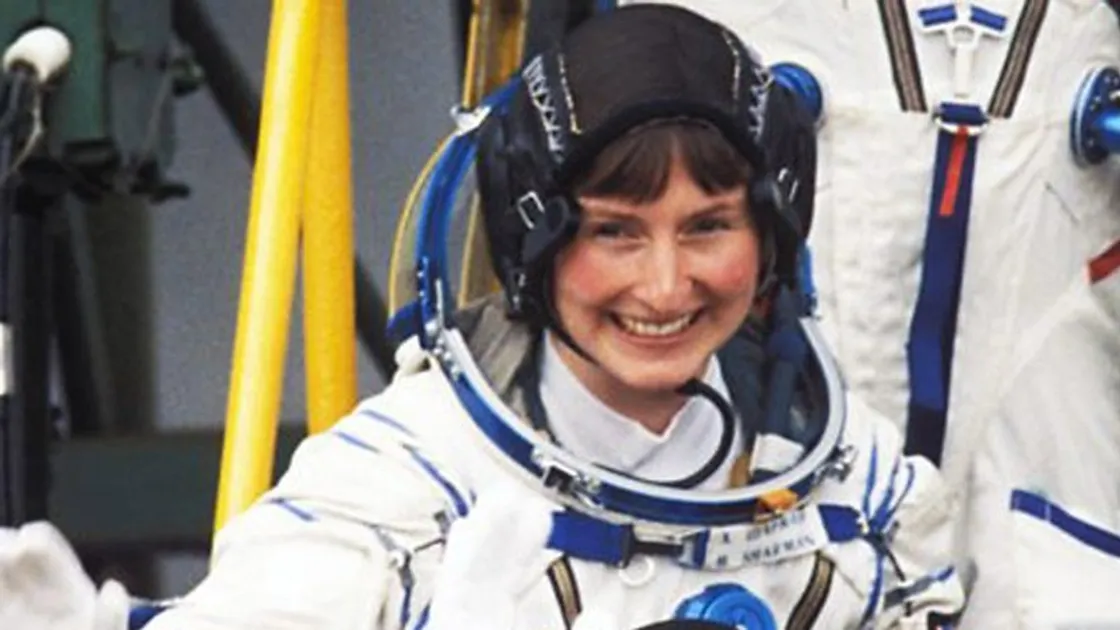
Becoming an astronaut was not even a prospect for Helen Sharman when she was at school – but at the age of 27 in 1991 she became the first Briton to travel to space and the first woman to visit the Mir space station.
Space travel was not possible when Helen was a child, and not something widely spoken about either.
‘It just wasn’t a possibility, it was not even there, it wasn’t on the horizon, it was not part of any agenda – nobody in this country talked about it,’ she said.
But a few years on, in 1989, she heard an advert on the radio for 'a new opportunity'. She applied, but with more than 13,000 people also giving it a go to sample this experience, she thought her chances of actually going to space would be very slim.
‘It initially was announced as this new opportunity. The application began by phoning a call centre, and the people at the end of the phone had been asked to ask us certain basic questions. They then sent out application forms and really then it was a fairly normal job application,’ she said.
‘It was a job that many people were interested in, and one that I thought I had very little chance of actually getting, but decided to have a go. If I didn’t have a go then there was zero chance, but also, because when you’re doing something quite different, you think about how you would be in those circumstances, and you learn a lot about yourself just from that act of applying.
'So I thought, “You know what? It’s not wasted, I’ll give it a go”.’
Helen was exactly the type of person the selectors were looking for – calm, practical, friendly, professional, a team player. Two people were chosen for the rigorous training but only Helen went into space.
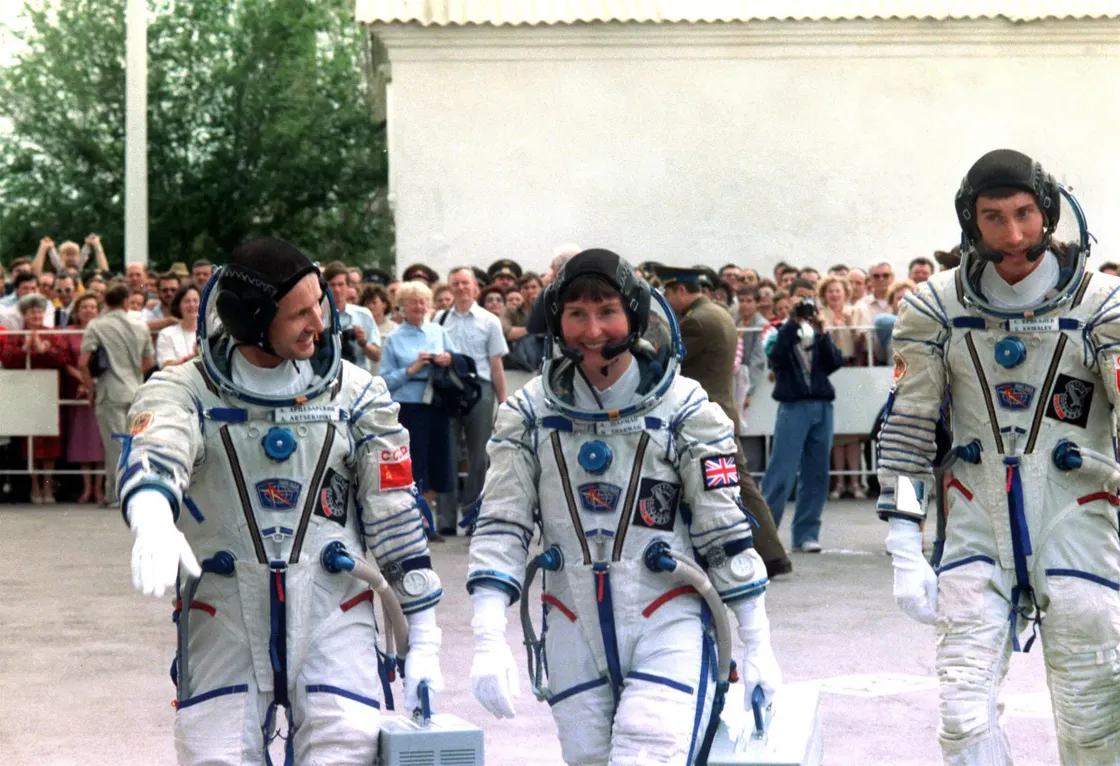
The selection process was rigorous, with psychological and medical assessments, as well as tests of her technical and practical skills. Once she had been selected Helen went through 18 months of intensive space flight training which started with learning Russian, preparing for feeling weightless and undergoing g-forces, learning how to cope inside a cramped space capsule, how to deal with a landing in the sea and training for all possible scenarios – positive and negative – which might happen when in orbit, travelling at 17,500 miles per hour.
Helen carried out spacecraft operations during the launch.
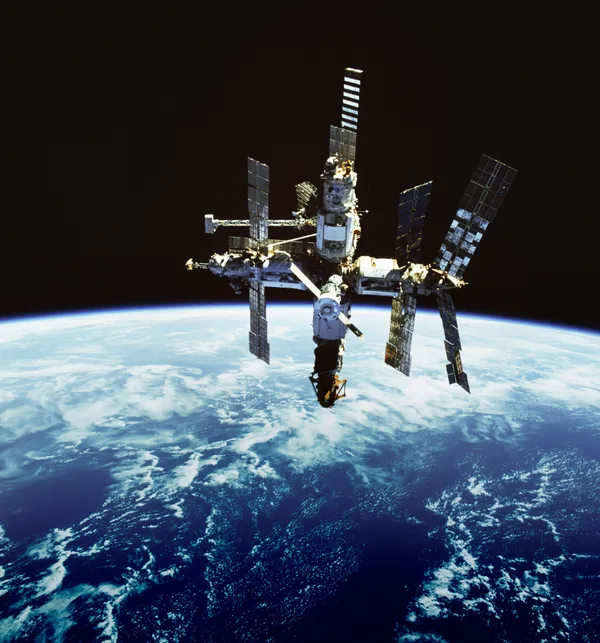
On board the space station, her tasks included medical, agricultural and chemical experiments, materials testing, Earth observation work, and operating an amateur radio link with British school students, as well as regular interviews with the media.
She orbited the Earth for eight days.
‘I think that feeling of not having an up or a down any more and of just floating is just natural, relaxing – it’s a glorious feeling. That, combined with all the things that you can do in space because of feeling weightless, and that camaraderie with the crew... You trust each other with your lives, they trust you with theirs, and you’re living in close proximity. You’re isolated from the rest of the world, so you’re relying on each other psychologically as well,’ she said.
‘And then of course you’ve got those views out of the window. Combine all of that into one space mission and you can’t really separate – well I can’t separate – any one of those in my mind. It’s just part of what my space mission was and something I’ll never ever forget.’
Helen has never returned to space, but still says she would love to go back and experience feeling weightless, the camaraderie with the crew and the view of the Earth and stars again. She said her time in space changed her outlook on the world.
‘What space really changed, I think, were my priorities in life,’ she said.
‘When you look back at the Earth, you think about the families, the friends that you have in certain parts of the Earth that you’re orbiting over, and it was then, when I got back from space, I realised that I had not once thought about material possessions and the stuff that I aspired to own – and that really set life into context.
‘It’s those personal relationships with our colleagues as well. That’s what makes life worth living. And it’s also what makes us, enables us to do all the things that we do on Earth. We really can’t operate as an individual. We’re relying on people in different ways to do so many different things.’
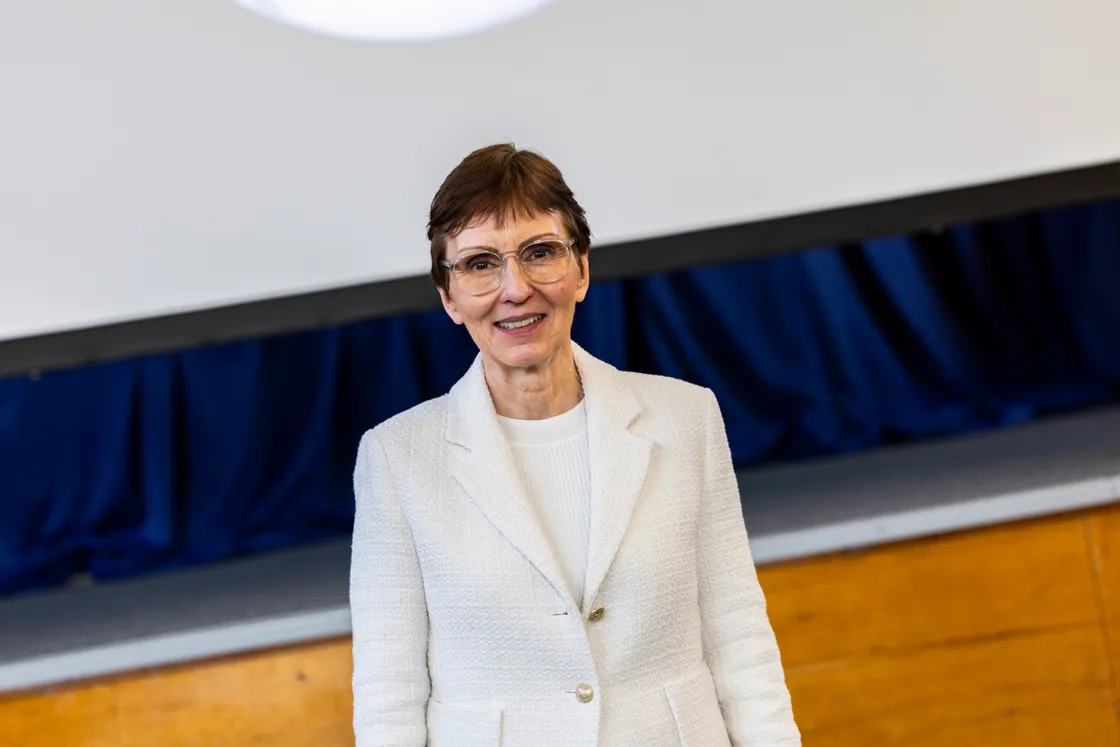
For the students who listened to her talk at the Sixth Form Centre to celebrate International Women’s Day and British Science Week, her best advice is to stay curious.
‘It’s a question of constantly seeking to find out and to want to know more about the world around them,’ she said.
‘Not only can they go into space, but they can do it in a number of different ways – they could pay for themselves and go as a tourist, they could go as a space agency astronaut, and there’s a whole load of other new opportunities coming up in between those two, where they’ll do it as part of their job.
'They might be paid by SpaceX, or another employer, because space is becoming that much more accessible.’