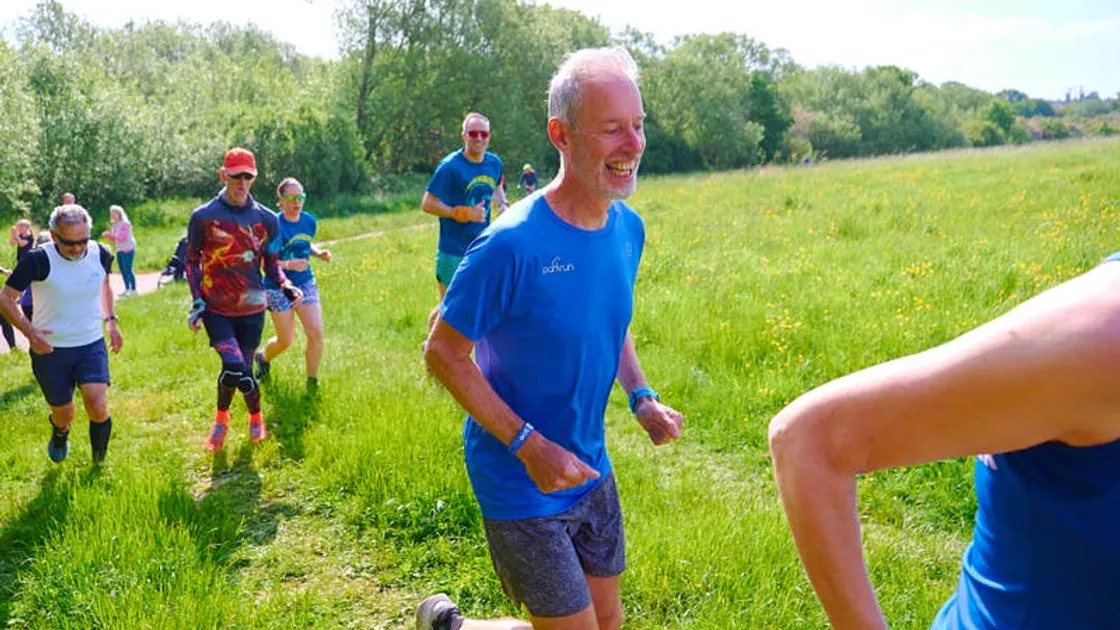
Paul Sinton-Hewitt came up with a simple idea. He would start a weekly time-trial run every Saturday morning in his local park. There would be no winners or losers, it would always be free and Paul would be there every week.
On 2 October 2004, 13 runners and five volunteers took part in the 5km run around Bushy Park in London. They did not know it, but they were taking the first steps on a journey that would become the worldwide running movement parkrun.
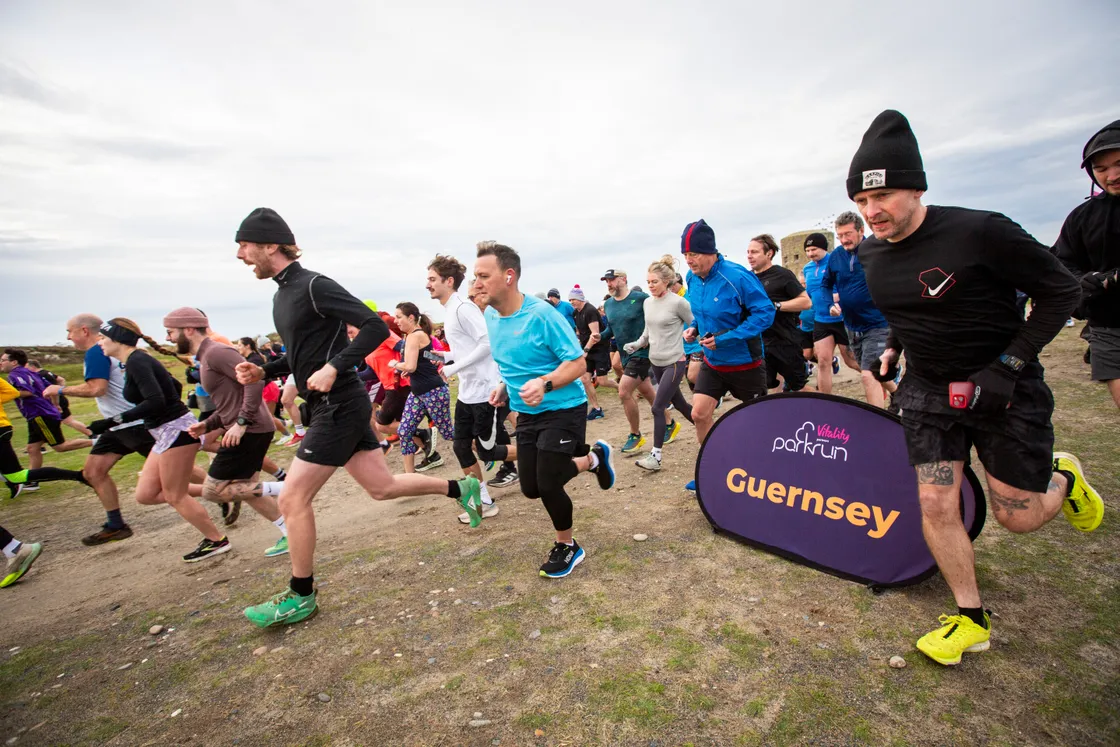
More than 20 years later it has grown into a global community of over 10 million runners, across 23 countries, participating at more than 2,600 weekly events, including one here in Guernsey.
Paul will be attending the Guernsey Literacy Festival talking about his book – ‘One Small Step – The Incredible Story of parkrun’.
The book chronicles a difficult start to life in South Africa, to how a love of running sparked a global fitness revolution that has seen participants in his event clock up enough 5ks to run around the Earth more than 13,000 times.
‘It is a phenomenon, nearly half a million runners every single week,’ he admitted. ‘I’m just an ordinary guy, there was no time in my life when I thought I was going to be exceptional at anything, or that I would account for anything more than the average guy who worked hard, hopefully have some wonderful adventures along the way with people that he cared about – that would have been enough for me.
‘The whole purpose of writing the book was to try and explain how it was possible for a very ordinary person, not just come up with a very simple idea, but actually to execute on it.’
The mechanics of running a charity that now operates on five continents were very far from his mind on that blustery day in south-west London.
‘We started very small and I had very low expectations. It was all about me and my friends in the park on a Saturday. Over the years I had to embrace all of it. If you think about the organisation and the cost of delivering that, it’s quite extraordinary, it isn’t chicken feed anymore and it’s no longer run from my garden shed. We have people throughout the world who are employed to make sure that we do this safely, we do it well, that we generate an income, all those sorts of things.’
He added that there were many professional organisations and sporting bodies who offer events around the world, who could have done this, but never ever did.
‘There are some characteristics that I think I have which possibly come from adversity, from the way I was born and grew up, and the situation that I went through which led me to a set of beliefs and possibly ethical views, which meant that I was very dogged in making sure that parkrun stayed free forever for everyone.’
Paul started running early in life, growing up in difficult circumstances in South Africa, where at the age of just five he was made a ward of the state and entered the boarding school system.
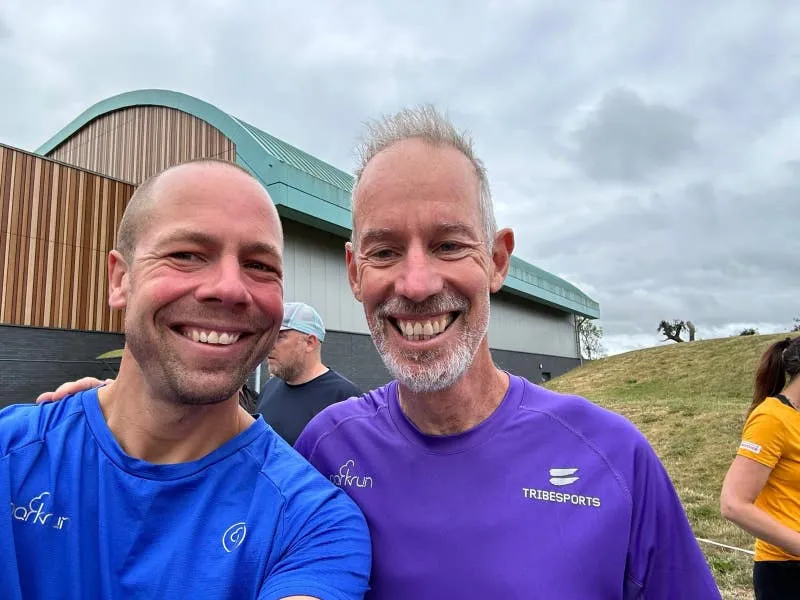
‘There were some very early periods at school and boarding school where I was allowed to leave the premises and go for a long jog out into the streets and those were treasured moments of freedom.
‘I was free and I was able to be on my own and that was cool. But later on in life, I realised that those are the moments when I sort of rebalanced the books. If I was going through some form of hardship, I was able to understand the hardship, perhaps work out how to deal with it.
‘And so there were very early signs that running for me was not just something I was good at, but it was something that helped me resolve mental health issues. Obviously, in the 80s, we didn’t call it mental health, we didn’t have a name for it, It was just the stress that I was facing and having to deal with.’
It is obvious that Paul is not a huge lover of publicity and has promised that ‘one small step’ will be his first and also last book.
‘This book is about, “why me?” How is it possible that an ordinary person was able to create something so incredibly wonderful, so global? That’s what this is about. I’m a private person. I don’t really want to be in the spotlight, and absolutely don’t feel I need to be. The longer parkrun continues, the more we’re able to attract brilliant people into the organisation, the less I will be involved.’
The book was written alongside author Matt Wyman, who Paul now describes as a very good and close friend.
‘We talked about things for six months at least, I think it’s enough and nobody wants to know more. I don’t think I really want to put my head above the parapet again. I don’t think I really have a lot more to say to the world. It gives people some sense of why I did what I did. I didn’t particularly want to share all the gory details of how I got there, but it was cathartic to go through the past, a bit like therapy.’
Once you start parkrunning there is a tendency to become a little obsessive about your time and how many you have done (I’m at 122 and counting at a meagre three locations).
Meanwhile Paul has participated 609 times, volunteered 300 times and attended more than 280 locations. He will be adding another to his list when he attends Guernsey parkrun for the first time the day before his talk.
‘Generally speaking, I don’t tell people I’m coming. I do it just like everybody else, and then at the end of the event, I’ll go and say hello to people. I think because this is a one- off as I am coming for the festival, they probably know I’ll be there.’
Despite his reticence and dislike of publicity he said he was fine with the almost hero worship that came with starting the movement.
‘I do understand the position that I’ve created for myself, and it’s an honour, really. There isn’t a week that goes past where I am not told about somebody’s life-changing event that involves parkrun. It is extraordinary, and I’m very pleased to meet people and to chat with them.’
The UK is now home to over 900 weekly events, but other countries are catching up, with almost 100 in the US, 50 in Japan, and more than 200 in South Africa. Paul said that growth was inevitable and will probably grow to be twice as large in the next five years.
‘I’m very proud of the fact that it does what it does, the fact that you said, how much it means to you personally – that tells me everything I need to know – it tells me that we’re still doing good stuff, that we’re not over complicating, that we don’t have the big corporate view of what it is we do.’
Now aged 65, Paul still find exercise helps, although running has to be put to one side.
‘I’m now somewhat arthritic – both my knees are a problem – I try to do a parkrun every week, but my running days are really over. I do do some cycling now, so I still have the principles of doing some exercise out in the open with friends, and maybe a little bit of adventure at the same time, those principles still stand. Parkrun on a Saturday morning is definitely something that helps me turn a corner every single week.’
Paul Sinton-Hewitt will be speaking on Sunday 3 May at 12 noon at St Pierre Park Hotel. Tickets are available at www.guernseyliteraryfestival.com/