I’m a child of the 80s. When I think back to my tween and teen years, the most vivid images that spring to mind are my roller boots, my Walkman and the family’s video recorder. I was wired for sound, in the groove and able to watch whatever incredibly strange stuff Channel 4 pumped out in the wee small hours at my leisure the next afternoon. It’s thanks to Maxell blank VHS cassettes that I first saw Eraserhead and Brazil. Good times.
I tend to get most nostalgic when the summer arrives. May is when, along with tights and jumpers, I pack away the podcasts that got me through the winter months, and reach instead for the tunes that made me happy in the 80s. It’s an eclectic mix, taking in REM’s early stuff, pre-SAW Bananarama, Lloyd Cole at his moodiest and Paul Simon’s masterpiece, Graceland.
Film fans will be delighted to learn that Cult Movie Guernsey will be showing Grosse Pointe Blank at The Mallard on Thursday 4 June. While rewatching this recently, it struck me that I’m not the only one whose musical taste, forged in the 80s, persists until today; films made well after that decade often draw on its music to enhance key scenes. Here are just a few of my favourite examples:
Where Is My Mind? (Pixies, 1989) – Fight Club (1999)
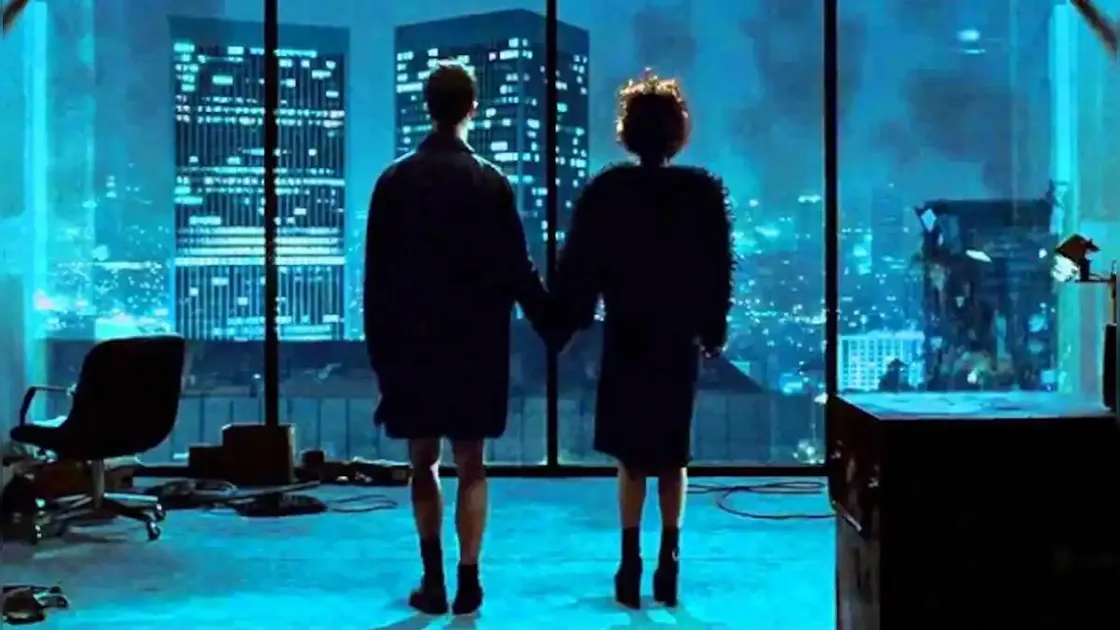
I know Fight Club gets a bad rap these days because it can, if you squint, be read as an incel manifesto, a harbinger of so much of the social and political disharmony we see around us. It’s not, though: it’s a love story, and nowhere is this more obvious than in the final scene. Tentatively, ‘Jack’ (Edward Norton), having destroyed his nemesis, Tyler Durden, (Brad Pitt) reaches for the hand of his lover, Marla Singer (Helena Bonham Carter.) As the financial district of the city collapses around them, ‘Jack’ turns to Marla and softly reassures her, ‘You met me at a very strange time in my life’, as if to say it’s all going to be okay from now on. This plays out to Kim Deal’s melodic howling and Frank Black cooing, ‘With your feet in the air and your head on the ground/Try this trick and spin it/Your head will collapse if there’s nothing in it/And you’ll ask yourself/Where is my mind?’ Lovely stuff. Given the frenetic pace of the rest of the movie, this lo-fi grunge ending is perfect.
Hip To Be Square (Huey Lewis and the News, 1986) – American Psycho (2000)
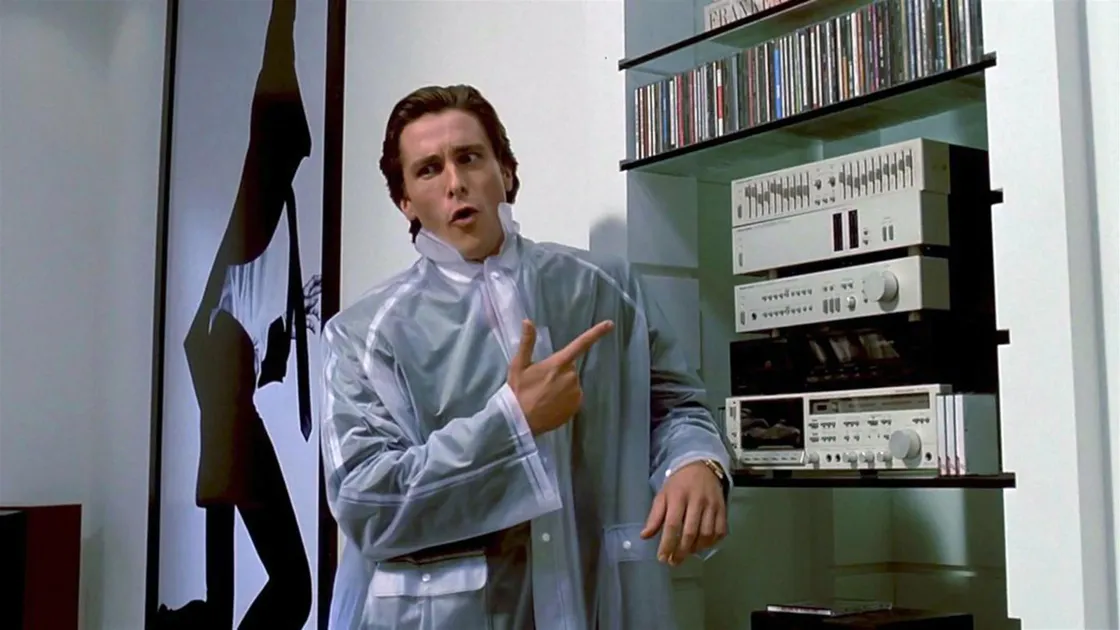
Christian Bale does a grand job here of embodying Patrick Bateman, the awful, murderous yuppie invented by Bret Easton Ellis. In one particular scene he is entertaining fellow awful but non-murderous yuppie, Paul Allen (Jared Leto) and describes in enthusiastic detail why this cheesy, dad-pop song is so darn good. While he tries to persuade Allen that the track has a ‘sheen of consummate professionalism’ he bounces around his minimalist apartment, putting on a waterproof mac before smashing Allen’s head in with a shiny new axe. The juxtaposition between Bateman’s inoffensive, beige, Radio 2 music taste and his bloodthirsty destruction of the poor guy makes for quite the watch.
Smalltown Boy (Bronski Beat, 1984) – Pride (2014)
Now and then the UK produces a film which, though ostensibly about a small group of people who are thrown together because they live in the same town, work at the same place or have the same hobby, actually paints a picture of wider society at the time more vividly than any documentary could. Brassed Off is a good example, as are The Full Monty and This Is England. One of my favourites is Pride. Set during the 1984–85 UK miners’ strike, the film follows a group of London lesbian and gay activists who form an alliance with a struggling mining community in Wales. Calling themselves ‘Lesbians and Gays Support the Miners’, they raise money to support the strikers and travel to Wales to deliver it in person.
At first, the miners and their families are wary and even uncomfortable with the group, but over time both sides begin to understand one another. Through shared experiences of prejudice and hardship, they form an unlikely but powerful friendship. The film charts how this alliance not only helps the miners materially, but also leads to lasting political solidarity, culminating in the miners later supporting gay rights.
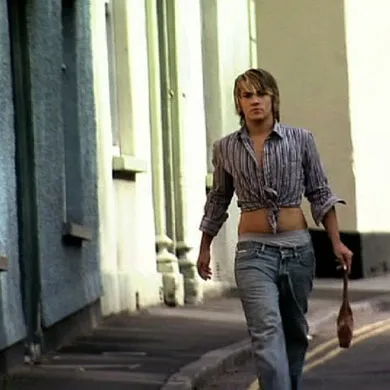
The brilliant Bronski Beat track is used over a touching montage about Joe (George MacKay.) The sequence shows the growing strain between Joe and his parents, whose rigid, homophobic attitudes make home feel increasingly hostile. Joe becomes more withdrawn until he gathers his belongings and leaves, stepping out into an uncertain future. The montage follows his journey away from home and towards London, capturing both the pain of exile and the fragile hope of finding acceptance elsewhere. Jimmy Somerville’s falsetto and the driving disco beat of the song are compellingly at odds with the pathos of the lyrics: ‘You leave in the morning with everything you own in a little black case/Alone on a platform, the wind and the rain on a sad and lonely face/ Mother will never understand why you had to leave/The love that you need will never be found at home.’
The sequence closely and deliberately mirrors the video that accompanied this song, and reminds us just how difficult it was (and still is in huge swathes of the world) to live as an openly homosexual person.
Holiday (Madonna, 1983) – The Wedding Singer (1998)
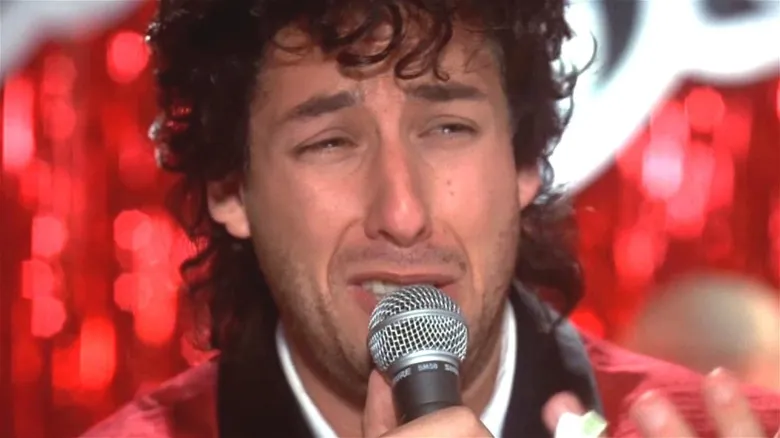
This romcom starring Adam Sandler and Drew Barrymore starts off about as bleak as it can get. Sweet, loveable Robbie (Sandler) is dumped at the alter by his fiancee, Linda (Angela Featherstone). Eventually, of course, he ends up happily ever after with Julia (Barrymore off of ET), but not until he’s gone through a whole heap of heartbreak. It doesn’t help that his job is as a singer in a band that plays at all kinds of events (anniversaries, bar mitzvahs, etc) but specialises in weddings.
There are plenty of banging non-diegetic 80s tunes in the film (99 Red Ballons, China Girl, White Wedding, Pass The Dutchie…) but one of my favourite scenes involves a heartbroken Robbie singing Madonna’s floor-filler, Holiday, at Cindy and Scott’s wedding. His rendition is a far cry from Queen Madge’s original and sees Robbie mournfully wailing the lyrics through his sobs. The bride and groom look on, aghast, as Robbie’s voice becomes shakier and tears start to spill from his eyes. His backing band, including Alexis Arquette on keys, gamely doing his best Boy George impression, try to lift the mood, but to no avail. Just as Linda ripped Robbie’s heart out of him, so Robbie ripped the life out of this song, and it’s hilarious.
White Lines (Grandmaster Flash, 1983) – Shaun Of The Dead (2004)
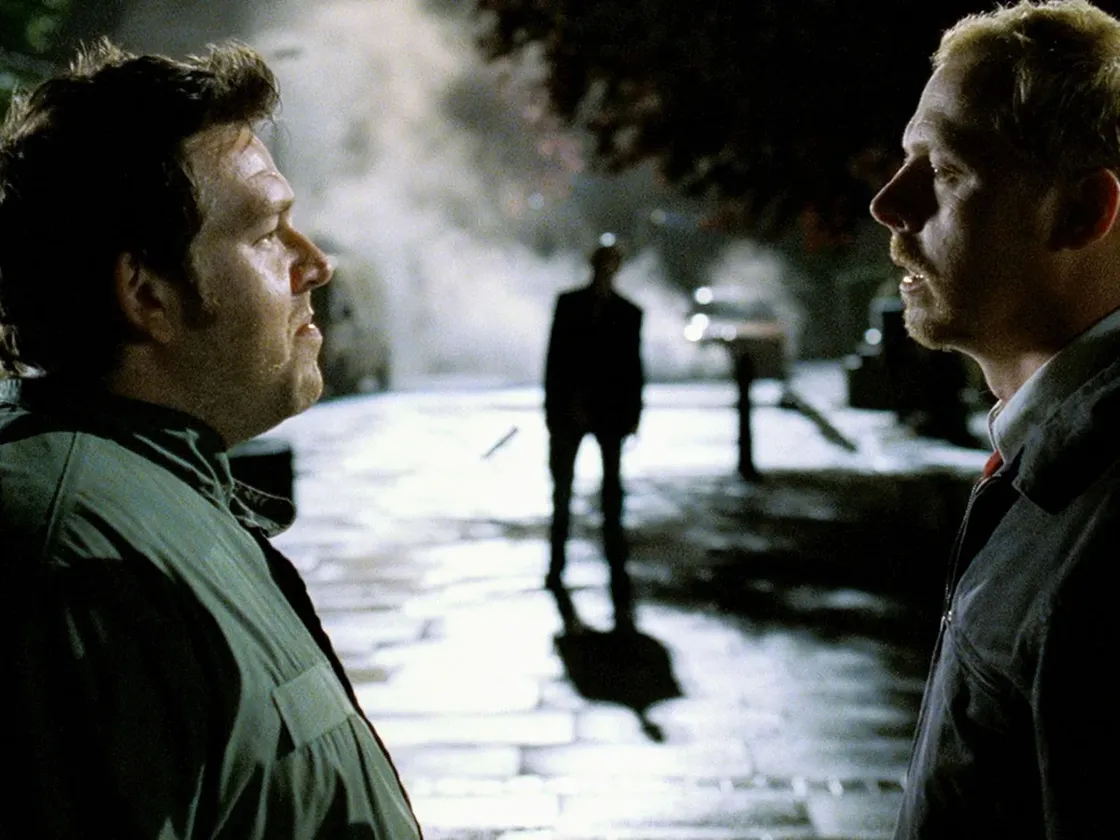
One of the funniest things about this film is just how long it takes Shaun (Simon Pegg) and his idiot best friend Ed, (Nick Frost) to realise that they are in the middle of a zombie apocalypse. Recently dumped by his girlfriend, Shaun spends the evening with Ed, drowning his sorrows in The Winchester, his local boozer where the film’s climatic battle later takes place. On their way home, way past the official closing time, thanks to the landlord’s fondness for lock-ins, they ignore the signs about keeping the noise down, and decide that singing the hip hop, old school rap, electro classic about the perils of taking drugs will be a suitable serenade for the local residents. At perfectly-timed intervals, a nearby zombie joins in with the gaps in the bassline. Unimpressed by his vocal stylings, though, the hapless pair merely criticise him for sticking to just the one ‘Urghhh’ sound each time, rather than mixing it up with, say ‘Base!’ or ‘Freeze!’ It’s the perfect encapsulation of Shaun, the man-baby, endlessly replaying his teen years, oblivious to the reality around him. Reality soon bites, though, literally in the case of most of the main cast, and Shaun is forced to grow up pretty fast.
If, after reading this, you’re in the mood for getting on down with your bad self to some banging choons, might I suggest you look no further than The Fermain Tavern on Friday 3 July. Tim and Daisy, Guernsey’s premier DJ duo, will be treating boppers to an evening of the best tunes from that decade and beyond. Come along, swing your pants and get into the groove.