We have all seen them while driving down La Vallee, St Peter’s, in their field or standing steadfastly on the granite cliff face. Some of us may have even bottle-fed them with our children or dropped off a Christmas tree for them to feed on over winter.
But how many of us know that the Royal Golden Guernsey goat currently faces a serious threat of extinction due to a critically small gene pool?
The royal title was bestowed upon them by King Charles during his Guernsey visit in 2024. In October last year, the first Royal Golden Guernsey Goat Symposium was held at Government House, where conservationists, farmers and international breed societies agreed that the survival of the native breed depends on urgent, coordinated action.
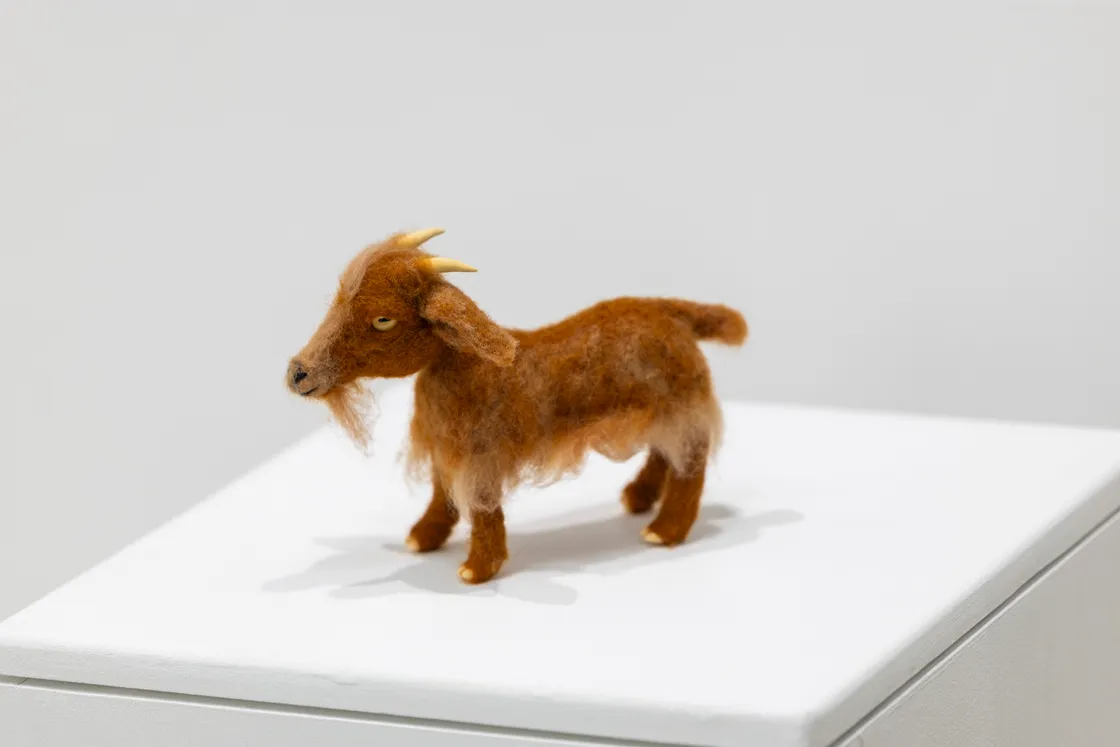
‘Jock [Pettitt, Art for Guernsey’s curation director], as he is a farmer in his own right with The Soil Farm, was at the symposium,’ said director David Ummels. ‘This was when we realised we must do a show.
‘AFG has always applied art for the greater good of the island. The goats are known by everyone. Even after 11 years of being in Guernsey, I didn’t know they were in danger. Today their number stands around 70. We needed to create awareness of something that is very precious.’
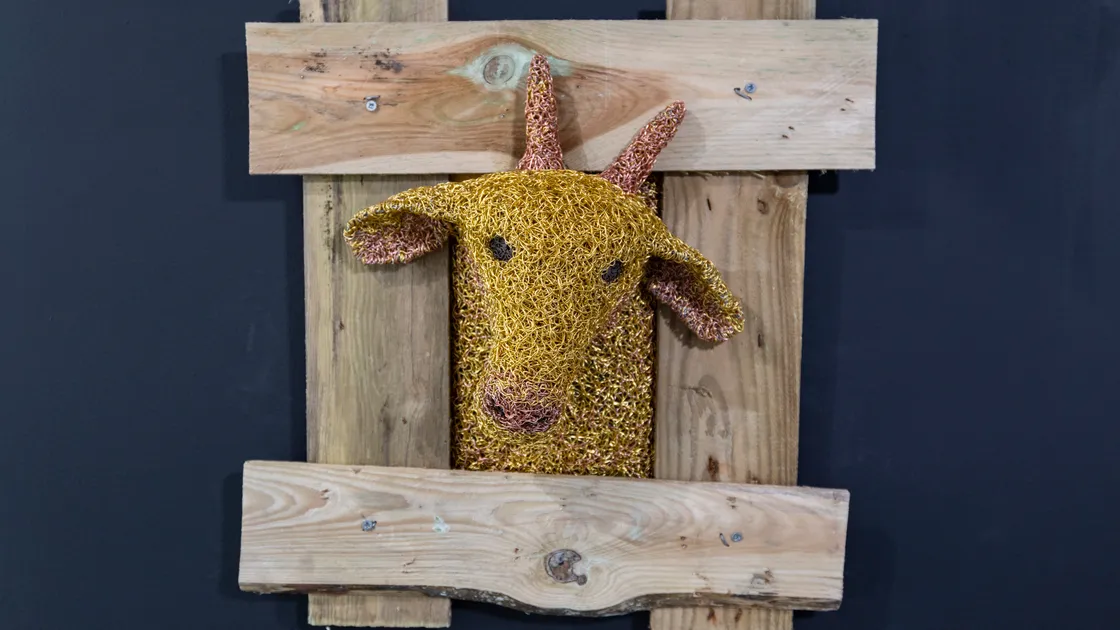
Earlier this year AFG put out a call for artists to submit their Royal Golden Guernsey goat-inspired work.
‘We have more than 50 artworks in the exhibition and they are all for sale,’ said David. ‘The artists are giving part of the proceeds towards the protection of the goats.
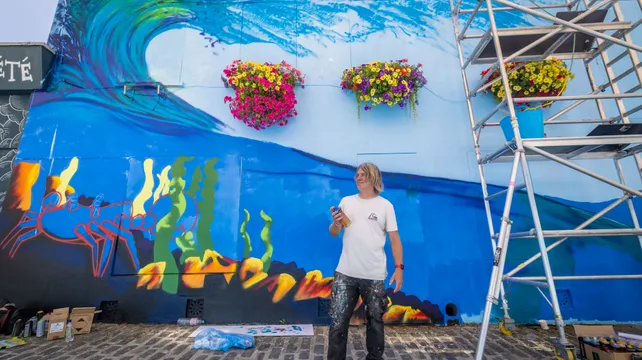
‘We also asked Charlie McFarley, graffiti artist and a great friend of AFG, who has exhibited with us many times, to design a goat cartoon which we distributed to schools and invited the students to colour. We’ve had 850 coloured goats back so they’ll be going up on the gallery walls.
‘I’m so proud of this exhibition. It’s a great way to bring attention to the goats.'
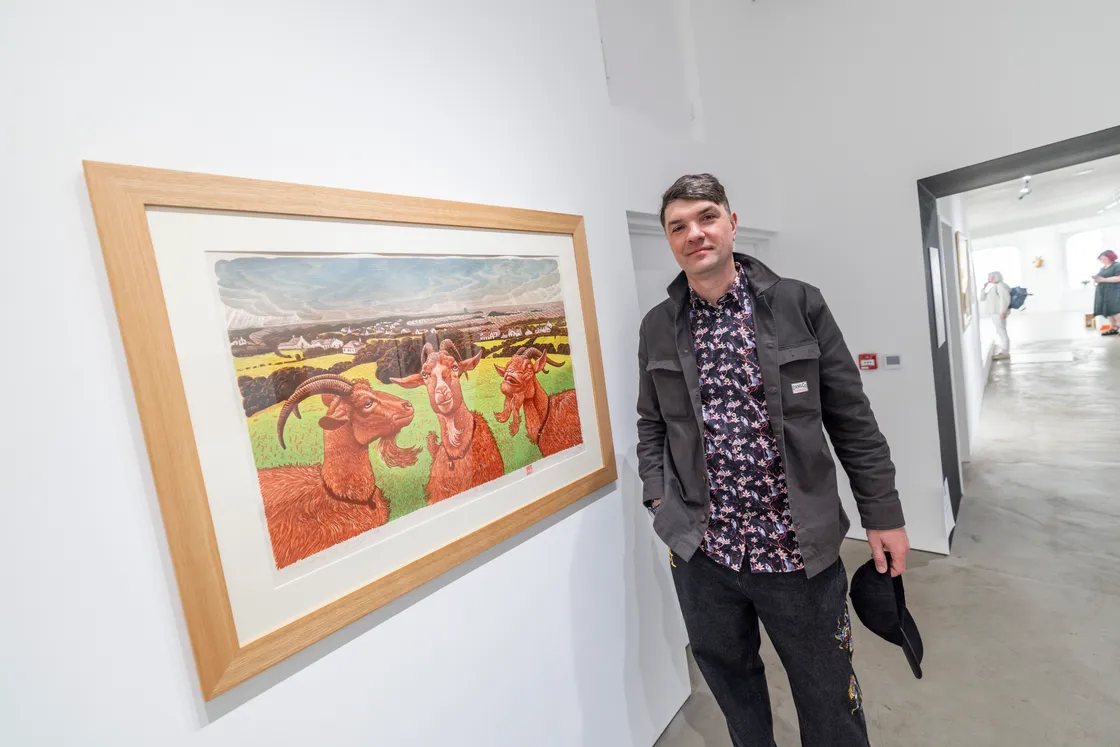
Another great friend of AFG, who has also exhibited many times at the gallery, is Oleg Mikhailov. He has several works in the exhibition.
‘They are all woodcuts, which is one of the oldest form of printmaking, and I use Fabriano cotton paper from Italy. They’ve been making paper since the 13th century – the Middle Ages.’
Oleg took photos of the goats on a previous visit to Guernsey.
‘I went to the goat farm and spent a day there. They are a society, real animal characters, like human relations.
‘I wanted to pay my respects to Guernsey nature, so as well as the goats I’ve added wild garlic, thistles and butterflies.’
The three separate portraits are called Horny Thinker, Queen of the Field and Thistle Song, and they are joined in two larger pieces called Guardians of Guernsey Fields. The backgrounds are panoramic views of the west coast.
‘I love the clouds – sometimes it’s rain coming down to the sea and sometimes it’s sunlight,’ said Oleg.
‘It’s the beads that I love,’ explained Hayley Mallett, a multi-media textile artist specialising in glass bead embroidery.
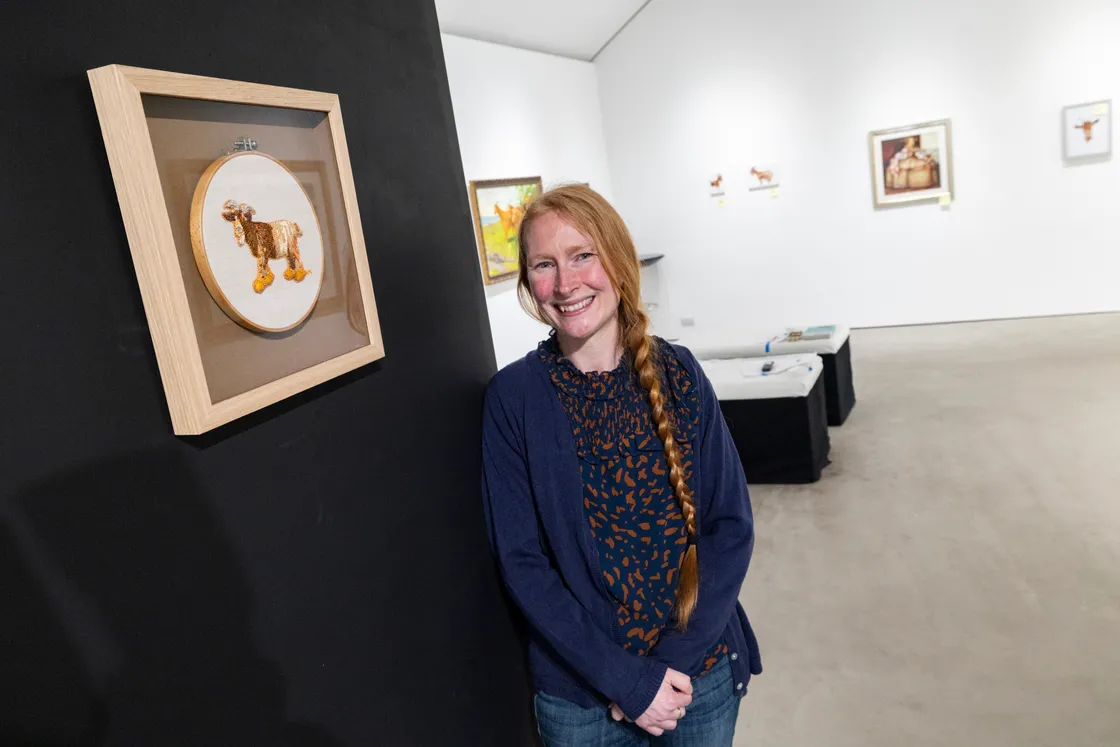
‘I draw the outline first – it happens quite naturally. This took a couple of weeks. I usually just do it in the evenings.
‘Sometimes I’ve been known to repurpose old garments and jewellery found in charity shops to use in my work. It gives it another life. That’s the bonus of textiles.’
This is Hayley’s first exhibition at the AFG Gallery.
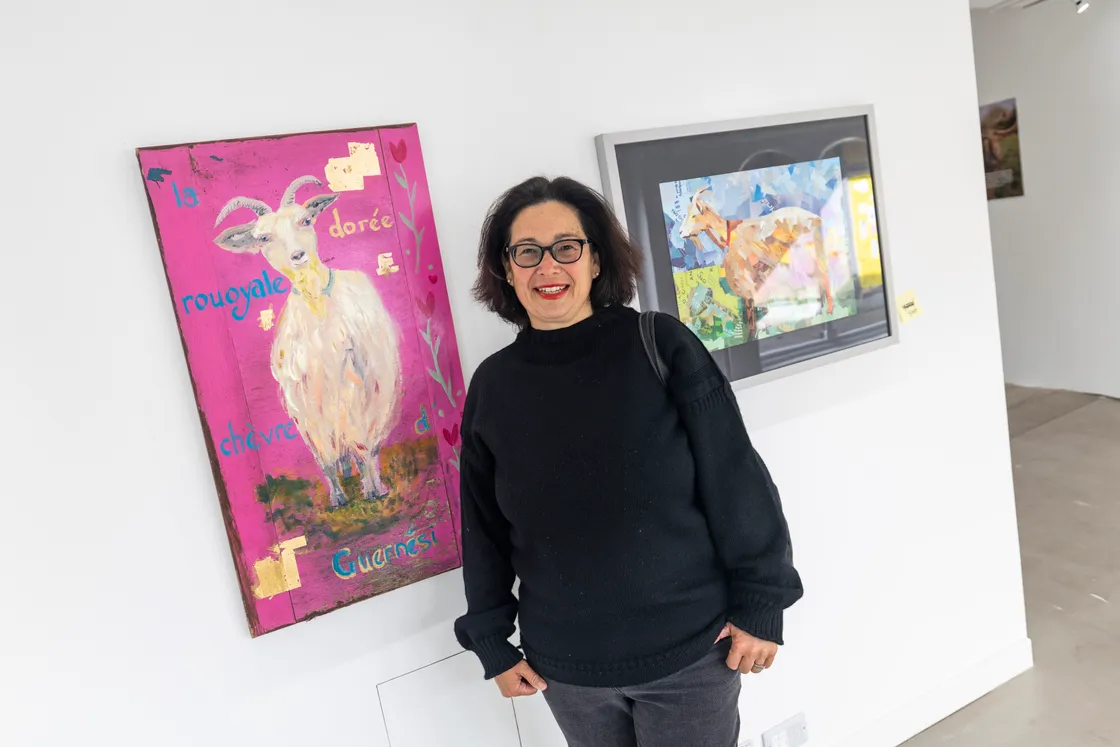
Lisa Upham has also repurposed.
‘It’s my old dining room table,’ she said. ‘I got inspired and painted it pink. I used acrylic.
‘My normal medium is pen and ink but I wanted to go down a more folk art route with flowers. And it’s the first time I’ve used gold leaf. For the goat I found a photo. I think he has an inquisitive face.’
Although fairly new to creating art, Lisa feels inspired to continue.
‘I find it relaxes me. I’ve also started going to St Peter Port Sketch Club. I went for the first time this year last night. You only draw for half an hour or so and then there’s the show and tell in the pub afterwards.’
Judy Porter has used an unusual – and yes, repurposed – medium for her goat portrait – glass.
‘It’s quite by accident. My husband said I should enter. I’ve been collecting sea glass for years. It’s nice and shiny when you collect it off the beach, then it goes dull, so I’ve had to varnish it. When it has tumbles, none of it is sharp.'
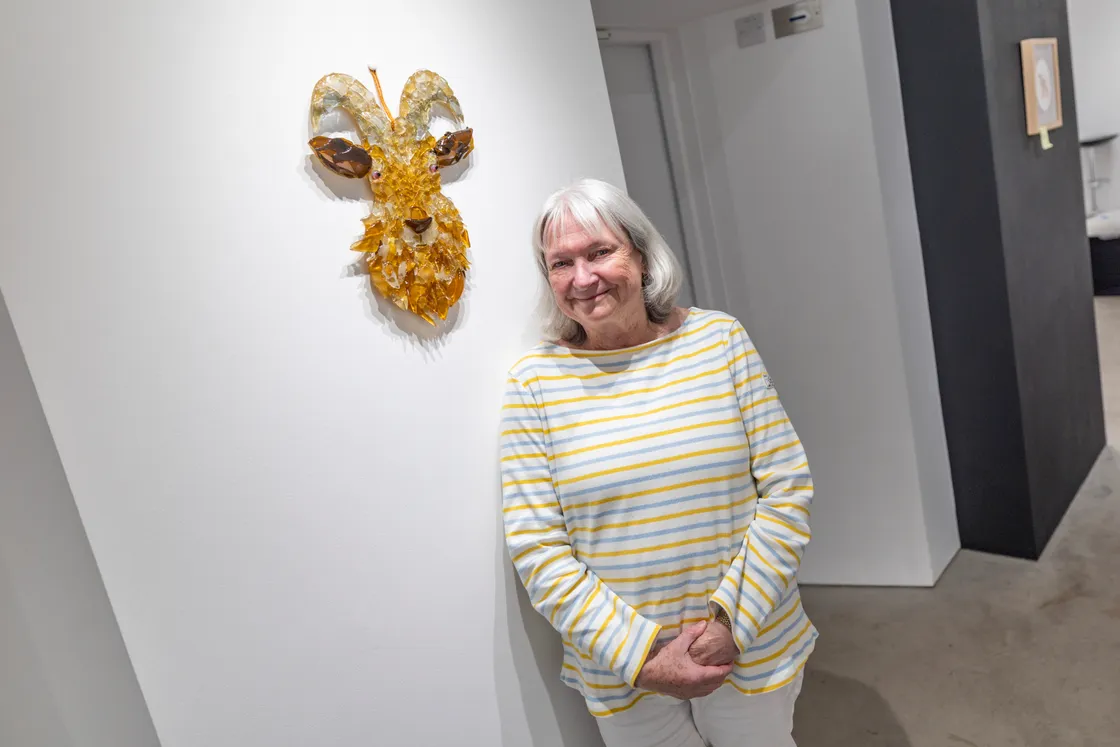
Well versed to creating, Judy used to run activities in a care home.
‘A lot of what I get is white or green glass but I did have some brown and amber bits. I didn’t have enough for the ears and nose so I went through the recycling and found one of my husband’s old Hawkstone lager bottles.’
Lyndsey Longson only began creating art a couple of years ago, such as pet portraits and her favourite bands like Blur and The Strokes.
'I use pastel and coloured pencil because I prefer dry medium as my office is my studio – I’m a developer by day.’
Lyndsey’s portrait is of a baby goat cradled in the arms of its owner.
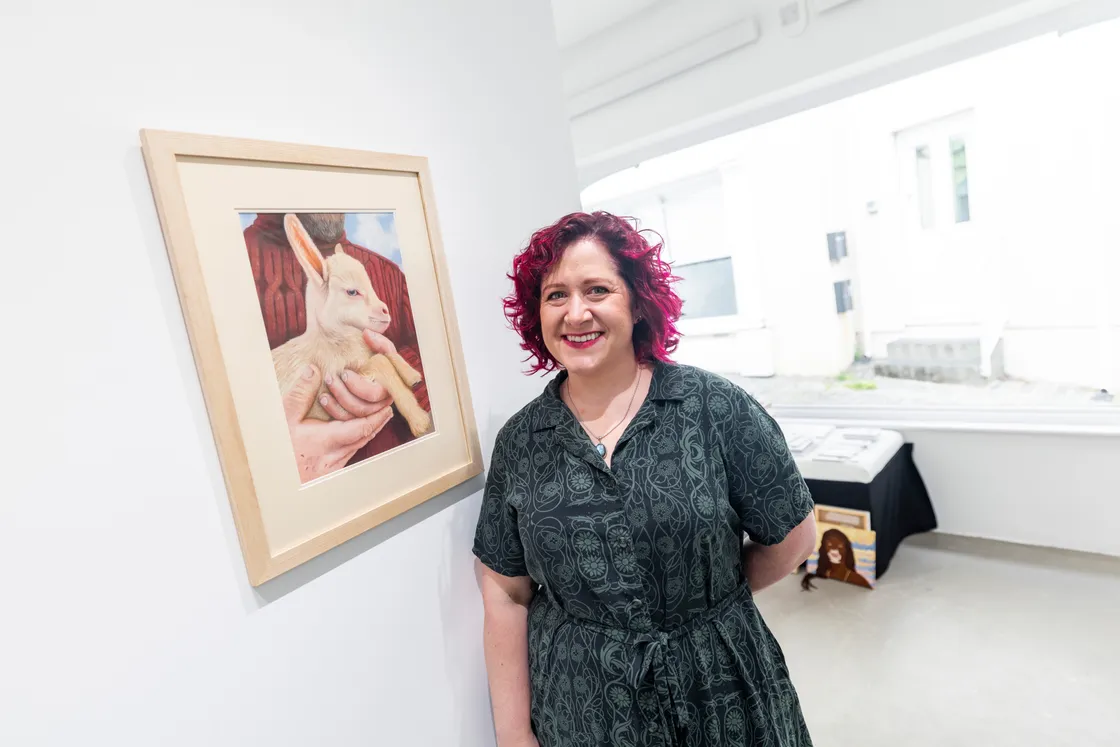
‘It’s from a photo. My daughter loves animals and I remembered a friend who had five Golden Guernseys. The goat in the picture is only 12 hours old. My daughter held it first and then my friend. I love the composition – his rugged hands holding the baby goat.’
Lyndsey loves being a part of the exhibition.
‘It’s a real honour and it’s really nice to meet the other artists taking part.’
Lt-Governor Sir Richard Cripwell was AFG’s guest of honour at the private view on 15 May.
Royal Golden Guernsey Goats is at AFG Gallery, Mansell Street until Saturday 13 June.
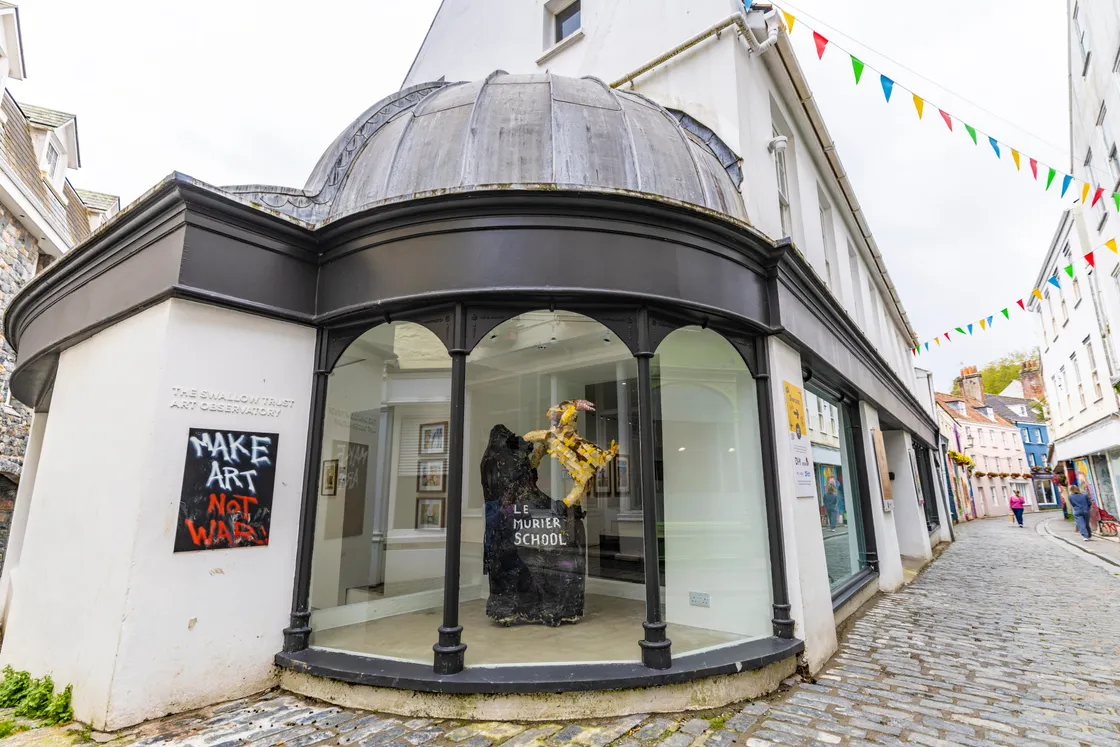
One of the artworks is Lily the Goat – last seen at the Eisteddfod – from Le Murier.
‘After learning that AFG was hosting an exhibition on the Golden Guernsey Goats, we began an observational project for our semi-formal students,’ explained Le Murier’s art lead, Lucy Brimage.
‘We invited Lily, a beautiful Royal Golden Guernsey kid from Soapy Goats, along with her kind owners Margaret and Bruno, to visit the school. Many students had a wonderful time getting to know her. The students later painted and created mini versions of Lily before we tackled the giant sculpture. The finished piece is named Lily after the goat who inspired the work.’
As the project progressed, more students across the school had a helping hand in constructing the piece.
‘Year 11 students helped with the foundations, building a mountain out of a stool and reshaping the wire to resemble Lily the goat. Semi-formal students were involved in the papier-mache and painting process, as well as weaving the goat’s coat. Many other students, including Year 7s, also helped with painting and other elements of this collaborative sculpture.
‘It took shape over several weeks at a steady pace, using materials including wood, wire, papier-mache and a huge amount of masking tape.’
Where will it go once the exhibition is over?
‘Le Murier holds The Everest Challenge every year, which is the primary fundraiser for the school. With Lily’s mountaineering skills, I think she will be well placed for this event.’