I particularly enjoyed listening to Thought For The Day on BBC Radio 4 this Monday as I drove into work. The Rt Rev. David Walker was discussing last Friday’s football match between Grimsby and Salford City. Two Grimsby goals were allowed that it later transpired might have been overturned if VAR (video assistant referee) had been available. Not being a fan of VAR, the Bishop said that even as a Salford supporter he did not particularly resent the situation.
His point was broader than football – he reflected that ‘there comes a stage where the pursuit of absolute perfection starts to interfere with the ability to do good’. He went onto discuss the famous quote from G K Chesterton: ‘If a thing is worth doing, it is worth doing badly.’ Not carelessly or lazily, but imperfectly. The point is that worthwhile things are often abandoned because people feel they cannot do them perfectly.
The problem with ‘starting properly’
Health behaviour change is full of this trap. As a GP, I have conversations every day advising people about stopping smoking, losing weight, weaning off potentially addictive medications or cutting down on alcohol. The problem is that doctors and patients often approach change as an all-or-nothing exercise. Patients may leave the consultation with plans for the perfect diet, an intense exercise regime, or an agenda to quit smoking or alcohol as soon as the next Monday comes around. Then life intrudes: a stressful week, a skipped gym session, a cheeky takeaway, a weekend cigarette after a smoke-free week… very quickly the thinking becomes: ‘I’ve failed.’
The change cycle: why relapse is normal
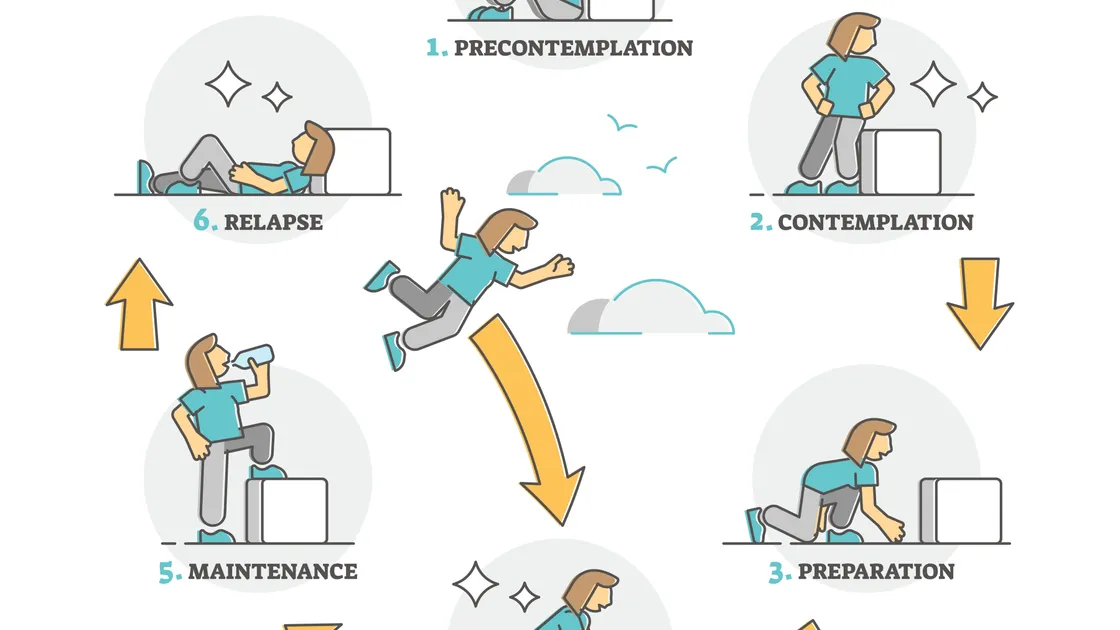
Psychologists sometimes describe behaviour change using the ‘stages of change’ model – not as a straight line, but as a cycle people move around repeatedly.
The first stage is precontemplation – not yet recognising there is a problem, or simply not ready to change. A smoker may know smoking is unhealthy but feel stopping is impossible or irrelevant right now.
Then comes contemplation – beginning to think seriously about change. This is the stage of ‘I know I probably should…’. People may spend months here weighing up pros and cons.
Next is preparation – buying nicotine replacement, joining a gym, downloading a couch-to-5k app, or deciding to reduce alcohol intake. The intention is there, but the new behaviour is not yet fully established.
After that comes action – actually making the change. Stopping smoking. Walking regularly. Improving diet. Taking medication consistently.
Finally comes maintenance – sustaining the new behaviour long enough for it to become part of normal life.
The important point is that relapse is built into the model. It is not viewed as failure, but as a common and expected part of the process. Most people do not move neatly from stage one to stage five in a straight line. They circle back, regroup and try again. Research has shown that the average smoker makes seven to 10 attempts before finally quitting long term. The same is true of weight loss, exercise habits and addiction recovery.
10 practical strategies for successful change
So, what can we do to help us with making sustained healthy changes?
1. Make changes small enough to be realistic and compatible with day-to-day life.
2. Break the goal down into small, hyper-specific actions.
3. Write your goals down – the act of moving a goal from your brain to paper is powerful.
4. Find a supportive person or group – your ‘cheerleaders’– and keep yourself accountable to them.
5. Aim for consistency over intensity – small changes, repeatedly daily.
6. Cultivate your environment to work with you – think about how to set up your living and working places to make your change easier.
7. Track your progress – for example in a diary or on an app.
8. Expect setbacks in advance rather than treating them as disasters. Reframe slip-ups as learning opportunities – assess what triggered a slip, adjust your strategy and jump back into the cycle again.
9. Always focus on direction of travel rather than daily perfection.
10. Celebrate your milestones!
No VAR in general practice
The bishop reflected how this acceptance of non-perfectionism applies to football officials – that referees make decisions based on what they can see in real time. Without VAR, they work with incomplete information, difficult angles, and limited seconds to decide. And most fans accept this fallibility (even while disagreeing loudly from the terraces or their sofas).
And his football analogy applies to healthcare here too. Patients understandably hope medicine provides immediate certainty – one symptom, one diagnosis, one correct easy answer with guaranteed success. In reality, GPs are often working with partial information. Symptoms evolve. Illnesses declare themselves gradually. Test results take time. Decisions are made using the evidence available at that moment, not with the benefit of hindsight.
That is not an excuse for poor standards or negligence. Medicine should absolutely strive for excellence. But there is a difference between aiming for high standards and pretending uncertainty does not exist.
Good healthcare depends on partnership. Patients monitor symptoms, return if things change, and help doctors build the fuller picture over time. Doctors apply their judgement and experience, order investigations wisely, and advise treatments as carefully as possible – all within the limits of the information available.
But, like football officials, clinicians are human. Some decisions will later look imperfect with the benefit of replay and hindsight. The important thing is not flawless performance, but honest effort, genuine communication, and a shared aim of moving in the right direction.
Whether in lifestyle change or healthcare provision, perfection is rarely attainable and often unhelpful. Better to accept that progress is usually incremental, occasionally messy and thoroughly human.
Such is good general practice. Just healthcare professionals and patients working together steadily towards better health.