Some people just get lucky, and John Andros Jnr got very, very fortunate back in the early 18th century.
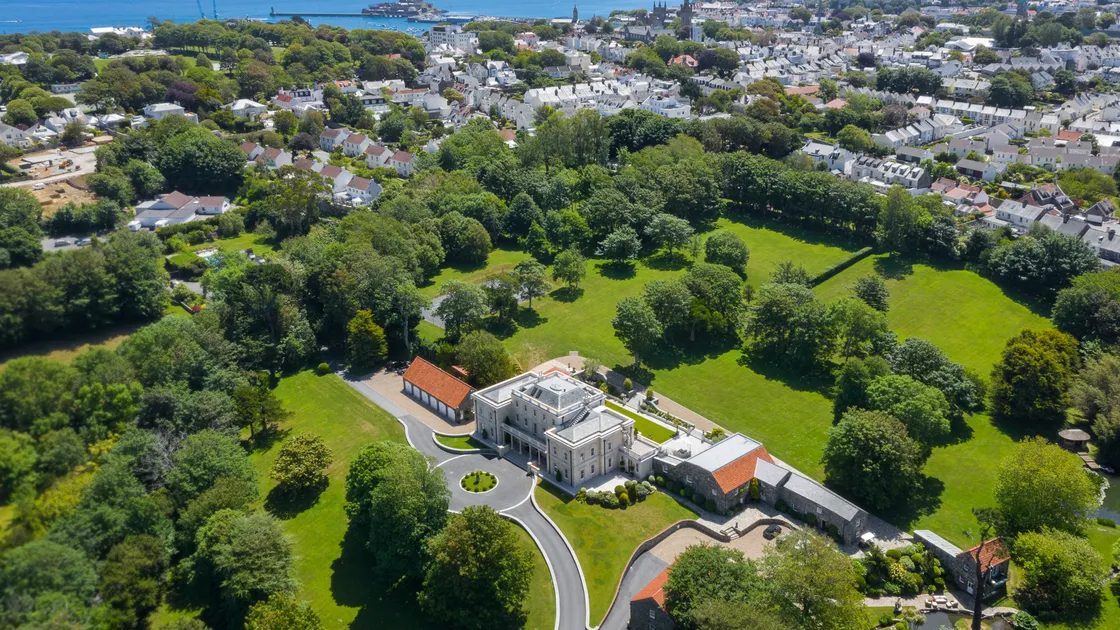
Not only did he inherit Sausmarez Manor, but also the even more grandiose Normanville, a property which has just sold as Guernsey’s second-most expensive home ever.
It is fair to say Normanville, and the land which it sits on, all 17 acres of it, has played an eminent part in island history, not least because for the best part of a century its grounds housed Caledonia Nursery, arguably the biggest and most celebrated nursery Guernsey ever enjoyed and, boy, once upon a time they had so much choice on that front.
In these hurried times of busy car traffic, it is easy to miss or, perhaps forget, Normanville’s existence.
The nurseries have long gone, as has its original main building, one which entered the 1950s with a main frontage facade covered in pears.
Yes, pears.
While up the road at nearby Rouge Huis the front of centenarian Miss Neve’s grand old house was covered entirely in ivy, the stonework of the de Putrons’ Normanville manor house was largely covered by fruit, which did not react very well when fire ravaged the place in 1959.
Normanville is tucked away in the road triangle of Fosse Andre, to the north, St Jacques to the south and the narrow Rozel lane to the west.
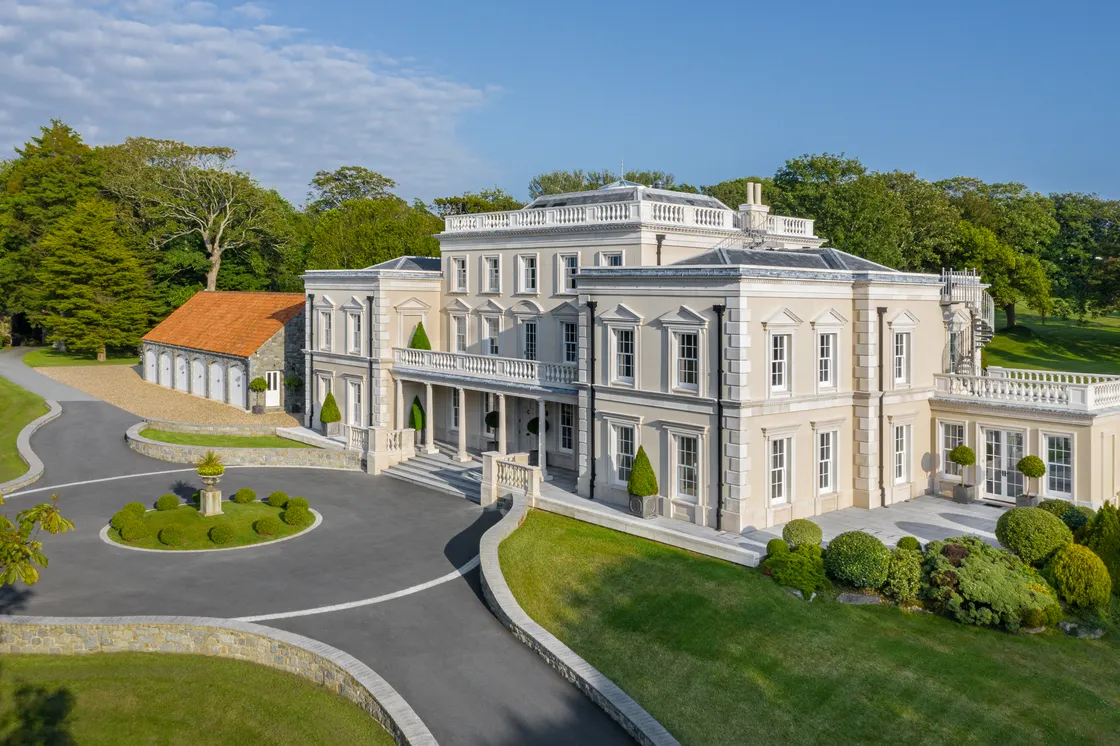
Inside stands a beautiful 21st-century mansion built with the money of the late Zef Eisenberg and then taken on by Guy Hands.
Normanville III has seven bedrooms, 10 bathrooms, an indoor swimming pool and leisure suite, private cinema and separate staff accommodation.
It also boasts a tennis court, lake and a woodland park wildlife sanctuary.
The property listing says it ‘is more than a home – it’s a legacy waiting to be continued’... ‘step into a world of timeless elegance ... a distinguished property steeped in Guernsey’s rich history since the 15th century’.
Indeed, the grounds are immaculate and you will not find a market bulb anywhere where once the Caledonia Nursery stock amounted to 100,000 plants.
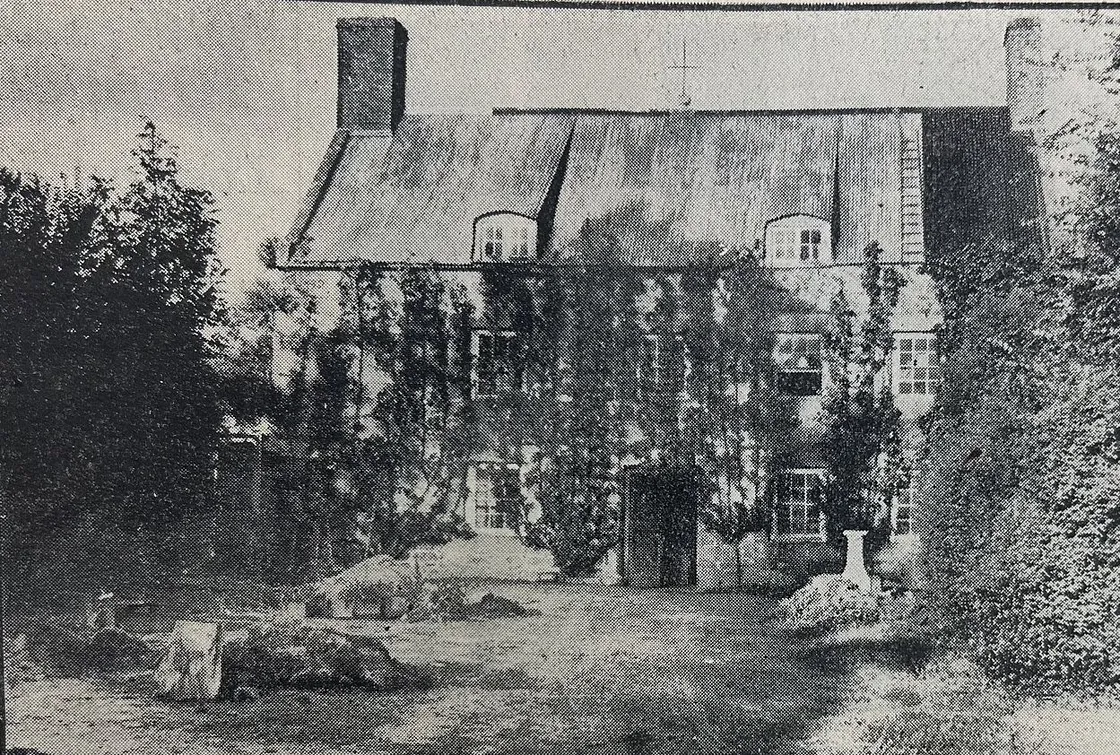
Trevor Cooper’s immaculately presented and highly informational ‘Mansion, Manor and Merchant Houses’ hardback tells the Normanville story, but relatively little of the nursery which botanist Charles Smith introduced to the grounds after his daughter, who had married into the de Putron family, moved in there during the very late Victorian era.
Smith, originally from Worplesdon in Surrey, had previously established Caledonia Nursery across the road at La Couture.
Normanville, though, offered even greater space to expand Caledonia and Smith, who had been moved to the island by his father on the grounds of the then 19-year-old being ‘delicate’, quickly set about proving otherwise.
Smith’s father was a timber merchant and his knowledge of Guernsey stemmed from an association with General Slade, the Lt-Governor living at Castle Carey.
For a time young Charles worked in those Castle Carey grounds and its finer view than any other island garden, but then set up his own small nursery at the Fosse Andre on land he rented from the Andros family.
Bit by bit, Smith expanded to the point when he could afford to buy the whole property, which then covered about 70 vergees.
At first he combined plant raising with farming, but so successful was the former that he sold his entire livestock and legend has it that he was one of the first islanders to export an entire herd of Guernsey cows.
There is also a suggestion that the famous bovine mark of the Royal Guernsey Agricultural and Horticultural Society symbol is one of Smith’s heifers brought from Mr Giffard of Braye du Valle.
From her were bred Vestas (cows) and Vulcans (bulls) which became celebrated in the UK and overseas.
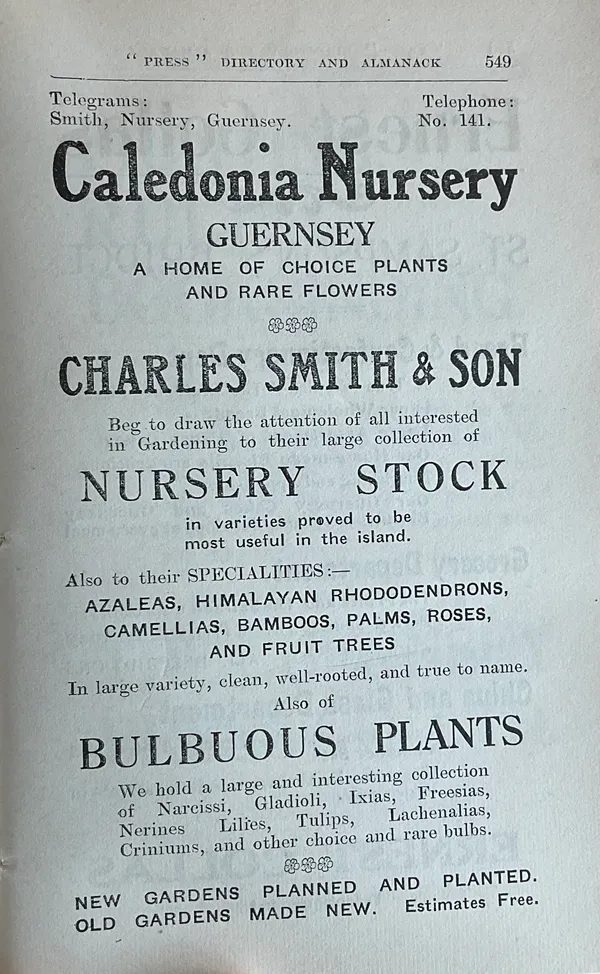
Smith’s decision to sell his herd may not have been as straightforward as creating room for more nursery beds, for at one point he required 500 cart loads of manure which would have to be purchased from livery stables across the island.
Charles had two children, a son in Henry, who worked alongside his father, and daughter Mary, who married one John de Putron of Havilland Street and would soon be having to get used to the sight of a huge garden dominated by her father’s nursery beds developing plants for the Covent Garden market.
In those early 20th century years Caledonia extensively grew chrysanthemums for the October to January market and early flowering gladioli were another speciality before the genus became scarce.
Sweet-smelling freesias were another feature at a time when other European gardens were slow to realise their potential, but Caledonia would also export tens of thousands of ixias, sparaxis, nerines and kindred bulbous plants to England, Ireland and even America and Holland.
The output of Caledonia also included the best qualities of hot-house grapes and the Smiths also boasted a fine collection of bamboos which were becoming ever more sought across England.
One further speciality of theirs was camelia, but for many years it was their display of roses that made the nursery one of the show places in the island.
All told, the nurseries occupied a total area of about 40 vergees of cultivated land and on top of that were 15 commodious hot-houses.
Surrounding it all were, as described by ‘Guernesias’ in a 1951 Press feature was ‘noble trees, masses of foliage and a wealth of colour, predominantly green’…’an oasis is a desert of housing’.
Even the occupying Germans had failed to shatter Normanville’s peace and it did not take long after the war to restore the house and natural expanse to good order.
Then, in Andros’ time and, still now, Normanville has been reachable by the identifiable arched entrance gateway, similar to that of those at the Ivy Gates and similarly with a larger arch for coaches and carts, a lesser one for pedestrians.
While Zef may have entered on a powerful, shiny motorbike, shut your eyes and it is easy to imagine those generations of Andros family being transported in and out of the main arch in their horse-pulled ‘cars’, less so a main building covered in pears.
As C E B Brett noted in his published review of St Peter Port parish buildings, the original 16th-century house ‘was a snug little property as any in the island,’ according to its owner A C Andros.
Snug and little are not two words to describe the current building.
That said, you, like me, would move into Normanville tomorrow, given the chance and a vastly increased size of bank account.
It has certainly come along way from its first existence as a guesthouse to the monastery that once existed at St Jacques, its days of a thatched roof and then a corrugated iron ‘lid’ long gone.
Footnote: The noted Guernsey historian Edith Carey once noted that in the year 1568 one Jean Mansell sold a house and land to Guillaume Andry at La Couture.
And with that sale Andry probably gave his name to Fosse Andre.