
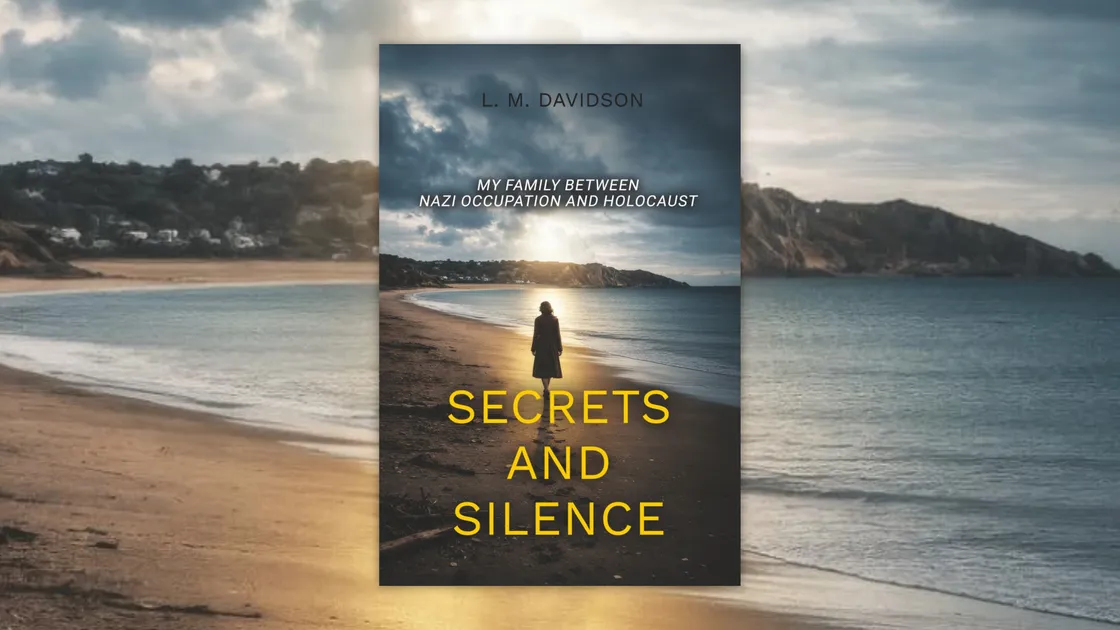
I have just published my first book – a memoir born of my curiosity to find out about my heritage – covering the period of the German Occupation of the Channel Islands in the Second World War.
I was born in the 1950s and raised in Surrey, England, but my mother was a Jerseywoman who lived on Jersey throughout the Occupation.
I feel a strong connection to the Channel Islands because my mother, although by then married to an Englishman and living in England, used to bring me, her daughter, and my siblings to Jersey for summer holidays every year, and I grew to love the island.
My memoir tells how I learn that my eldest sister was fathered by a German soldier during the Nazi Occupation of Jersey. Raised by a Jewish father, many of whose family were murdered in the Holocaust, I struggle to reconcile two painful legacies: alleged collaboration and persecution.
Over four decades, I searched archives and histories, questioned relatives and confronted conflicting stories.
Was my mother coerced, or was it a forbidden love affair? Why was the truth buried in silence?
I wrote the book because I felt a great need to tell my family’s story. As the great American author Maya Angelou once wrote: ‘There is no greater agony than bearing an untold story inside you.’
For me, it was a tremendous relief to write the book and put down on paper all that I had felt about my family’s history for so long.
Although I had been interested in my family’s history since the 1980s, I started writing my book during the Covid-19 lockdown in the spring of 2020. The pandemic gave me a feeling of affinity with the war, a dangerous collective experience involving limitations on everyday life, such as not being able to go out and, initially, food shortages. The pandemic killed more than 200,000 people in the UK, three times the number of civilians who died in the Second World War in the UK.
As the daughter of a woman who had a relationship with a German soldier, potentially a Nazi, and later with my father, who was Jewish, I have found it very difficult to reconcile myself to my family history.
In order to come to terms with my family’s past, I did a lot of research, drawing on novels, memoirs, histories and archives, such as the Jersey Archive and the Frank Falla Archive.
I was able to carry out the research for my book because, although I am now retired, my career was as a researcher in social policy at a leading London university.
Writing my memoir has brought tremendous benefits to me personally. Using genealogical sources, like birth, death and marriage certificates, as well as family trees created by my cousins, I learnt about my parents’ family history.
I learnt about my mother’s heritage in Jersey, with roots in Normandy and Cornwall. And I also learnt about my father’s Jewish family history, which stretched from Russia, through Palestine, to London. Like most Jewish families in Britain, a number of my father’s family were murdered in the Holocaust. I hope my book inspires others to do similar research on their family histories.
As I uncover official records and hidden memories, I reveal not only a family secret but the wider shame, judgment and trauma faced by women in occupied territories. I bring a fresh perspective on women who had relationships with German soldiers during the Occupation.
In writing my book, I learn that the experience of the Occupation was similar throughout the Channel Islands, but that there were some differences between the Islands. The hostility of the islanders towards women who had relationships with Germans seems to have been greater in Jersey than Guernsey. For example, some women in Jersey were violently attacked at the Liberation if they were suspected of having relationships with Germans, whereas there are no reports in the histories of this happening in Guernsey. However, there was retribution of a different sort on Guernsey.
After the Liberation, some young Guernseywomen lost their jobs when their employers were threatened in anonymous phone calls.
My book also uncovers hostility by Channel Islanders towards the German-fathered war children. In a recent Channel 4 documentary, Britain Under The Nazis: The Forgotten Occupation, the historian Professor Gilly Carr says: ‘My mother, who was from Guernsey, was told… that she wasn’t to talk to another girl in her class because her father was reputed to have been a German soldier.’ She goes on to say: ‘These sorts of things go on for generations. In fact, discussion of these matters is still taboo in the Channel Islands today.’
My book ends by arguing for greater openness about the German-fathered war children, as there has been in other formerly occupied countries in Europe. My memoir uncovers the damage caused by secrets and silence, which carry with them unspoken emotions like shame and guilt. I urge the Channel Islands to break the silence around the German-fathered children and truly accept them.
Since my book was published, I have been in contact with a German-fathered war child, Pauline Botting, whose mother was a Jerseywoman and whose father was a German soldier. Her story has been told in the media, including the BBC, which ran an article on her in 2020 called My mother Slept With The Enemy, and I draw on this coverage in my book.
Pauline would like to hear from other people in the same situation as herself - people whose mothers were islanders and whose fathers were German soldiers during the Occupation. Anyone in this position or their descendants are invited to get in touch with Pauline Botting in confidence by emailing the author L M Davidson at lmdavidson4045@gmail.com.
Secrets And Silence: My Family Between Nazi Occupation And Holocaust by L M Davidson is published by Michael Terence Publishing. It is available now in bookshops and from Amazon UK.


You need to be logged in to comment.