
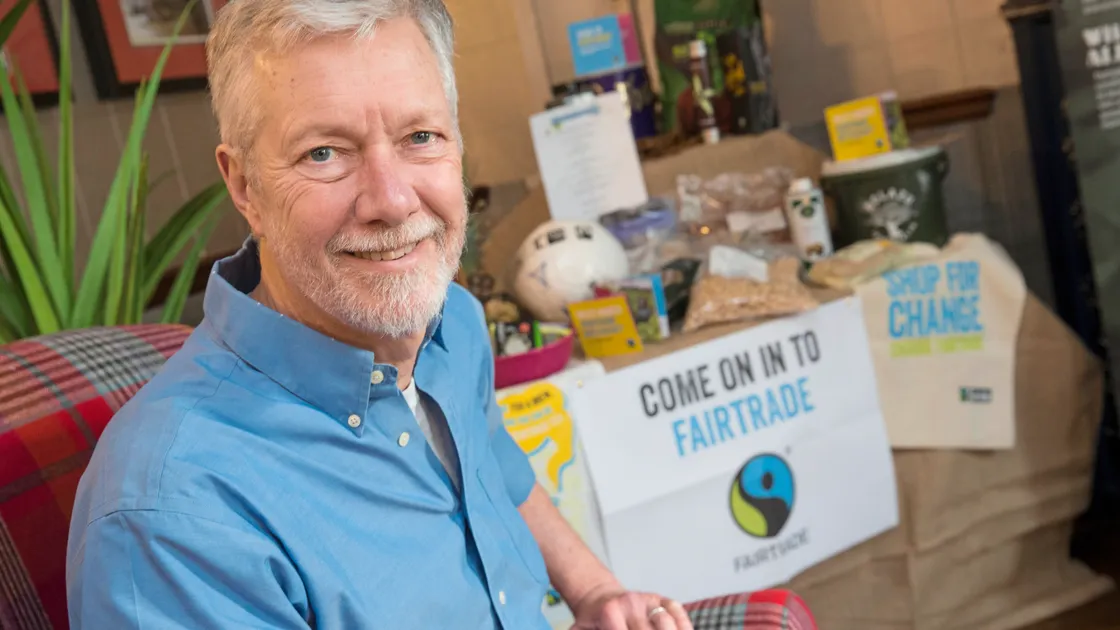
Guernsey-based researcher into contemporary slavery at Nottingham University, Professor Kevin Bales, gave a talk at Les Cotils last night at the start of this year’s initiative to persuade people to do their grocery shopping with the ethical label.
Around 40 million people worldwide live enslaved, he said.
‘But we even have a problem using the word “modern” because really the only difference now is that it is illegal. Slavery pre-dates the legal system.’
His work has included compiling research on the instances of slavery in car washes and nail-salons evident in the UK and he has been nominated for a Pulitzer Prize for his work.
‘Fairtrade is all about supply chains, I speak especially about the link between modern slavery and environmental destruction,’ he saids.
‘Fairtrade makes a huge difference, I’ve seen it on the ground, it reduces crime rates and corruption.
‘In the cocoa trade, for example, there’s a good chance the growers will be illiterate and innumerate and the buyer will be telling them all sorts of things they won’t understand and they can’t get a good deal.
‘A Fairtrade co-operative means all the farmers buy wholesale,’ he said.
Fairtrade products are now available in most supermarkets and Professor Bales thinks this shows that the situation is improving.
‘People are thinking more about their consumption in general, not too long ago you didn’t think about what you were buying at all.
‘The impact can be huge, children can get into schools and out of rural poverty,’ he said.
Further events include a Fairtrade menu laid out by Les Rocquettes in the bar area until 11 March and a quiz at the Professor Shaw Community Centre, St Martin’s, on Saturday.
There will also be a talk from Mahyana Sari, the secretary of the Arinagata Co-operative, who produce coffee in Sumatra, Indonesia, on Friday 9 March.
n More information on the campaign and how to help is on www.fairtrade.org.uk/fortnight or contact Fairtrade Guernsey at www.fairtradeguernsey.com.

You need to be logged in to comment.