
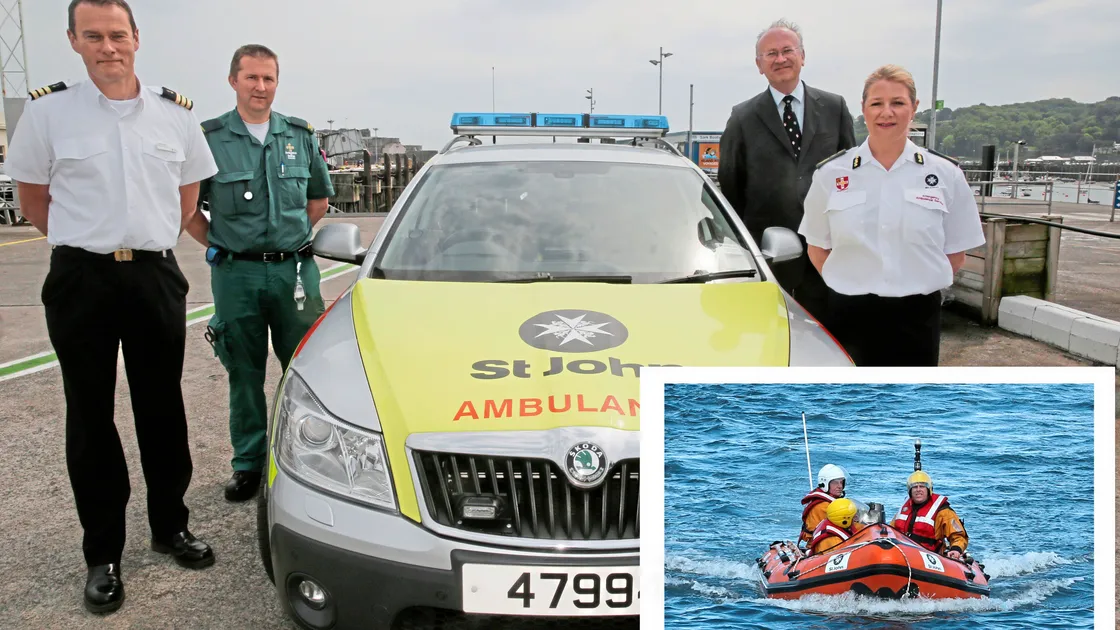
It has been carrying out rescues from offshore rocks and such for several decades. However, demand has dropped considerably in recent years.
There have been no call-outs this year and three in each of the previous two years.
The RNLI will be trialling a larger 80ft B Class inshore lifeboat later this year, but a permanent replacement has yet to be finalised.
A review of St John services at the beginning of the year deemed that those such as the emergency ambulance service, medical event cover, the health care shop, patient transport, first aid training and youth work should take priority.
Conversations about the need for future provision of inshore rescue boats have been going on since early 2017.
The RNLI has also carried out an independent review during this time.
‘Guernsey Coastguard continues to recognise and value the inshore rescue capability
provided by St John and its volunteers,’ said Guernsey Harbours head of port operations Jerome Davis.
‘We are always assessing the service and capability we have available to ensure maritime safety within our waters. We have been working with both St John and representatives of the Royal National Lifeboat Institution to determine what future capability is required for our waters, based on a collaborative approach to assessment and evidence review.
‘With a relatively low number of incidents and following a risk assessment, I have no concerns about St John ceasing the IRB service.
‘We have a legal responsibility to coordinate search and rescue operations in Guernsey’s territorial waters and will therefore continue to work with existing search and rescue partners, both volunteer and full-time, to give the most appropriate provision of search and rescue coverage for the island.’
Andrew Henton, Knight Commander for the Commandery of St John, said, as a charity, it needed to adapt to the growing demands on its service.
‘The number of call-outs for the IRB team is relatively low and the boats are rarely used. In recent years, the St John IRB team has moved away from being provided by employed ambulance personnel to a team of specialised volunteers,’ he said.
‘They have been supported by specially trained clinicians who, in the event of a casualty needing medical treatment on the shoreline, rocks or cliff, have worked alongside the IRB crew who are performing the rescue.
'We anticipate St John clinicians will continue working with the RNLI and Guernsey Coastguard in the future as part of the collaborative efforts between the ambulance service and maritime rescue services.’


You need to be logged in to comment.