
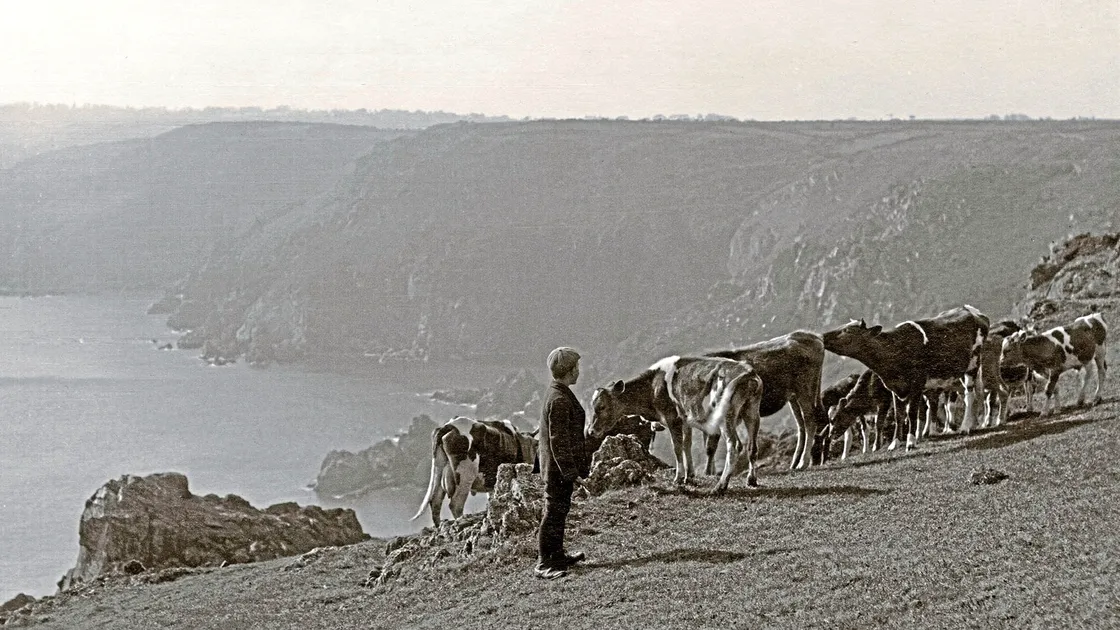
The States-owned land at Icart field is being turned into a locally-rare dry grassland habitat, which will support a wide range of plants, insects and birds.
The area being restored forms part of a site of special significance and is currently low in species because bracken and scrub have prevailed for some time.
It is hoped the area’s enhancement through this project will greatly improve its biodiversity and special nature over time.
The area will be grazed each autumn by the Guernsey Conservation Herd.
‘The Icart project is one of the first examples of environmental offsetting in the island and as such is a unique opportunity to restore a declining local habitat,’ said La Societe Guernesiaise’s Barry Wells.
‘While existing scrub supports a reasonable amount of wildlife, a landscape which includes a mosaic of different habitats encourages more biodiversity.
‘By clearing some bramble and blackthorn, areas of rare maritime heath and dry grassland will be restored.
‘As various wildflowers become re-established over time, a large number of invertebrates and other wildlife such as slow worms, hedgehogs and Guernsey voles will be able to colonise the area.
‘The whole headland will be ecologically richer as a result.’
The existing seedbank and soil structure should accelerate the restoration of the site.
Icart headland has remnant pockets of coastal heathland habitat, which may also establish at Icart field.
This is of international importance because it is among the most scarce habitats found in Guernsey.
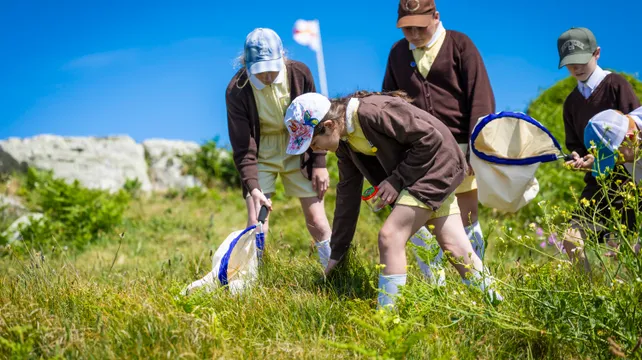
Biodiversity education officer Julia Henney said wildflower-rich grassland and heathlands were once common around Guernsey’s cliffs and coastal land.
‘Unfortunately, as grazing of these sites reduced after the Second World War, bracken and bramble took hold and began to smother the wildflowers,’ she
said.
‘This exciting restoration project – the largest of its kind in Guernsey – offers an opportunity to redress the balance and restore these endangered habitats which, in turn, will protect the butterflies, bees and birds which rely on them.
‘Some of these, such as the blue-winged grasshopper or Dartford warbler, are at risk of being lost from our island forever.’
Under the planning conditions for the work, a landscaping scheme detailing the trees and shrubs which will be planted on the north-eastern boundary of the site near neighbouring properties has been submitted.
No trees should be felled, however it will be necessary to make safe any dead or damaged pines to ensure there is no risk to livestock sheltering under them.
A new pathway, which should be open for use early in 2019, will allow those visiting the area to admire the wildlife which will be attracted and recreates a convenient loop for walkers from the Icart car park.
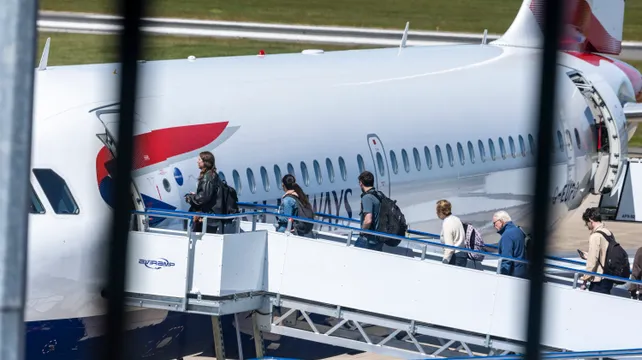
The project is being funded by Guernsey Airport, as part of its scheme to lessen the environmental impacts from major works on the airfield completed in 2014.
‘This next phase will create new grazing land to make up for the loss of former agricultural fields at the western end of the runway,’ said general manager of ports Colin Le Ray.
‘These were needed as part of the overall airport improvements, to provide longer run-off safety areas for the runway.
‘Once complete, this project will offset the loss of those fields and we are pleased to be funding that work.’



You need to be logged in to comment.