
Home Affairs wants to amend the 2002 terrorism and crime law to bring in the measures urgently ahead of the results of a wider review of the law which has been ongoing since 2006.
‘Bailiwick Law Enforcement have advised that, following the cases in the UK of Litvinenko and Salisbury – the Skripal case – it was identified that counter terrorism border officers were engaging with many subjects potentially engaging in hostile state activity,’ its States report says.
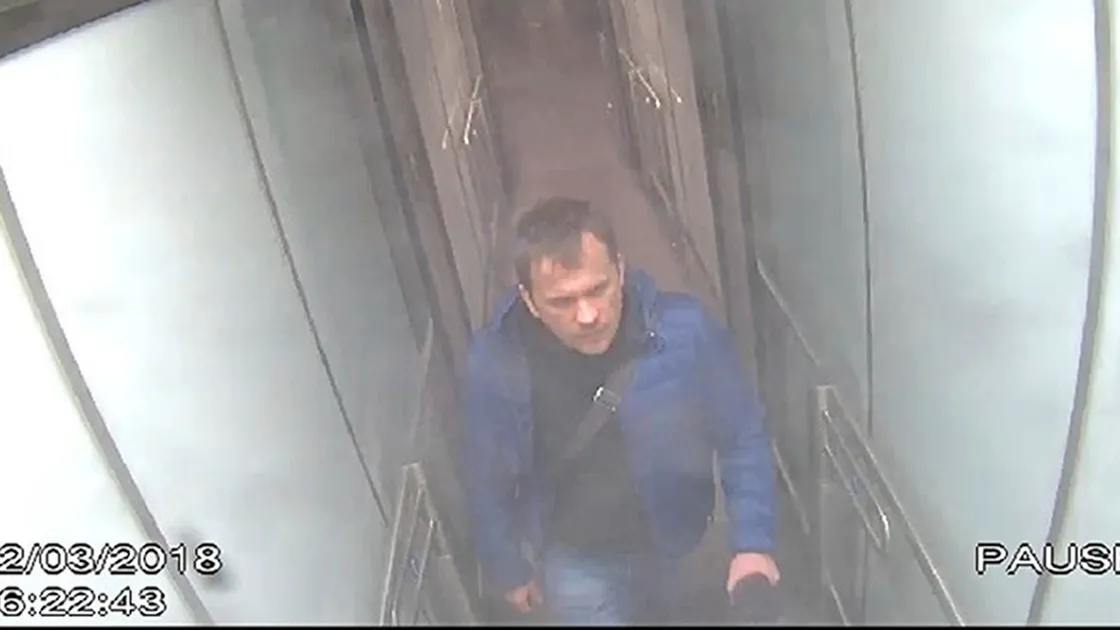
‘The two suspected offenders in the Skripal case had been stopped by counter terrorism border officers on their arrival in the UK and it was the landing cards that provided the forensic link to the events in Salisbury.
‘However, the counter-terrorism legislation did not previously allow for lawful searches and interviews in such cases, due to the definition of an act of terrorism.
‘In the Bailiwick, Law Enforcement occasionally see nationals from hostile states whose behaviour is of concern and it is the view of Bailiwick Law Enforcement that the introduction of these changes will enable them to better determine the purpose of their visit to the Bailiwick or onwards to the UK.’
Ex-Russian spy Alexander Litvinenko died in a London hospital on 23 November 2006 from radiation poisoning. A public inquiry concluded in January 2016 that his murder was an FSB operation that was probably personally approved by Vladimir Putin and Nikolai Patrushev, who was at the time director of FSB.
Sergei Skripal, a former Russian military officer and double agent for the UK’s intelligence services, and his daughter Yulia, were poisoned in Salisbury in March 2018.
The two men the UK believed to have been responsible, Russian military intelligence officers Alexander Petrov and Ruslan Boshirov, famously made a TV appearance claiming they were simply visiting the city as tourists.
The updated Guernsey legislation would reflect powers in recent UK legislation.
They would include new powers at the border to inspect, seize and retain travel documents; powers to stop, question and detain people, to search people, ships and aircraft and goods and to take copies of documents.
In 2006, the States resolved to prepare legislation to update the 2002 law to introduce offences consistent with those introduced in the UK at the time.
Before that work was finished, the UK introduced further changes – in 2008, 2009, 2013 and 2015.
‘It is clear that the Bailiwick’s terrorism legislation needs to be looked at in the round and that the relevant outstanding resolutions are now out of date.
‘To that end, a broad review of the UK’s terrorism legislation, and an assessment of the provisions that might be appropriate within the context of the Bailiwick (with appropriate modifications), has been under way for some time at the Law Officers’ Chambers.
‘The committee notes that this is a major undertaking that has to be managed with existing work pressures (especially work relating to the coronavirus pandemic at the present time); as a result of the frantic pace of legislating in the UK, the legislative framework is very complex, and it is clearly important that provisions implemented here are proportionate and appropriate to the Bailiwick.’




You need to be logged in to comment.