
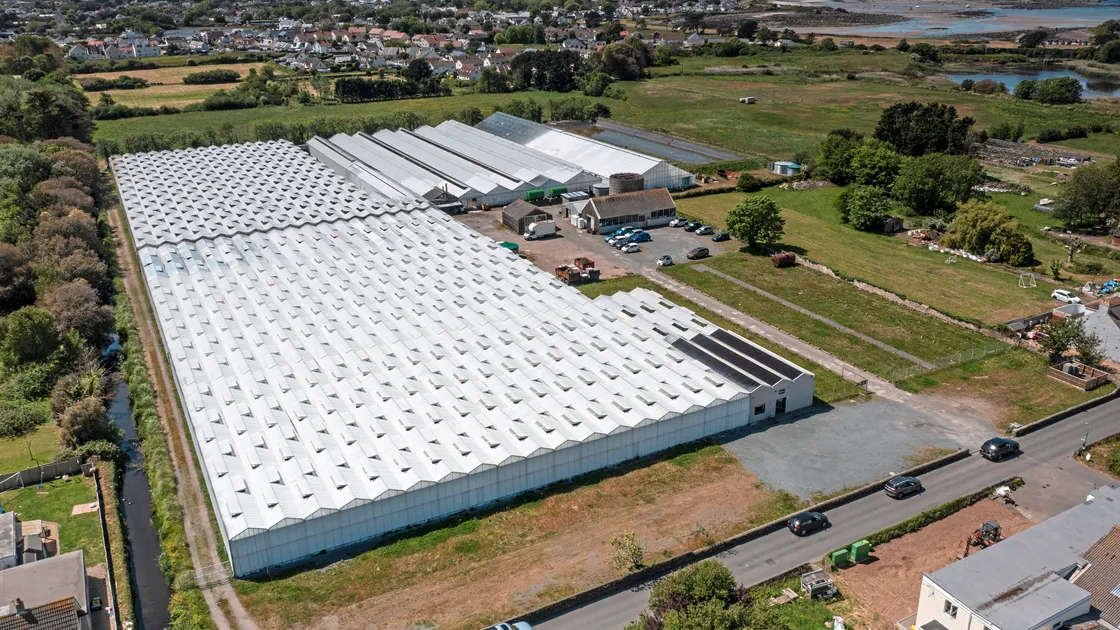
The busy nursery on Route Militaire will use the panels to help power production machinery such as conveyors.
Environmental Health did raise some issues during the planning process.
This included worries about site contamination and low frequency noise from the panels, as well as glare from them.
Agriculture, Countryside & Land Management Services noted that the project was small and was unlikely to impact species or habitats.
The planners noted in their report that the site was one of the world’s leading clematis production nurseries, employing 40 full-time equivalent staff and producing more than 2m. young plants for worldwide dispatch.
‘The nursery continues to invest and upgrade its equipment to allow for further expansion and future growth, ensuring that the nursery is likely to continue to operate for the foreseeable future by virtue of its sustainability for commercial operations,’ they noted.
‘The proposed solar array will generate electricity for on-site use, mainly the running of horticultural production machinery, and it is envisaged that the array will mean the site is largely self-sufficient in terms of energy. Any excess will be sold to the grid, but this is not the primary aim.’
The planners also noted that the array would fit in with the built ribbon development along the road. The proposed array is at least 10m away from residential neighbours with the panels tilted away for maximum solar gain and not considered to have a significant visual impact, or create issues in terms of glare.
‘They will also be largely obscured by the glasshouses to the south,’ the planners said.





You need to be logged in to comment.