

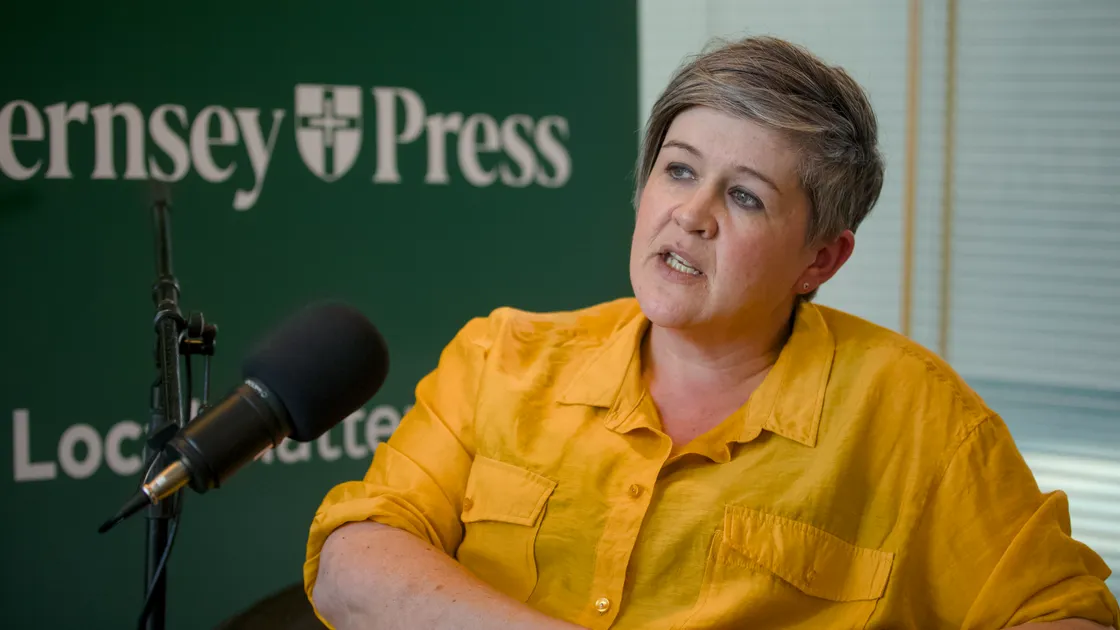
Hayley Camp has laid a sursis – a delaying motion – against the Education, Sport & Culture Committee’s proposals to progress with setting up education governance boards. It will be debated in the States next week.
Deputy Camp rejected the idea that her move was about blocking progress, instead arguing the biggest risk was enabling governance boards with no genuine authority or purpose.
‘That would be the real delay at the end of the day, to go ahead with a process that you don’t have any real concept or certainty over the intended outcome,’ she said.
‘At some stage it will become likely the boards will have to be closed down because they are ineffective, or this process will have to be run at a later stage where we acknowledge that we’ve built these things with no credibility and no foundation, and if we want them to survive we’ve now got to go in SAS-style and sort them out.’
She compared ESC’s current approach unfavourably with business practice.
‘If I, as a business leader, had wanted to set up a committee to do something, the first thing I would do is get the terms of reference down, and set out its objectives and powers.
‘If I had suggested setting up a committee in the way ESC is doing, my board and shareholder would have said “absolutely no chance”.
‘You need clear terms of reference and powers first, then you populate it.’
Deputy Camp said her sursis would not change the timeline of the boards’ introduction, but merely rearrange the order in which things were done.
She said, while the formation of the governance boards should be halted for the time being, the work of a temporary investigation committee to consider the future powers of the boards should continue.
‘All roads were going to lead to September 2026, that being the first point at which these boards could have anything like their final constitution determined.
‘Why not make that the true starting point and in the meantime allow for an intelligence-gathering opportunity for governors to start learning what it is they would want to see from these boards?’.
While acknowledging that persuading colleagues in the States to back her motion would be ‘an uphill climb’, Deputy Camp said the issue was too important to ignore.
‘This isn’t about 40 people in a room thinking it doesn’t matter, we’re talking about thousands of future students going through a system that has no foundation.
‘Policy formation can’t be done on the hoof, it has to be thought through from the start.’



You need to be logged in to comment.