
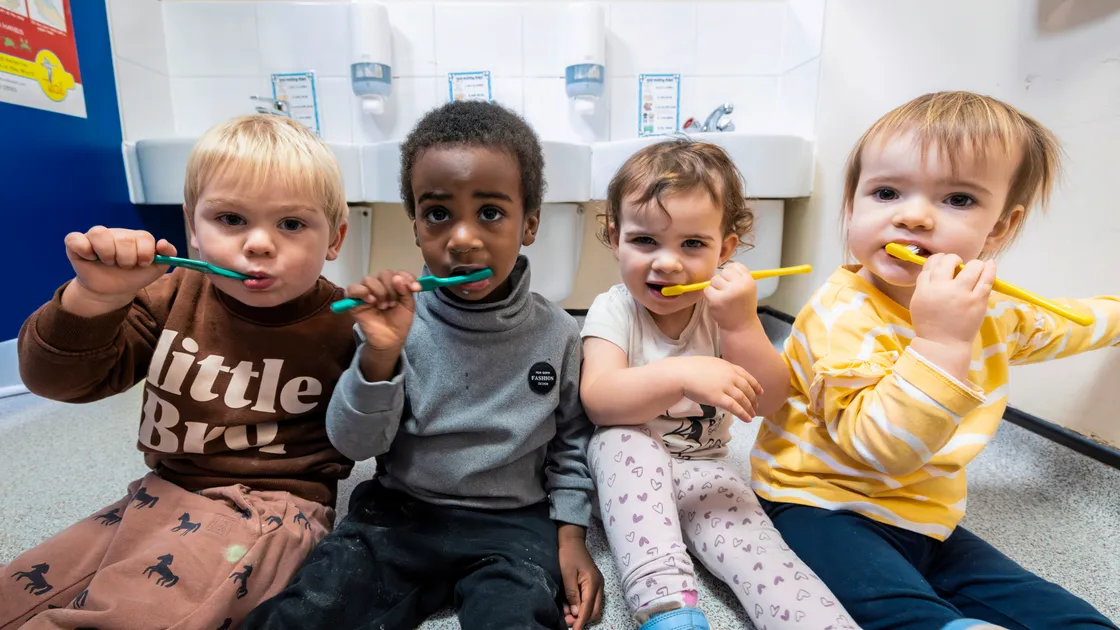
But the States Children’s Dental Service said that there was still more that could be done.
Since the Super Smiles project was launched in 2014, it has supported more than 2,500 children in the Bailiwick.
A Children’s Dental Service survey of reception children has found that while the rate of obvious decay has decreased from 20% in 2011 to 14% in 2016, and 11% in 2021, there remains significant improvement to be made.
Children’s dental officer Abby Arblaster said there were still too many children in the early years getting cavities.
‘Last year we found 55 cavities in three-and-a-half-year-olds,’ she said. 'One child needed 17 teeth removed.
‘We have to take children to general anaesthetic. So far this year we’ve done about 82 general anaesthetics, and for some of those children that was their first experience of the dentist.
‘It doesn’t have to be that way. We can pick up problems when they’re small before they need treatment, and things like this can make it a normal, easy part of the routine rather than a struggle as it can be for families.’
The Super Smiles project aims to make toothbrushing a fun skill and embed it as part of other hygienic routines and skills such as handwashing.
‘We’re finding anecdotally that children are going home reminding their own parents that they need to clean their teeth. It’s a bit like healthy eating – if children see their peers eating healthy foods that they might refuse at home, they can do it in a setting when they’re with their friends and the fun pace of it gets them to want to do it themselves,’ said Early Years education officer Kate Hynes.
‘There’s time pressure at home. This isn’t meant to replace brushing teeth at home, but if we can get those healthy habits in a calm way, hopefully the habit will carry on either end of the day for them as well.’
Children in La Petite Ecole at Bosq Lane have been part of the Super Smiles initiative for a number of years. Staff get the children excited by starting a special toothbrush song to sing together with their friends.
They have noticed that catching children earlier as two to three years old has helped better embed toothbrushing as a practice and eased the transition through the years.
‘It’s set in our routine, and when they go up they know they’re going to do that,’ said deputy manager Chloe Le Tissier.
‘Some of them used to really not like doing it. Then as we’ve gone on, a lot more have enjoyed doing it.’



You need to be logged in to comment.