

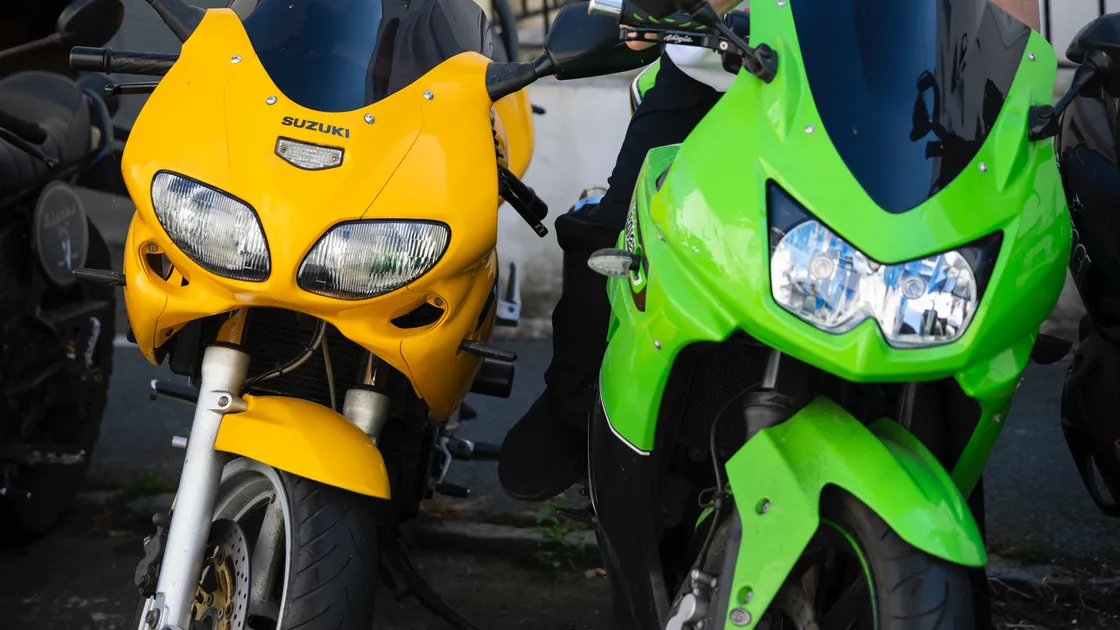
The Health Improvement Commission’s most recent Active Travel Audit saw the use of motorcycles among school pupils drop from 9% in May 2024 to 2% in October this year, while bicycle use increased from 15% to 19%.
The requirement for youngsters to pass a stringent theory test before taking to the roads on a motorbike, as well as the rising popularity of electric bicycles, is said to be responsible.
‘Motorbike sales have decreased dramatically in the past two years,’ said Duques Garage owner Ian Lavenne.
‘I think part of it is to do with the fact they have to do their theory test before their CBT.
‘At 14 they don’t have that much experience on the roads and don’t recognise all the signs and things, it can be really hard for them to pass.’
The number of people undertaking CBT courses has dropped from 118 last year to just 48 this year.
‘We have always had road safety as our prime goal. With the introduction of new candidates required to take the theory and hazard perception test before CBT in May 2024, which Guernsey Motorcycle Training Scheme continues to support DVL in the introduction of, we have seen a significant reduction in numbers,’ said Martin Proudlove, GMTS lead instructor.
The number of provisional motorbike licences issued has also decreased from 137 last year, when the theory test requirement was introduced, to just 76 this year.
‘The number of category P provisional licences issued to 14 year-olds and the number of CBT courses undertaken by those holding these licences have decreased over the past few years,’ said Colin Le Page, manager at Traffic & Highway Services.
‘Although we can’t know exactly why this is the case, this is likely due in part to the requirement for a formal theory and hazard perception test before taking a CBT course, which was introduced in May 2024. This change was supported both by the police and the Guernsey Motorcycle Training Scheme and is about equipping young people with the right knowledge and information before they take to the road, keeping members of our community safe on our roads.
‘Other reasons for the decrease could include the increased running and maintenance costs for motorcycles compared with forms of active travel, as well as the increased popularity of e-bikes.’
Active travel is on the rise in both primary and secondary schools. Since the Health Improvement Commission’s May 2024 audit, active travel in primary schools has increased from 48% to 58%, with cycling increasing by 7%. In secondary schools active travel has risen from 37% to 43%. Cycling has increased by 6% over this period.
James Roe, sales director at Ian Brown’s Cycle Shop, said he has seen an increase in young people buying bicycles.
‘It definitely feels like there has been an uptake in 14 to 16-year-olds before getting a car now,’ he said.
‘They are typically going for e-bikes rather than regular bikes, and using them as a moped replacement. Since Covid there has been an uptake for all ages, but I would say in the last year or two more younger people have been getting them.’




You need to be logged in to comment.