

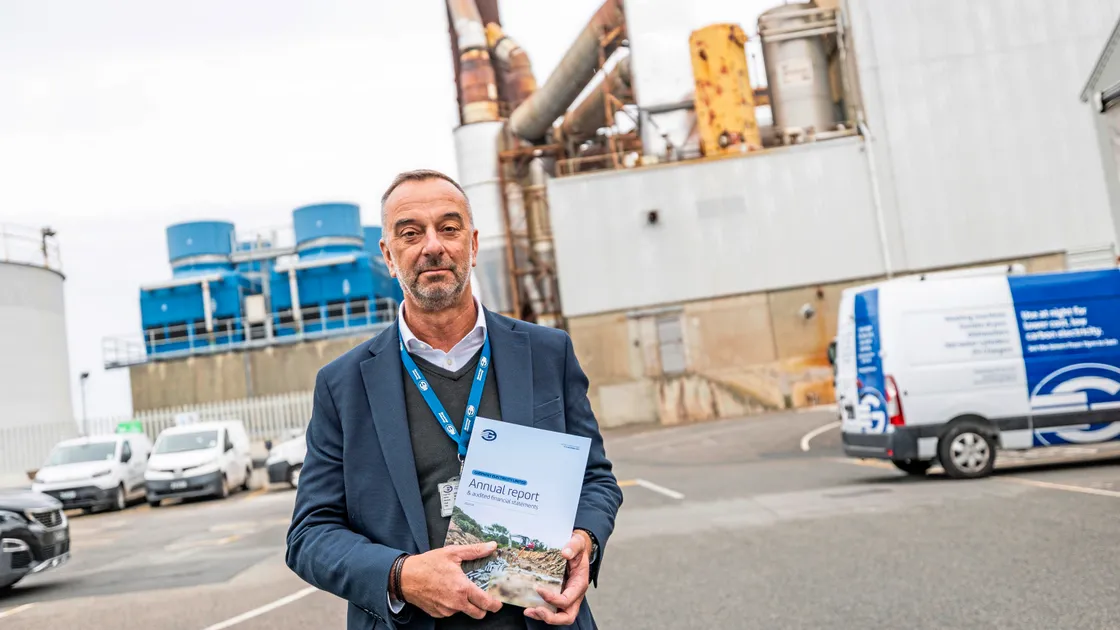
The figures were revealed in its annual report, just released, and despite the appearance of the bottom line, CEO Alan Bates said the company was still taking in less money than it was spending, and recently had to secure another £15m. credit facility.
The annual report covers a period of price rises which included a 10% rise in June 2024, as well as changes to pricing structure that has seen standing charges increase. These changes have been criticised by some of GE’s customers.
‘The tariff application this year said we could not pass on all our costs to customers,’ said Mr Bates. ‘So we’re probably going to be at almost £65m. of debt within the next 12 months. The whole reason for that [the standing charge] is to lessen the burden on tariffs.
‘Everything we make, we reinvest in the business – it doesn’t get distributed as shareholder dividends. It just gets reinvested in the business. We don’t hold a lot of cash, we reinvest it to reduce the borrowing we need.’
Despite the increase in debt, Mr Bates was optimistic about the company’s future and that the additional debt would help minimise the impact of the tariff increases.
‘We’re not covering all the costs we’re creating today by the earnings we make today, but we’re getting better,’ he said.
‘However, we are taking on less debt than we would have had 10 years ago where we were just borrowing for everything when we had years with no tariff rises. Then, of course, we have had issues like the Ukraine war and what that has done to inflation, interest rates and energy prices.
‘That was like a perfect storm for the customers and for the company. We have had to take on more debt just to stand still. Customers having to pick up quite high tariff increases, and we’re taking on more debt. But at some point we have to stop taking on debt to pay for today, and start taking on debt to pay for tomorrow.’
The accounts stretch over a 15-month period as the utility changed its accounting procedures and year-end date. So he said the £4.6m. headline profit, which followed an annual loss of £591,000, did not show a true picture. Interest costs have almost doubled over the period and would continue to do so, Mr Bates added. Pre-tax profits on ordinary activities had remained relatively stable at £799,000.
‘The new revolving credit facility isn’t like the previous ones, where they were taken out at very low rates,’ he said. ‘So the financing cost is going up quite significantly.’
During that same 15-month reporting period Guernsey Electricity invested £15.8m. into infrastructure projects, a figure Mr Bates said had risen to a level where the risks associated with underinvestment were now starting to reduce.
Money was spent on projects including the installation of a bulk supply point at the hospital, which saw a 6.5km cable laid across the island, a major upgrade to the electricity infrastructure in Doyle Road, and low-voltage network upgrades in the High Street and Commercial Arcade.
‘This investment is crucial in helping ensure that we continue to provide a secure and reliable supply of electricity to our customers, minimising the risk of power outages while also putting the business on a resilient footing to invest further towards decarbonising the island in line with the States Electricity Strategy,’ he said.
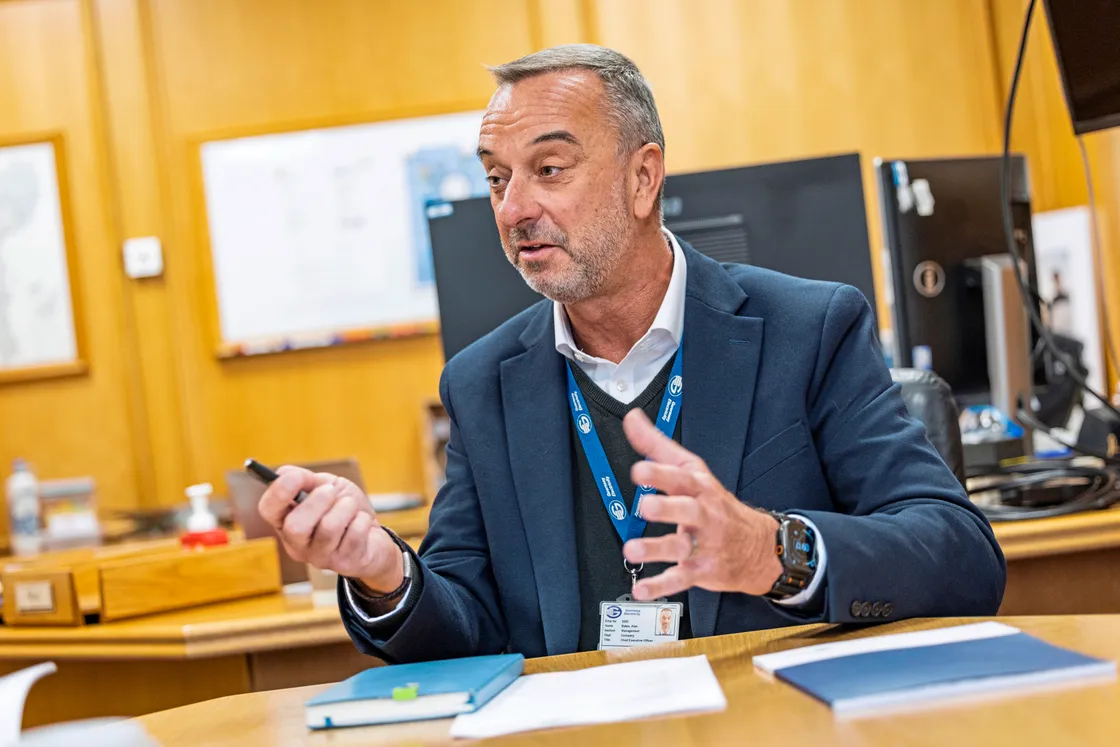
10-year vision could save island more than £100m.
Guernsey Electricity has set out a 10-year strategic vision that it says could save the island more than £100m. by being smarter about the use of energy.
The company has produced two documents, ‘Strategic Vision 2035’, and the more detailed five-year ‘Strategic Plan’, which defines the key delivery milestones between now and 2030.
Both documents align with the 2023 States’ Electricity Strategy which agreed a long-term strategic direction for the future of electricity supply in Guernsey, underpinned by greater access to secure, low-carbon electricity through further interconnection to the European grid.
CEO Alan Bates said that while the preferred pathway in the Electricity Strategy featured a direct undersea cable connection from France to Guernsey, the planned replacement of the original Channel Island Electricity Grid Normandie 2 cable may present an opportunity to reconsider an additional connection route through Jersey.
‘We’re looking direct to France, and we’re also looking via Jersey and we’ve undertaking some survey work between Jersey and Guernsey recently,’ he said.
‘We’re hoping to take the business case for that further interconnection to the States in the middle of next year. We’d like to be thinking certainly before 2035 that further connection would be in place. But if we could get it by 2030, it substantially reduces the capital investment in the power station.’
In the Electricity Strategy, it was estimated that maximum peak electricity demand for the island could go from 94MW now to 157MW in 2050.
‘However, if you manage demand by making people use it wisely, it could be as low as 125MW, and that could save £160m. over a 30-year period,’ said Mr Bates. ‘Because I think that’s where the island can really start saving on its costs, is by being a bit smarter about how and when we use electricity.’
The company has recently launched a number of campaigns to promote off-peak heating solutions, such as storage heaters and show customers how to programme their hot-water cylinders to heat up overnight to help reduce the evening peak demand.




You need to be logged in to comment.