

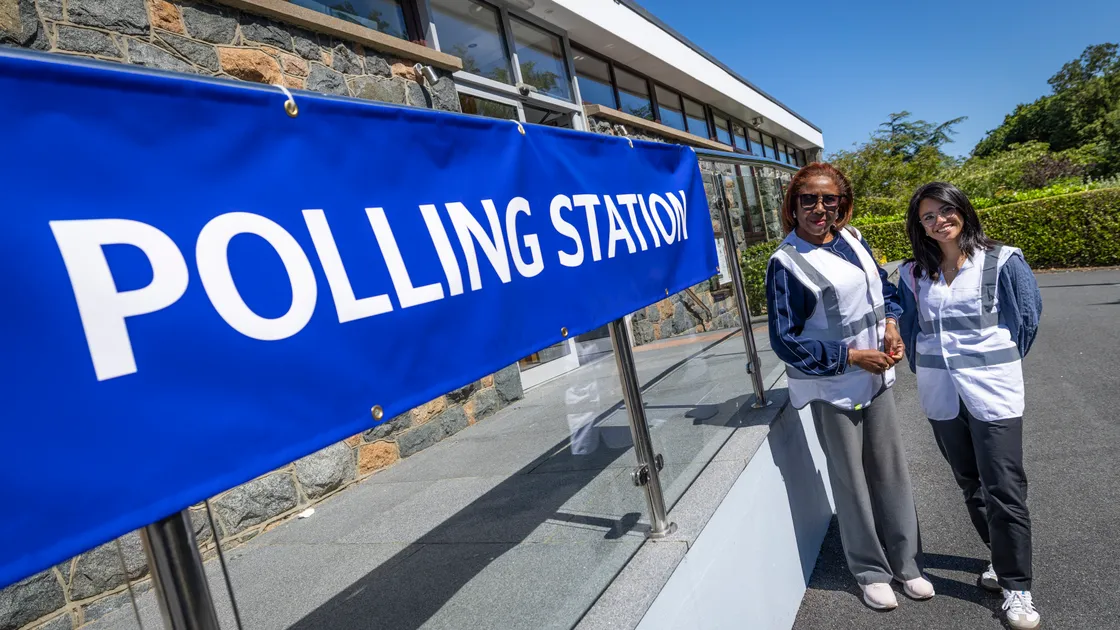
Voters are currently taking part in a survey about last year’s election to see whether public opinion has changed since a previous consultation revealed strong support for moving away from the existing system under which all deputies are elected island-wide at the same time.
The president of the States Assembly & Constitution Committee said yesterday that a proposal to scrap island-wide voting in that form was ‘not off the table’ and that the survey, which closes next Monday, was deliberately organised early in the new political term, well ahead of the 2029 general election.
‘Timing is one reason we have at the back of our mind. If there is a need to change, then we would need a referendum, and hence why we’ve started the work now,’ said Sacc president Sarah Hansmann Rouxel, speaking on the latest Guernsey Press Politics Podcast.
‘If it [the electoral system] is to change substantially, we would more than likely need a referendum, and that would take time to bring it to the Assembly so that those changes could be in place before the next election.’
Would you like to see a referendum on the system for electing deputies?
- Yes63%
- No37%
The current system was introduced after being selected in a referendum in 2018. Two years later, nearly 25,000 voters took part in the first island-wide general election, but last year fewer than 20,000 voters participated, fewer than in 2012 and 2016 when candidates stood in electoral districts.
In the previous States term, Sacc was made up mainly of members who supported island-wide voting, including its president, Carl Meerveld, who had led the referendum campaign to introduce it, but in the current States Sacc is dominated by long-standing sceptics of island-wide voting.
Deputy Hansmann Rouxel said that a minority of the committee could back a move away from the current form of island-wide voting without a referendum, if the latest survey again showed strong opposition, but a majority of her members would want to give the public the final say in another referendum, which would probably be held next year.
She believed that a referendum would be unnecessary to ‘tweak’ the current system, as opposed to wholesale change, and suggested that was another possibility once the findings of the survey have been considered.
‘There is no predetermined outcome. We’ll have to see what comes out of the consultation and then start putting the pieces together,’ she said.
Organising the 2025 general election cost taxpayers a total of £1.15m., an increase of more than £250,000 on the election in 2020. The States has said it was unaware of the total cost of organising the 2016 general election, the last to be run in electoral districts, but campaign grants claimed by candidates, one of the few expenses met by the States, cost less than £50,000.
One potential saving in 2029 could be to do without external election observers, for whom there was a budget of £50,000 last year, which Deputy Hansmann Rouxel said ‘probably would not be warranted’ if the electoral system was unchanged.


You need to be logged in to comment.