

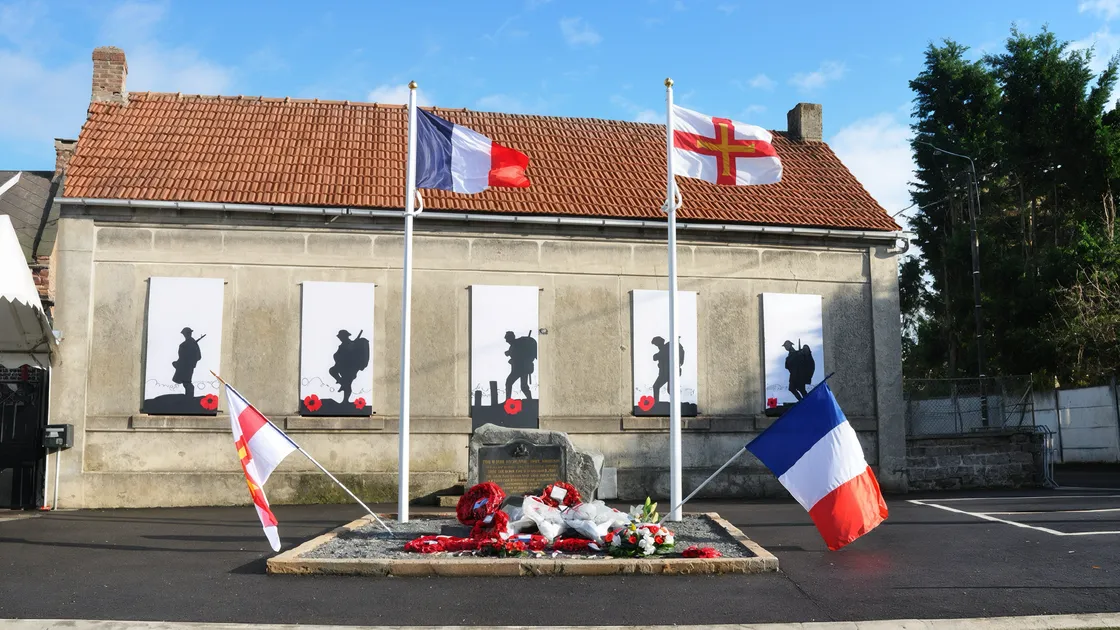
Dubbed by the project’s leaders as ‘Guernsey’s most important building outside the Bailiwick’, the former cafe at 16, La Rue Verte in Masnieres – which was the scene of several days of bloody, hand-to-hand fighting in 1917 – is being purchased and refurbished by the Royal Guernsey Light Infantry Association. A substantial parcel of land adjacent to the tumble-down building will also be bought and turned into a historical and cultural centre, if an ambitious funding campaign – to be launched at Government House this evening – is successful.
The site has stood unoccupied for about 30 years and the current owner, whose grandparents lived in the building, has agreed the terms of the sale for what has been described as ‘a very reasonable sum’.
In late November of 1917, the cafe became a refuge for isolated RGLI troops, as they battled to repel the largest German attack of the war, while British lines either side of them were pushed back. With 453 Guernseymen killed, missing or wounded in these exchanges, it is said that no family in Guernsey was unaffected by the losses.
‘At the moment, it’s a small, two-room cottage with a large loft that’s almost derelict,’ said association chairman Chris Oliver.
‘The fabric of the building is what remains from the cafe that was there over a hundred years ago, and our aim is to stop it deteriorating, protect it and refurbish it on its original footprint so that it can last another hundred years. We also aim to erect an open-plan building of the same size beside it, which will connect to it and become a multi-use facility, opening out into a garden with typical Guernsey native trees and shrubs.’
The upper storey will incorporate accommodation, which will help to enable the association to expand on its already growing programme of cultural development between Guernsey and Masnieres.
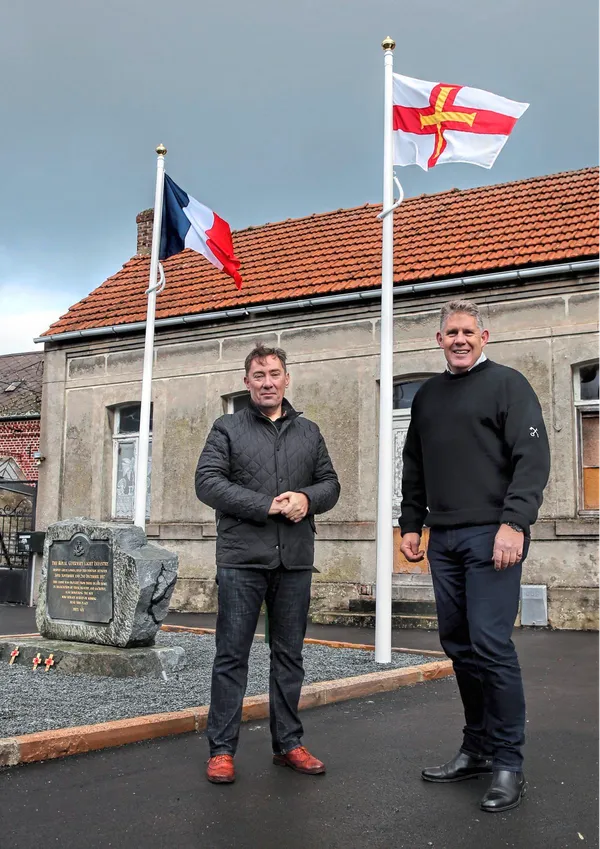
‘We’ve twinned Masnieres with St Peter Port, which is quite a successful twinning,’ Mr Oliver said, ‘and we’ve got an annual student exchange, for which this cultural centre can be a focal point. We’ll be preserving for heritage what is ostensibly the most important Guernsey building outside of Guernsey, and bringing it into modern use. It will strengthen the ties between two communities linked by an incredibly sad past.’
However, the association is planning to ensure the site is as useful as it can be to the community in Masnieres, so it becomes a busy place all year round.
‘We didn’t want this to be just a museum or educational centre that gets used twice a year,’ Mr Oliver said. ‘It’s being designed to be useful to us here in Guernsey and also to the communes of Masnieres and nearby Marcoing for various events. It will have accommodation and flexibility, so by locking various doors, the shape can be changed and allow adaptation for different purposes. It’s not just a visitor centre, an events facility or accommodation – it’s all these and more.’
The charity’s previous fundraising efforts have already enabled a piece of Guernsey granite to be used to construct a permanent memorial outside the building – unveiled nine years ago, on the 100th anniversary – which commemorates those who fell in the battle and have no known grave.
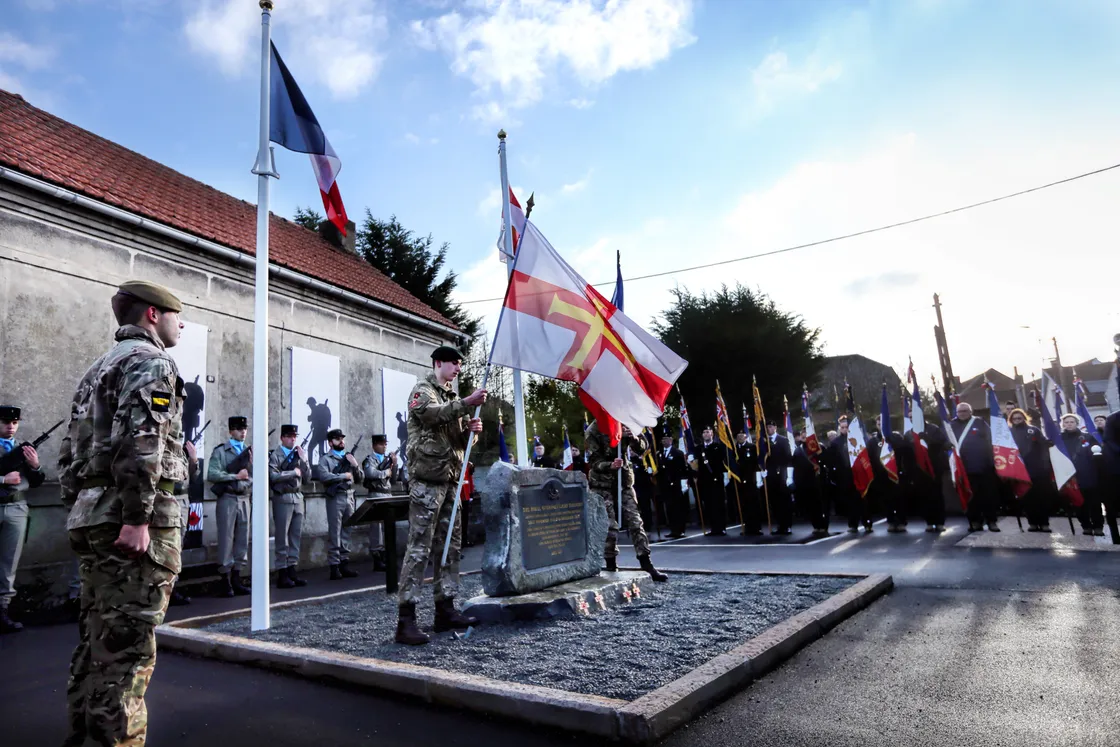
Every year, a Guernsey flag that has been on display for 12 months at the Town Church is taken to Masnieres and hoisted above the memorial. After a further year, it is replaced and taken back to Guernsey to be presented to a descendant of those who fought there.
In 2018, an identical ‘sister memorial’ was unveiled in the Sunken Garden in St Peter Port and on 30 November, simultaneously at each memorial, there is a service of remembrance.
Dozens of interested parties – members of the association, descendants of those who fought with the RGLI and potential donors – will attend a ceremony at Government House this evening, which will act as the official launch of a campaign to raise the estimated £350,000 which will be required for the refurbishment and expansion. The sale price for the original building and grounds has already been raised and several benefactors have also pledged significant sums towards the refurbishment work. As with the public subscription arrangement that was available for the memorial, relatives, friends and islanders will be able to offer donations recorded on behalf of loved ones who served. Names will be inscribed within the building accordingly.
Mr Oliver said the money would be well spent, and not just for the sake of preserving heritage.
‘In an age where we are seeing increased isolationism in the world, I think that encouraging the youth of tomorrow to share each other’s cultures can only bring positive outcomes.’