

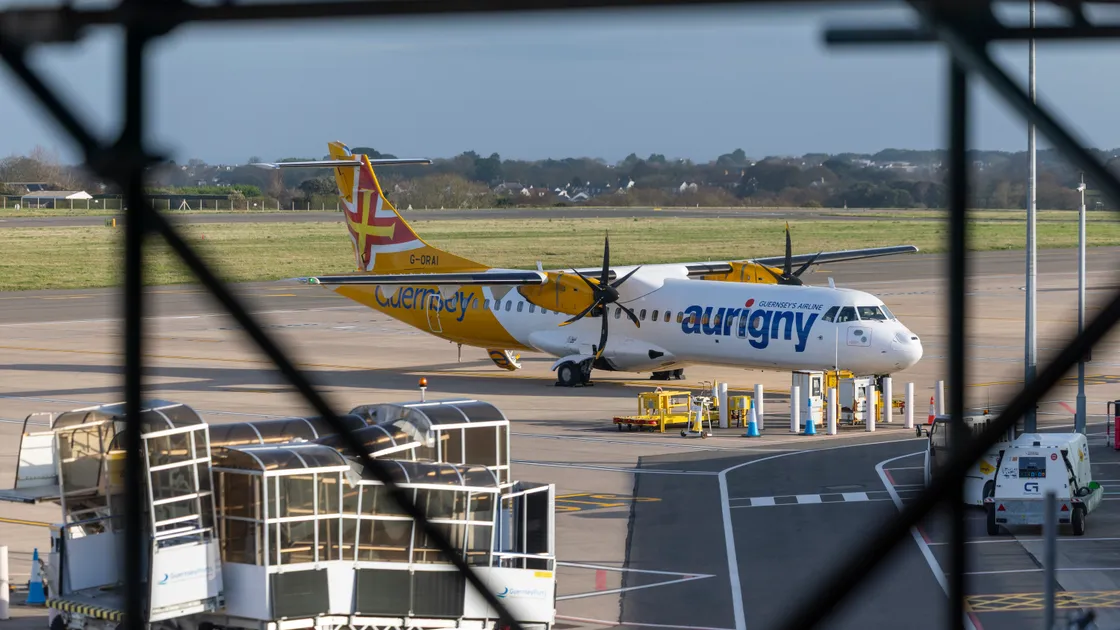
The island’s new link with Heathrow through British Airways, less than a week old, was immediately blamed for ‘cannibalisation’ of the island’s air passenger market.
States Trading Supervisory Board president Mark Helyar, responding to a question from Simon Vermeulen, said that there was an ‘evolving picture in terms of the way in which the business will need to respond to competition and cannibalisation of passengers on the Heathrow route’.
Yvonne Burford wondered what part of the estimated loss could be attributed to the Heathrow route coming into operation but Deputy Helyar said it was not possible to do that at such an early stage.
‘It’s only an estimate based on forward bookings. That is a net position even taking into account the additional frequency and transport of passengers to Southampton and Jersey.’
It was possible that bookings would pick up in three months’ time, he said.
But Sasha Kazantseva-Miller, whose Economic Development Committee brought British Airways back into local skies, pointed out that Aurigny passengers could book only up to the end of October at present, while other airlines had bookings available into March next year, and said a lack of forward bookings could be connected.

Deputy Helyar accepted this but said that in order to look to break even, Aurigny might need to look at cutting routes or the frequency of flights to different places, potentially including Gatwick.
The airline’s board would need to consider what steps it could take in order to protect itself from the ‘adverse financial outcome’ predicted, he said.
In his general update, Deputy Helyar referenced the Heathrow route and how it was likely to have an impact not just on Aurigny’s London route but on others, too, such as Southampton.
Aurigny’s role needed to be defined clearly, he said – whether it should be treated and funded primarily as a commercial airline and expected to produce a commercial return, or if it should be seen as a strategic asset, guaranteeing lifeline routes and minimum service levels with a subsidy.
‘There is room for a position between those extremes, but government needs to make a decision and it needs to be spelt out,’ he said.
‘Without that clarity, no board and no management team can sensibly optimise the business, and the island will continue to see periodic shocks when commercial realities collide with implicit political expectations, and at a cost to the public purse.’
Setting that strategic policy should lead to the division of responsibilities becoming more straightforward, he said.
Deputy Helyar also told deputies in an update speech that it was possible that scaffolding shrouding the airport could come down over the next few months.




You need to be logged in to comment.