

Policy & Resources is awaiting a report after directing its officials finally to get to the bottom of a long-standing claim from nurses and other health staff that they are underpaid by millions of pounds a year compared to other roles in the public sector.
P&R, which is sceptical about the size of the unions’ claim, has asked to be presented with the findings and recommendations of its pay parity investigation days before it is due to publish a policy letter on how to deal with the black hole in public finances ahead of a landmark States debate in July.
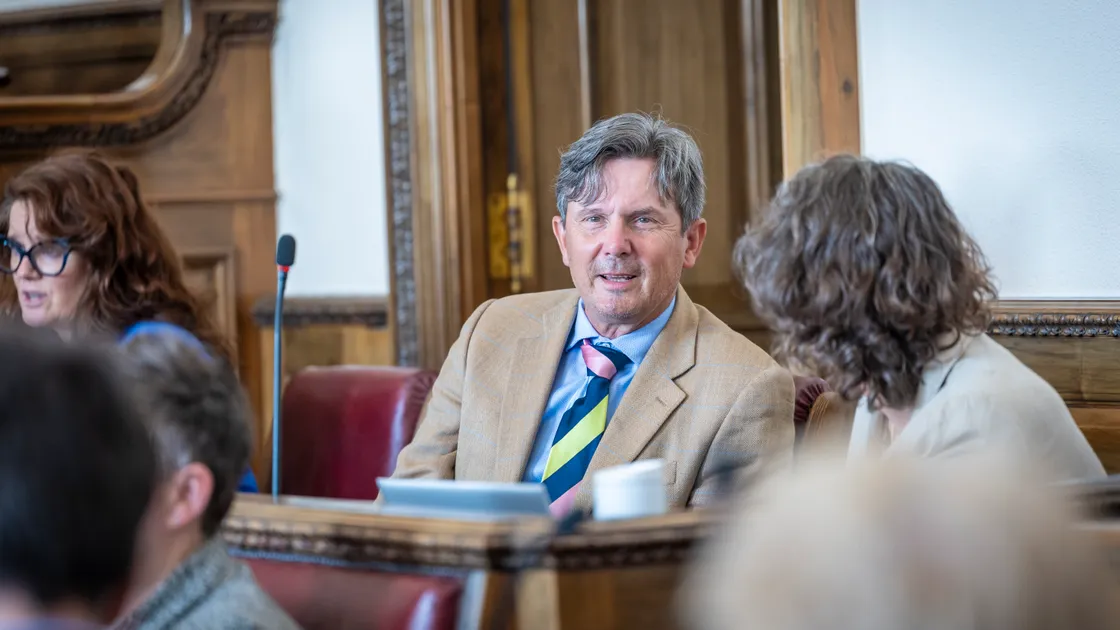
Scrutiny president Andy Sloan was dismayed when the move was first reported by the Guernsey Press last week.
‘There is a real risk in the current timing and P&R’s approach,’ he said, in email exchanges seen by the newspaper.
‘Whatever the technical legal position may be, accelerating and elevating this review at the same time as the Assembly debates GST inevitably risks sending a wider message — particularly to unions and public sector groups — that substantial future pay adjustments may ultimately be achievable.
‘That may not be P&R’s intention, but political signalling matters, particularly when tax changes are about to be debated.’
P&R tried to calm rebellious deputies over the weekend, assuring them that it was not looking at pay parity across the whole public sector – which independent consultants previously estimated could cost up to £50m. a year – and had instead effectively challenged only unions in the health service to prove that their members were underpaid to the extent they claim with evidence which the States believes has largely not been provided previously.
The senior committee said it had made no commitments to increase salaries even if pay disparity was proved.
It also pointed out that the previous States had undertaken to settle the pay parity dispute as part of an earlier pay deal. But it then delayed the work indefinitely, which P&R said left a shadow hanging over every round of pay talks.
Deputy Sloan’s concerns were not assuaged.
‘While it has been explained that this is not formally a UK-style equal pay for work of equal value exercise, the reality is that a review is still under way into alleged pay disparity across major public sector groups, and that review could still carry very significant financial implications depending on its outcome,’ he said.
‘From a taxpayer’s perspective, it is entirely reasonable to ask whether the States could ultimately end up introducing broad new taxation while also facing pressure for substantial increases in public sector remuneration costs of its own making.’
He requested more transparency about the potential impact of pay parity and any modelling undertaken on payroll and pension costs.
P&R replied to say that no modelling had been undertaken and that the agreement it had inherited to look into pay parity had placed the onus on the unions.
In the email exchanges, former treasury lead Mark Helyar told colleagues that the P&R on which he sat had concluded that full pay parity across the whole public sector would be ‘completely unaffordable and unworkable’ and put the States ‘even further in thrall of trade unions who are already squeezing the island’s lifeblood away with unaffordable pensions and above RPI pay rises’.
He asked for any such changes to be put in front of the Assembly for debate.
Deputy Helyar later said he had been assured by P&R’s reply to the concerns raised and claimed that applying pay parity widely would be inimical to a modern market economy.
Deputy Andrew Niles echoed Deputy Sloan’s call for more information about the potential impact of pay parity.
He said that he could not see how any work could be accelerated which was not strictly necessary if it potentially carried significant additional cost at a time when the Assembly had directed spending reductions and was about to debate major tax rises.