

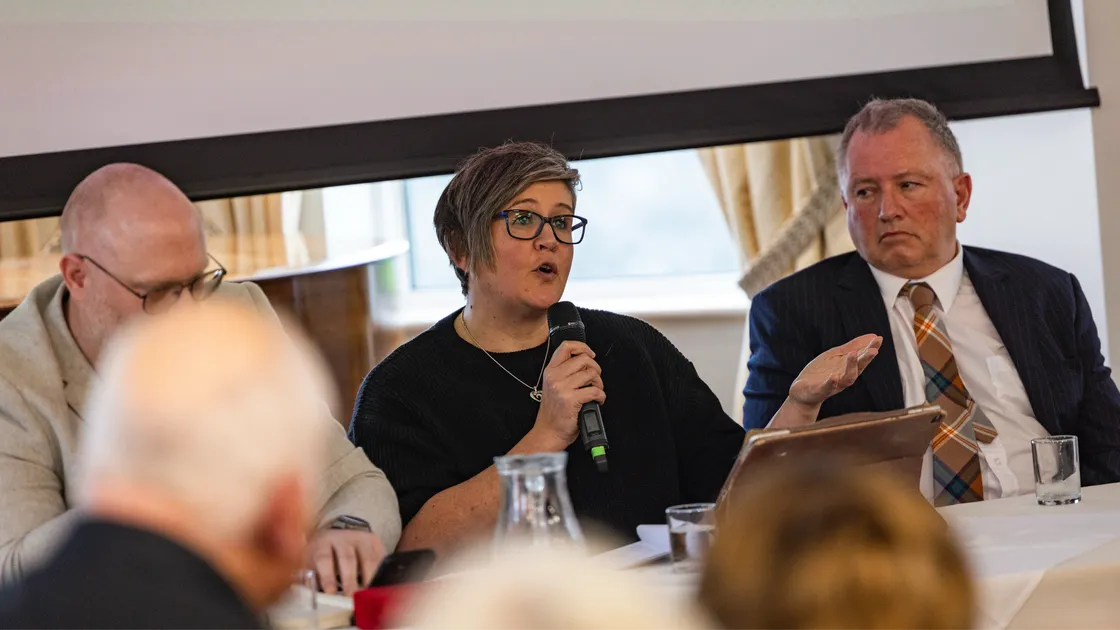
Haley Camp said that the changes that would be brought about were not about making a ‘neutral tweak’ to the system.
‘It is a re-routing of influence,’ she said, later saying that it was ‘cabinet government by stealth’.
By the time members were asked to vote on a project it would already have incurred a substantial amount of officer time, development costs and built momentum and that would make it much harder to reject, she claimed.
While Mark Helyar understood Deputy Camp’s points about oversight and scrutiny he said that the delegation of powers to P&R in this case was, in his view, quite modest.
The reality of the way the Assembly worked was not reflected in her comments, he said.
Deputy Camp’s suggestion that this was some form of cabinet government left Yvonne Burford’s ‘jaw on the floor’.
Assuming this was ‘ludicrous’, she said. Projects needed to come to the States with some information in them to enable members to make an informed decision, and that was what these proposals were about.
P&R president Lindsay de Sausmarez said that the idea that P&R would have more control or influence over projects in future was wrong, and she was personally uncomfortable about delegating too much authority to a single committee.
The changes would mean the States would have more autonomy and more influence than the current system, which enabled P&R to approve some projects at a too-early stage ‘by putting a finger in the air’ and could end up taking these to members to approve without solid cost estimates.
‘This allows that process to be driven by more accurate data,’ she said.
Neil Inder was concerned about how members were being asked to approve work on 26 projects now without any indication of affordability or deliverability within this term of the States.
And he was unhappy about the inclusion of a fire station, terminal and ancillary buildings at Alderney Airport, in the wake of members already approving the spending of £24m. on the airport’s runway.
Health & Social Care president George Oswald welcomed the proposals.
Five of the projects came under his committee, including three that were potentially high-cost and long-term, and two which were more urgent.
‘In short this process allows us to move away from the the current States approach, which is reactive and essentially firefighting to a much more strategic planning process.’
In her maiden speech, Deputy Munazza Malik urged members to approve the proposals and highlighted those in which committees on which she sat – HSC and Home Affairs – were involved.
‘The move towards clearer stages, better early planning and more consistent reporting is welcome,’ she said.
But she also wanted to see strong safeguards around how decisions were taken within the framework and clear lines of accountability for how the portfolio was managed over time.




You need to be logged in to comment.