
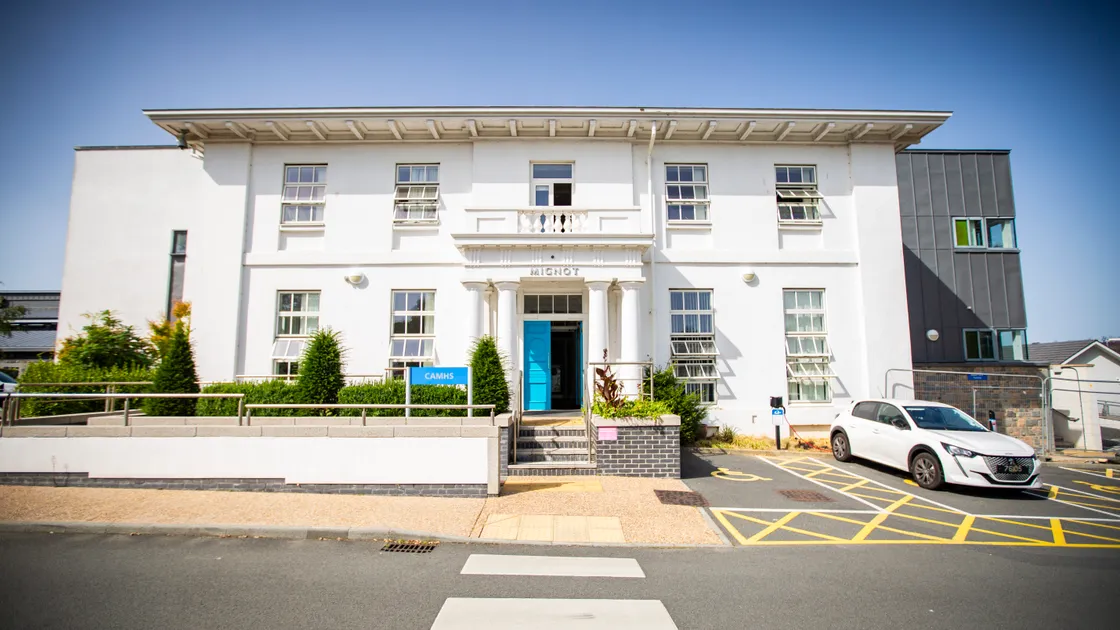
The Child and Adolescent Mental Health Service said ADHD referrals have tripled since the pandemic, the Autism Diagnostic Service has admitted it consistently receives more referrals each month than it has the resources to deal with, and Education, Sport & Culture said demand for its school autism bases had more than doubled in the past four years.
In response to a Freedom of Information request earlier this year, the Health & Social Care Committee said that current staffing levels and assessment capacity meant that children and adolescents were having to wait about 18 months for ADHD assessment, while adults were waiting for more than two years.
The system appears to be straining – with one local family is urgently calling for change.
Ady and Chantelle McKane’s daughter was diagnosed with autism at the age of two, and is currently awaiting an ADHD diagnosis.
They said she has not been to school since February because it is unable to meet her neurodivergent needs and they feel completely let down by an educational system that offers them no support.
‘Alana simply cannot cope with mainstream school. Her biggest issue is the noise and sensory overload, and yes, she has ear defenders and sensory aids. But we’re stuck in the middle because the criteria for the different levels of support is so heavily focused on how they present within school – not how they are at home,’ said Mrs McKane.
Girls, particularly, often learn to mask their neurodivergence in public settings and their distress only becomes obvious once they are back in their ‘safe space’. This means they do not meet the criteria for specialist help, despite experiencing extreme meltdowns at home.
Mr and Mrs McKane said their daughter would get so agitated once at home that she had to be sedated.
But since stopping school, they said her behaviour had calmed significantly.
Deputy Paul Montague, president of Education, Sport & Culture, acknowledged the problem but said ESC was working across committees and service areas to provide families with tailored provision that meets their individual needs.
‘As in the UK, we are seeing a marked rise in children with complex needs, particularly in communication, interaction and neurodevelopmental conditions such as autism, often alongside social, emotional and mental health challenges,’ he said.
‘For example, demand for places at the CIAS bases has more than doubled over the past four years. This service also operates an outreach team supporting a wider caseload in mainstream schools, where demand here has also risen by nearly 50% in the same period.
‘The figures demonstrate that our services need more resourcing, and we must not let these learners down.’
Autism clinical lead Amy Ford said the Autism Diagnostic Service was currently seeing children who were referred to the service in October 2024.
‘The team has consistently continued to receive more referrals each month than we are resourced to carry out,’ she said.
‘The team is very mindful that they are giving a life-long diagnosis, therefore we ensure that the process is rigorous and in keeping with NICE guidance.’
CAMHS operational manager Tom Loveridge said ADHD assessments were complex and typically take 12-15 clinical hours.
‘In each assessment a lot of information is reviewed, digested and decided on,’ he said.
‘CAMHS has seen a tripling of ADHD referrals in Guernsey since the pandemic. This is a common pattern in the UK currently as need continues to rise.’