

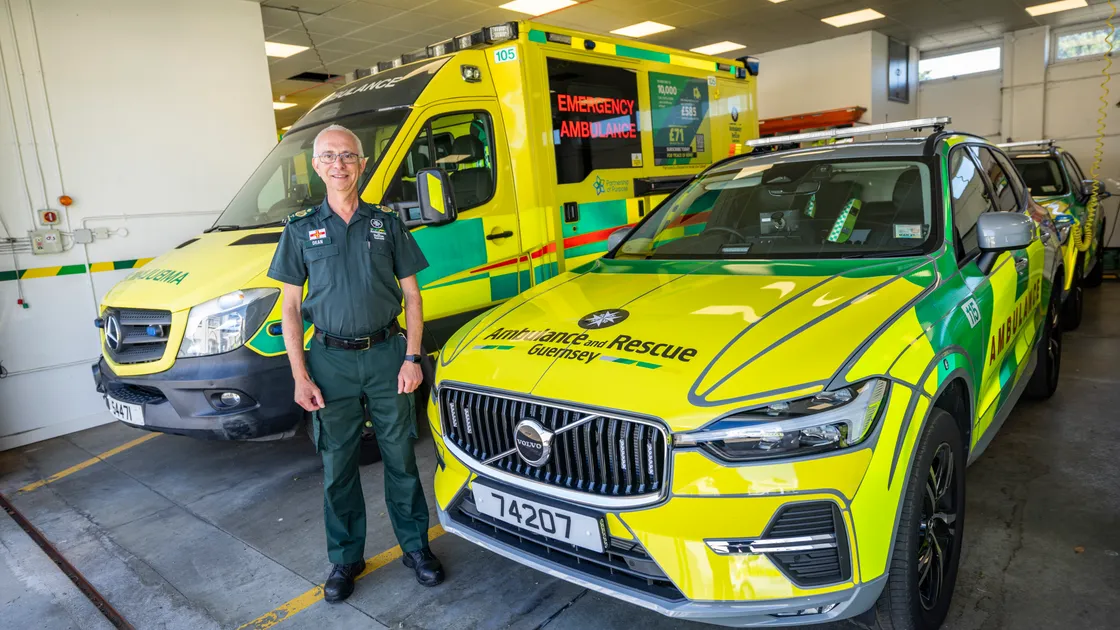
The survey, conducted between February and April, attracted around 1,400 responses including more than 750 written comments.
It found that 22% of respondents they were experiencing a life-threatening emergency when they called the ambulance, while 75% said their call was an emergency but not life threatening.
Most people who were experiencing a non life-threatening situation did not consider phoning their GP first and 90% of patients who were treated at home and discharged on scene said they were satisfied with the decision.
St John Ambulance & Rescue Service head of operations Dean De La Mare said that the survey results reinforced what the organisation already believed about the standard of care provided by its frontline staff.
‘It proves that there are people out there who are willing to share their views and want to give positive feedback,’ he said.
‘We always like to think that the staff are doing an excellent job out there and fortunately we get very few complaints, but this survey just goes to prove what we think about the clinicians doing a great job.’
Of the people who used the emergency ambulance service in the last year, 96% of people rated their overall experience as good, very good or excellent, 97% of people were highly complementary of the level of respect and dignity they experienced and 98% rated the professionalism of ambulance crews as high or very high.
For the first time, the survey also included questions about the Joint Emergency Services Control Centre.
Mr De La Mare said the feedback was particularly welcome because JESCC had never previously gathered this level of public opinion.
‘It has been going for 12 years now and had no feedback from the public,’ he said.
‘Most people recognised the call taker as being empathetic and caring when they’re on the phone and dealing with the emergency call. Often people calling are really scared and upset and need reassurance.
‘I fed the results back to the control manager and he was very pleased to be able to share that with his team.’
While the survey was overwhelmingly positive, the service was continuing to look at ways of improving how it operates. One priority is moving away from paper-based records.
‘We’re probably one of the last paper-based services in the UK, so we want to move on to having electronic patient report forms,’ said Mr De La Mare.
‘It’s things that the public wouldn’t necessarily pick up on, but it would make a huge difference for us and how clinicians operate.
‘The overall survey is so positive, there are always areas where we can improve, but the survey itself doesn’t really point to those.’
Earlier this year, there was a restructure of leadership, bringing the blue light service and the charity to work closer together.
‘Operationally for people on the ground it’s been business as usual,’ he said.
‘The people we interact with at government level and commissioners through HSC would have seen some different faces.’
Mr De La Mare said the overall number of ambulance calls had remained relatively stable, although crews had experienced short periods of exceptionally high demand in recent months, but predicting the demand is difficult.
‘The average number of calls has not changed, but over the last few months there have been short periods of really high demand, meaning staff are busier for those periods and the calls get triaged,’ he said.
‘Because the UK deal with such a huge amount of calls compared to us, they know when their peak times are going to be, where for us it’s totally unpredictable.’



You need to be logged in to comment.