
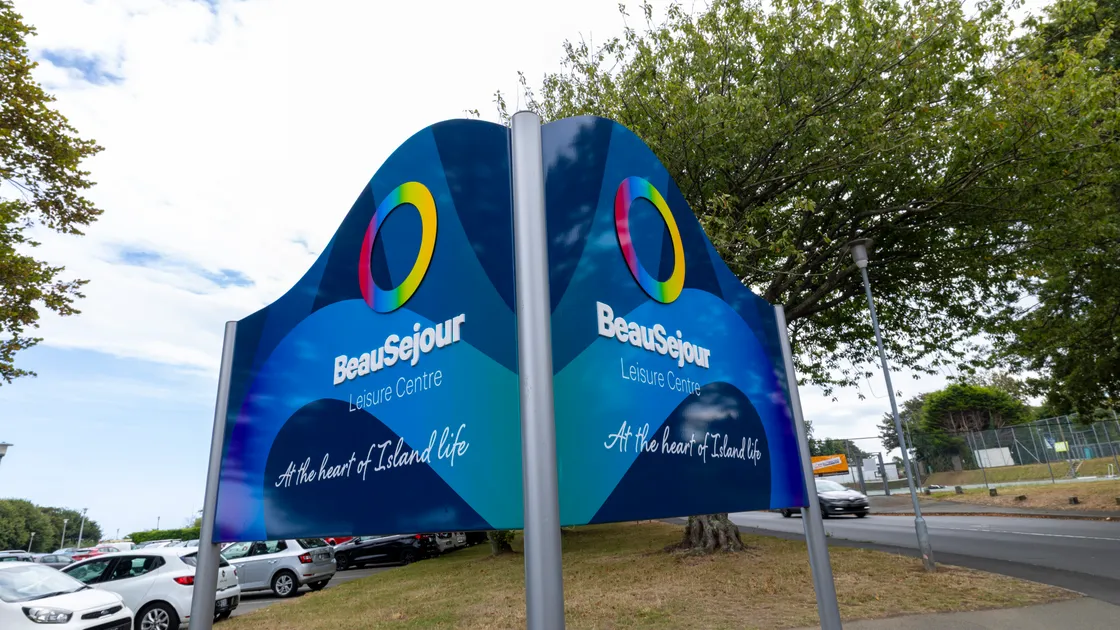
The centre is taking a direct subsidy of close to £1m. a year to stay operational, but there appears to be widespread support among the committee to keep it running somehow.
It has accepted the warnings of the independent review into the centre’s future that continuing to ‘patch and mend’ the ageing centre is not a viable long-term option.
The consultants behind the report said that a persistent operating deficit for a combined ‘wet and dry’ sports facility was not unusual, but the centre receives an annual grant of £700,000 from the Channel Islands Lottery, which is topped up by up to £300,000 from general revenue.
Figures in the report show the centre’s net deficit before funding has ranged from about £605,000 in 2019 to almost £1.2m. in 2020, standing at roughly £926,000 in 2025, when income of £3.98m. was outweighed by expenditure of £4.91m.
A large part of the cost, the review said, stems from the age of the building, which was built in 1976 and opened in December that year, and from staffing costs that are high compared with UK industry norms.
While it reflects the Guernsey cost-of-living, a duty manager at Beau Sejour can expect to earn about 25% more than a UK equivalent, while a lifeguard would be on close to minimum wage in the UK and can expect about £18 an hour locally.
The review concluded that the centre ‘performs well’ against most benchmarks and delivers social value worth at least £1.4m. a year in the wider health, wellbeing and community benefits it generates.
It said that a zero-subsidy or reduced-subsidy model was ‘unrealistic without major change’, and stakeholders have argued that the funding should be reframed ‘not as a subsidy, but as commissioned funding or service grant to deliver defined public outcomes’.
It aims to make what it calls ‘a clear case for change – not closure’. Options including closure, relocation and significant downsizing were assessed and ruled out because of the loss of essential services, public value and the centre’s role as an emergency rest centre.
But the review found the estate is ageing and its ‘fabric and plant’ nearing the end of life, with dated systems, poor energy efficiency and mounting mechanical and electrical replacement pressures – even though energy consumption has already been cut by some 45% since 2006.
Continued ‘patch and mend’, it warned, ‘would effectively be a programme of managed decline, resulting in an increased risk of failure and potential closure’.
Two options have emerged – a major refurbishment and repurposing of the existing building, or a full rebuild. Both, the report said, would be likely to outperform ‘business as usual’ in early financial modelling.
A rebuild is described as the strongest long-term solution, offering a fully integrated ‘wellbeing campus’ over 40 to 50 years, while refurbishment might provide a more balanced, lower-cost route in the short term.
Either way, it concluded, ‘significant capital investment appears unavoidable’ – and there is no guarantee that that money could be made available.
The review found that outsourcing the running of the centre was unlikely to deliver the savings often assumed, because high wages and lack of competing utility suppliers would limit the potential gains. It has proposed the possible creation of a commission or a States-owned trading company as future models worth exploring instead.
The redevelopment has already been recognised as one of 26 projects in the States capital portfolio pipeline, following the Assembly’s debate in April.
No final solution or capital commitment has yet been made, but the report is unequivocal that ‘a passive “do nothing” approach is not a viable long-term strategy’.