
It has also revealed that the island’s new critical care unit will not open until late 2027, and has moved to wind down and reboot its £24m. patient records programme.
The Committee for Health & Social Care set out the position on its three biggest capital schemes today, saying it had chosen to stop or reshape programmes rather than keep committing money ‘without a realistic and funded route to delivery’.
The decisions amount to a significant retreat from the ambitions set only a few years ago, and an admission that the projects have run into serious cost and delivery problems.
‘These are difficult updates, but it is important that the committee is transparent with the community about how these capital programmes have developed since their inception,’ said HSC president Deputy George Oswald.
‘Financial responsibility means being prepared to stop, reshape or separately justify work when the evidence shows that the original route is no longer affordable or deliverable.’
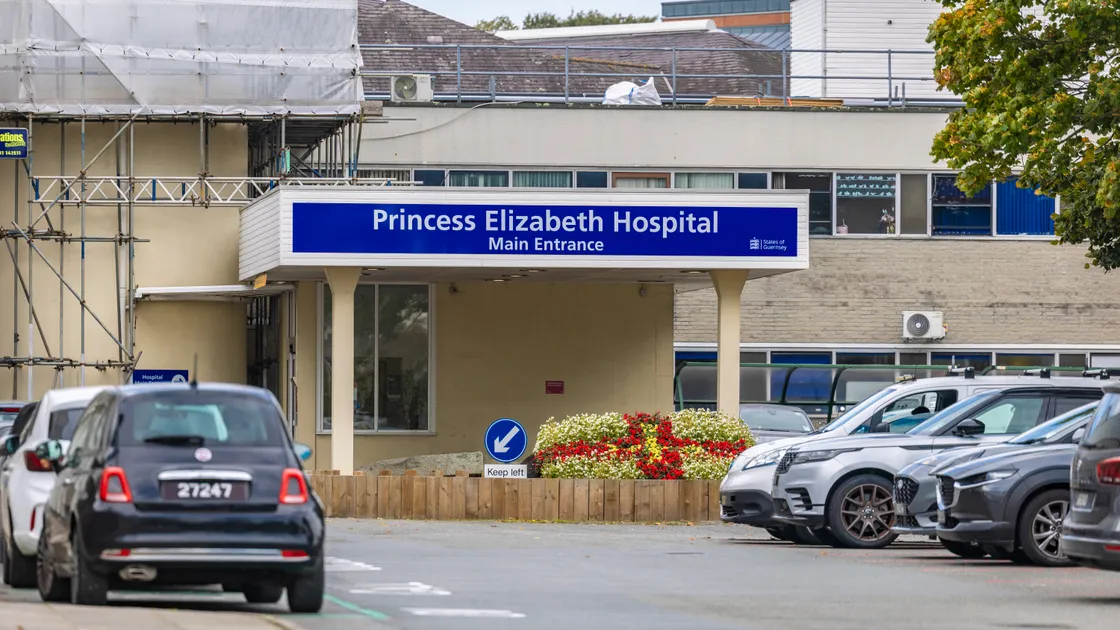
The most significant decision concerns Phase 2A of the Our Hospital Modernisation programme – a major new-build to expand operating theatres and provide modern maternity facilities at the Princess Elizabeth Hospital. The committee said the scheme was now ‘unaffordable and cannot be progressed further’, with the latest estimate putting its cost at around £273m.
That is more than double the £120m. the States agreed for Phase 2 in October 2023, and far above the £130m. figure presented in January 2025 after a value-engineering exercise. About 55% of the increase was attributed to inflation over a delivery period running to 2030, with the rest reflecting a fuller understanding of the scheme’s complexity and risk. Around £5.9m. has already been spent, which the committee said was not wasted as it would inform future planning. It now intends to pursue ‘smaller, more targeted’ projects instead.
Meanwhile, the first phase of the programme – a new critical care unit and post-anaesthetic care unit – remains unused almost two years after fire-stopping concerns were identified in 2024. A further £3.05m. has been committed to complete remedial and additional works, on top of a forecast total of £39.3m., with the units not expected to open to patients until late 2027.
The committee has also agreed to wind down its Electronic Patient Record programme, on which about £22m. of a £23.7m. budget has been spent. While its first phase was rolled out successfully earlier this year, unfinished elements – including an acute electronic prescribing system and a safeguarding system upgrade – will be transferred to the States’ Digital & Technology team as a ‘rolling programme of improvement’, rather than funded as a major scheme.
Deputy Oswald said the committee no longer wanted to pursue what he called ‘big bang’ programmes, preferring to target investment where it could have the greatest impact and deliver it ‘in a much faster and more cost-effective way’.



You need to be logged in to comment.