

Health & Social Care learned earlier this summer that the latest projected costs for phase two of the Our Hospital Modernisation Project had more than doubled to £273m.
It had been working on the basis that it could achieve about 80% of the benefits of its original scheme for about £130m.
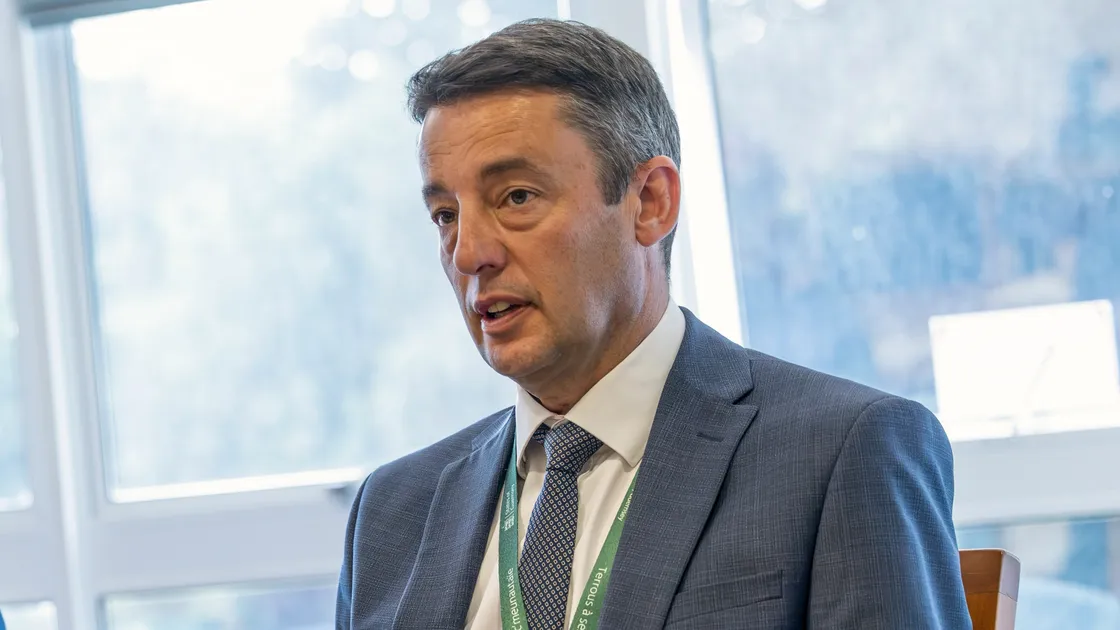
States chief executive Boley Smillie said it would have been easier for the committee to try to keep investing in the existing programmes. Stopping them was ‘the much more difficult decision, but the correct decision’, he said. ‘We can reset and make sure that what we’re delivering is right in the context of affordability.’
Mr Smillie said that the lesson for the States was to ‘break some of these huge transformation programmes down into much more smaller, manageable projects’.
Health & Social Care president George Oswald said the decision was ‘clearly a disappointment’. ‘In a world where we had endless resources, then clearly we would not have stopped it.’
He said HSC still recognise the need for significant investment in the hospital’s infrastructure, but would now have to decide what it could afford and prioritise accordingly.
‘We now have a challenge,’ he said. ‘And my committee is absolutely up to taking on this challenge.’
Deputy Oswald said HSC would now look at smaller and more manageable projects, with theatre capacity remaining a priority.
‘I hate that phrase, “pause and reflect”, because it has unfortunate connotations in previous education programmes,’ he added.
‘But this is an opportunity to pause and really think what we actually need and what we can provide within the resources that we have. As soon as we knew that this was an issue, we started thinking about what we’re going to do. Clearly, those plans need to be made far more firm and decided. And we will undoubtedly need extra advice from people we already have on board to see how we can do this, particularly in terms of theatre provision.’
Mr Smillie said that the closure of the programme did not dilute the need for significant investment across Health & Social Care.
‘The closure more reflects the fact that this significant legacy programme, at some point in its life, the benefits were overestimated in what could be achieved for essentially a fixed amount of expenditure. As we’ve got closer to the point where those numbers are better understood in today’s market, HSC have rightly taken action, stopped the programme, and realised it was unaffordable.’
The abandoned plans included building new operating theatres and surgical capacity, modern maternity maternity facilities and supporting infrastructure. The emergency department could also come into consideration after a sharp rise in demand. Deputy Oswald said attendances had risen from between 16,000 and 18,000 a year before Covid, to potentially nearly 30,000 this year.
‘And this is in the department which was designed probably 20 years ago now,’ he said.
‘We will have to scope whatever we do very cleverly within the limits of the budget that we’re allowed. That is what we’re here to do, and we will do it.’
The committee, which spends £250m. a year on healthcare for islanders, is already facing a Scrutiny panel investigation into what went wrong on the hospital modernisation project and the electronic patient record system, where work at HSC is being wound down after the first phase of the project was halted.