

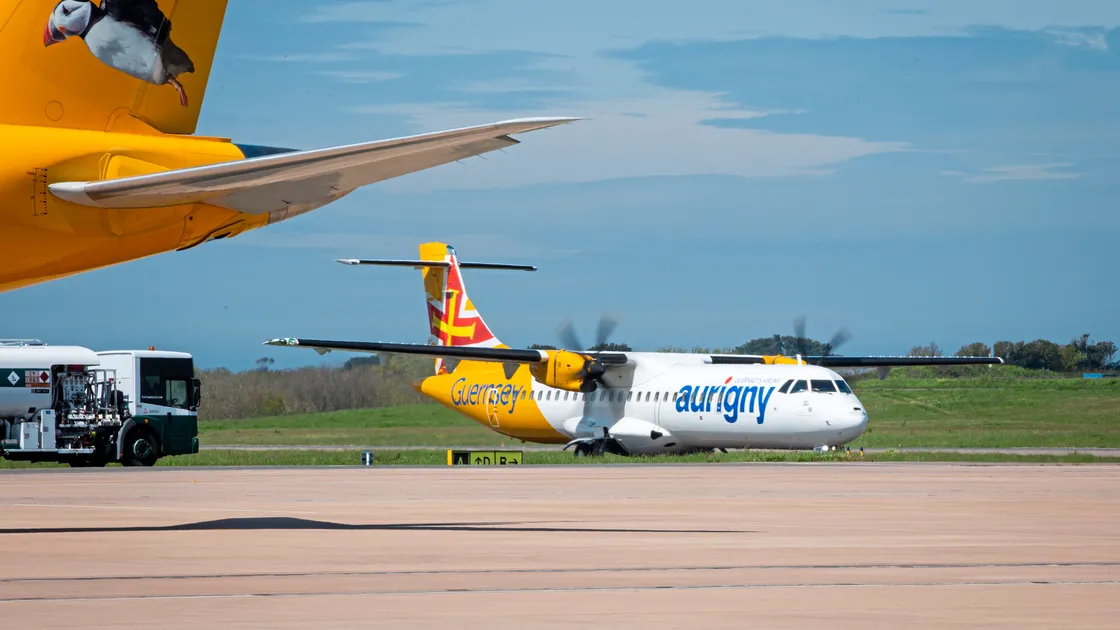
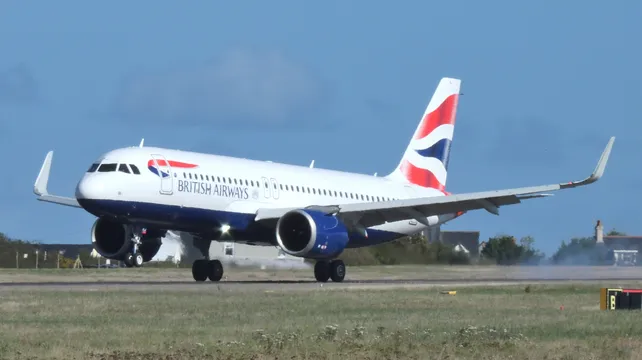
The States-owned airline has identified the subsidised British Airways Heathrow service as one of three main financial pressures, with the others being increasing fuel prices and the airline stepping up to cover Blue Islands services.
Aurigny claimed that a ‘significant number’ of passengers had moved away from Gatwick to use Heathrow instead.
It said that additional capacity, a subsidy and preferential airport charges that it could not access had put sustained pressure on its London revenues, which previously have accounted for more than 50% of its income, and contributed to a slump in demand for Southampton and Birmingham services.
Its likely losses were revealed by the States as part of the Budget this week with £9.7m. expected this year and another £5.7m. next year, to add to £13m. of losses over the past two years.
Its accumulated losses have led to the States having to recapitalise the company to the tune of nearly £100m. over the past decade.
Guernsey Hospitality Association president Alan Sillett said from a visitor economy perspective, the Heathrow service had been a very positive development.
‘It gives Guernsey access to a major international hub, brings the island to new audiences and provides valuable opportunities to grow visitor numbers and spending,’ he said.
‘Competition is a normal part of aviation, and the answer cannot simply be to protect an existing operating model from it.’
Mr Sillett said that the projected losses were concerning but he would not want to see the success or otherwise of local air connectivity judged solely by the financial performance of one airline.
As an air connectivity framework was developed, there needed to be an honest, evidence-based assessment of the network Guernsey actually needed, the most cost-effective way of delivering it, and the appropriate role for Aurigny within that network, he said.
‘That should include being open to other airlines operating routes where they can provide a sustainable service, while ensuring that our essential links remain reliable and affordable,’ he said.
‘Ultimately, our priority must be what is best for Guernsey, its residents, its businesses and its visitor economy – not the protection of any particular airline or operating model.’
The local airline expects to report a significant loss for 2026 but plans to nearly halve those losses the following year, though it said that there remained uncertainty around future demand and fuel prices and the small Guernsey market was sensitive to changes.
Aurigny’s fuel costs have increased more than 50% on what it paid in 2025.
It said that its standardised ATR fleet had helped to limit the impact, but in keeping with its community mandate, Aurigny had not passed the full increase on to passengers or withdrawn routes, as many other airlines have done, which has affected its financial performance.
After Blue Islands collapsed in November last year, Aurigny took over the Guernsey-Jersey lifeline route and added extra Southampton rotations.
The extra revenue associated with these services came with the cost of an additional ATR72-600, its crews and Southampton ground staff, and one-off costs of scaling up quickly to take on the route.
‘We have spent the last two years rebuilding the service reliability of our core UK network, and our punctuality rate is again on par with or better than other carriers,’ said Aurigny chief executive Nico Bezuidenhout.
‘We have simplified our fleet, and we are nearing completion of a material engine overhaul investment cycle of our owned ATR fleet, which supports improved fuel efficiency and further increases reliability.’
Throughout 2026, Aurigny relied less on leased aircraft due to improved ATR reliability and matched capacity to demand which declined after the conflict in Iran began and fuel prices rose.
It temporarily reduced capacity between April and June because flying at low load factors would have increased losses.
Aurigny has created a simpler, lower-cost fleet, retiring the two Dornier aircraft and operating the Alderney route with Skybus Twin Otters which cost less to run.
The second of two rebuilt Twin Otters dedicated to the Alderney operations will enter service by the end of October, while Aurigny will continue to have access to Skybus’ broader fleet of Twin Otter aircraft.
Aurigny chairman Kevin George said it had been an exceptionally tough year for airlines everywhere, including his own.
‘We have acted decisively to control costs throughout 2026, and the reduced loss we are planning for 2027 shows that this work is starting to take effect,’ he said.
‘The business has managed to deliver profitability in successive years after the Covid pandemic, and while the current conditions are not conducive to positive financial results, we are determined in our resolve to deliver reliable and efficient air services to Guernsey, notwithstanding the challenging conditions.’

You need to be logged in to comment.