

Presidents and members of several other committees explained how they were trying to meet their own financial challenges within budget constraints drawn up by Policy & Resources.
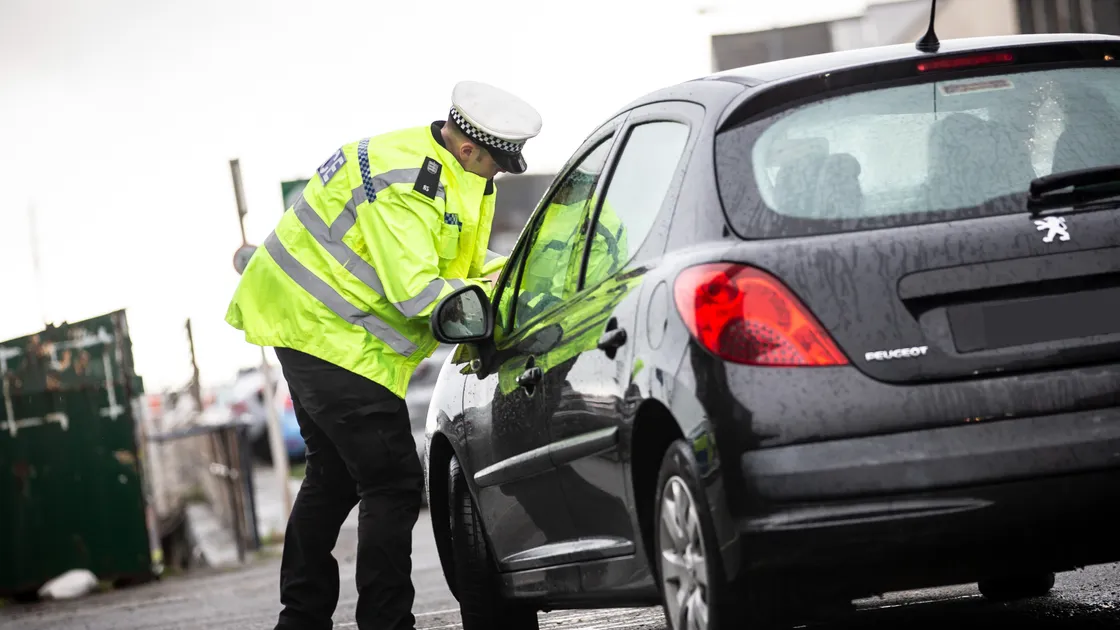
The writing was on the wall for Home Affairs once it failed with its first amendment requesting between approximately £800,000 and £2m. to fund cost pressures facing the police, fire service and other emergency services.
Environment & Infrastructure president Adrian Gabriel saw the amendment as the first major test since the States agreed a new long-term tax and spending package last month.
‘This Assembly cannot afford to abandon fiscal discipline the moment difficult choices arise,’ said Deputy Gabriel.
‘We cannot open the taps. If we allow exceptional top-ups here, there and everywhere outside the agreed budgetary limits, we open the floodgates for every other committee to demand the same.’
He said that approving Home Affairs’ approach ‘would shatter the fiscal framework the States has worked so hard to establish’, and he warned that approving the amendment might lead to him submitting one of his own for more money for road cleaning, over which E&I had faced criticism recently.
In addition to its own five votes, Home Affairs’ emergency services amendment won the support of only half a dozen members.
Andy Sloan was sympathetic to it after reading an external peer review of the Fire and Rescue Service which set out the impact of financial constraints under which it had been operating for some 15 years.
‘I would call these – prisons, fire, police – core government services and primary duties of the state. If we are underfunding them then our prioritisation process is not doing a good job in my opinion,’ said Deputy Sloan.
He drew a comparison with expenditure which had ‘mushroomed’ on P&R’s internal services to other committees since they were centralised some years ago.
But he ended the debate as one of six members who abstained from voting on the amendment, along with Deputy Rob Curgenven and the four members of Forward Guernsey.
Sarah Hansmann Rouxel argued that the cost pressures at Home Affairs were similar to those facing other committees and ‘not quite enough’ to justify backing its bids for more cash.
‘Every committee has been asked to transform and reprioritise and tighten its belt at the same time as demand has been increasing,’ said Deputy Hansmann Rouxel.
‘The question I have for the president of Home Affairs, and indeed for all his committee, is where is that work? Has the committee looked at doing things differently? What has it stopped doing or reorganised or looked to reprioritise before coming to the Assembly for additional recurring expenditure?’
She spoke early in debate and said she was ‘open to being persuaded’ by Home Affairs members, but their explanations ultimately failed to secure her backing.
The member who has spoken the least so far this term, Bruno Kay-Mouat, made a rare intervention to urge deputies to reject Home Affairs’ emergency services amendment.
‘We have been told that the service heads have been involved in such requests but are these not the same heads, not in person but in position, who needed armoured Land Rovers, high-speed pursuit vehicles and over-budget vessel overhauls?’ said Deputy Kay-Mouat.
‘This spending debacle is not limited to this committee but is seen across many. We appear to spend, spend and spend, often with no control and definitely with no consequences.
‘If we rein in our spending, we will be doing exactly what our electorate requested and expected us to do. If we can’t spend, we should become more efficient with the resources we have, and so the process of good government begins.’
Some members of Home Affairs had consistently voted against various proposals to raise taxes. Deputy Sasha Kazantseva-Miller criticised their ‘political inconsistency’ in now requesting inflation-busting budget increases.
Home Affairs found a rare voice in support when Deputy Tina Bury spoke about the drive for ‘savings – but at what cost?’ She claimed it was ‘disingenuous’ to allow the public to believe that spending could be cut with no impact on frontline services.


You need to be logged in to comment.