

But bills are likely to rise over the next decade.
The Environment & Infrastructure Committee and the States Trading Supervisory Board admit that their modelling forecasts that real terms increases would be required over the next 10 years to help finance the increased infrastructure investment.
Both say they are looking at possible options to avoid that happening.
‘Guernsey Electricity has modelled the impact on customer bills over the next 30 years. Around 85% of GEL customers are on the Super Economy 12 (non-heating) tariff, for which the average bill is currently £1,689 a year. To fund investment in a new interconnector via Jersey, tariffs would have to rise around 5% a year over a 10-year period, inclusive of the assumed 3% RPI increase. That would mean bills increasing by on average around £85 a year between now and 2036.’
The weekly electricity cost for a household would rise from about £35 a week to more than £50 a week over that period.
But the committees say once they get past that point, bills would fall, in real terms, over the course of the next 20 years, because less investment would be required to maintain and operate on-island generation.
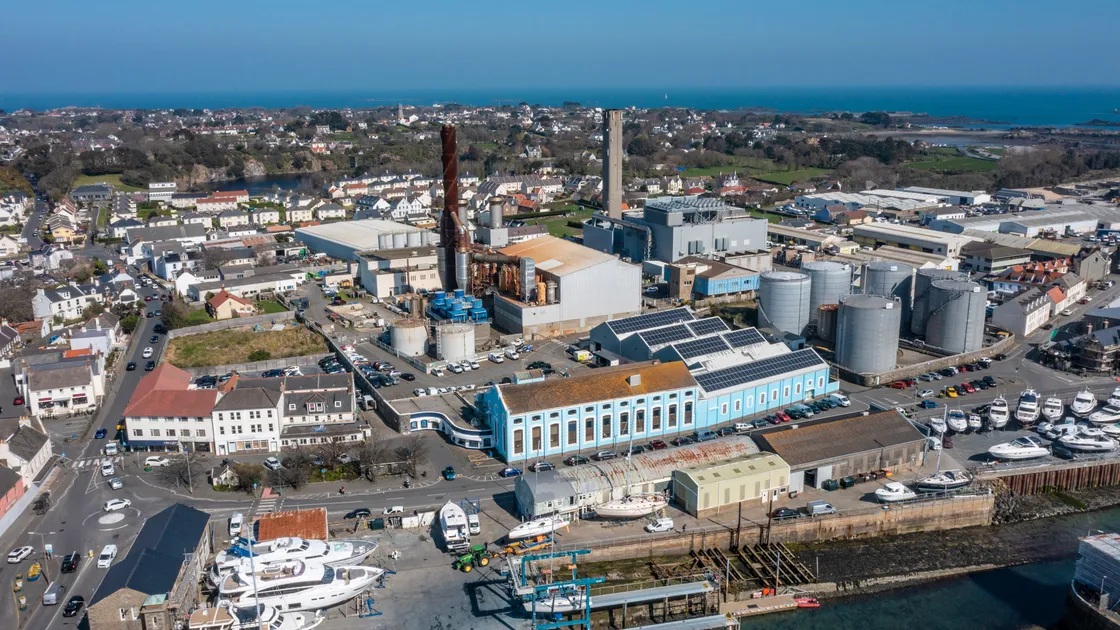
By contrast, maintaining the status quo of on-island generation would require significant investment in the next 10 years to replace some of the existing power station generators, along with ongoing maintenance and operating costs.
Taken together, these are forecast to have a similar impact on bills as a second cable via Jersey and development of more wind and solar power. The financial impact of the second cable going direct to France, rather than via Jersey, would be slightly different.
The two committees say a direct interconnector to France would not be commissioned before 2034, which would delay the initial investment requirement. But that comes with a warning.
‘The estimated additional capital cost would mean higher bills in the medium to long term, with the model forecasting annual increases of around 8% in 2028 and 2029, followed by 5% for the following 10 years. This would add around £100 a year to the average bills between now and 2036. After applying annual inflation of 3% over 30 years, this would see average customer bills rise by, on average, of £73 per year.’
The modelling takes account of the projected increase in demand, and assumptions for oil prices, electricity import costs, interest rates, and exchange rates. It includes all expenditure on new interconnectors, network and local generation plant, as well as operating and maintenance costs and interest on any loan financing.
Environment & Infrastructure president Deputy Adrian Gabriel said that his committee understood the strain that higher charges could create for many.
‘We recognise tariff increases will be difficult for some households and businesses. So following engagement with the Policy & Resources Committee, it has been agreed that GEL should model options to see if and how any immediate impact on tariffs could be mitigated,' he said.
'Options include the States providing an equity injection to the company, or adjusting the phasing or structure of any future debt repayments to the States.’
Despite the forecasting, any actual application to increase tariffs would remain subject to scrutiny by the STSB. Its president Deputy Mark Helyar stressed that the process would be a thorough one.
‘It includes the commissioning of an independent review of any new tariff applications, benchmarking, establishment of efficiency targets for GEL, and ongoing review of the company’s capital expenditure programme. We will continue to work with GEL to establish how any potential increases in the earlier years can be smoothed out over a longer period of time.’



You need to be logged in to comment.