
Dear members,
First, I want to express my appreciation for the recent positive and open-minded discussions around road safety and the laws governing electrically assisted pedal cycles (EAPCs). It has been both refreshing and encouraging to see a genuine willingness to review these matters, including the Environment & Infrastructure president’s comment about potentially lowering the minimum age of use to align with the entry age for secondary school.
With that encouraging stance in mind, I would like to suggest that the committee considers a broader, forward-looking review of our legislation – specifically, the Motor Vehicles (Electrically Assisted Pedal Cycles) (Exemption) (Guernsey) Law, 2002 – to ensure that it reflects today’s technology, opportunities and sustainability goals.
Since the law was enacted over 20 years ago, the world has moved forward considerably. Electrically-assisted pedal cycles, e-cargo bikes, and micro-mobility options such as e-scooters have become key components of modern, efficient transport systems across the world. Many jurisdictions now allow for a much wider range of designs, including four-wheeled pedal-assisted cargo bikes, which are already being adopted by traders and commercial logistics and delivery companies in built-up areas as more space-efficient alternatives.
Guernsey’s current legislation, which limits EAPCs to two or three wheels and a maximum weight of 60 kg, inadvertently restricts access to these sustainable innovations helping other places around the world to ease their traffic space issues.
If we want to genuinely reduce congestion, free up road space, support our carbon reduction goals and help the recently publicised obesity rates, enabling access to these newer active transport options will be an important step forward.
I would also like to raise the point of the age restriction, which currently prohibits use by those under 14.
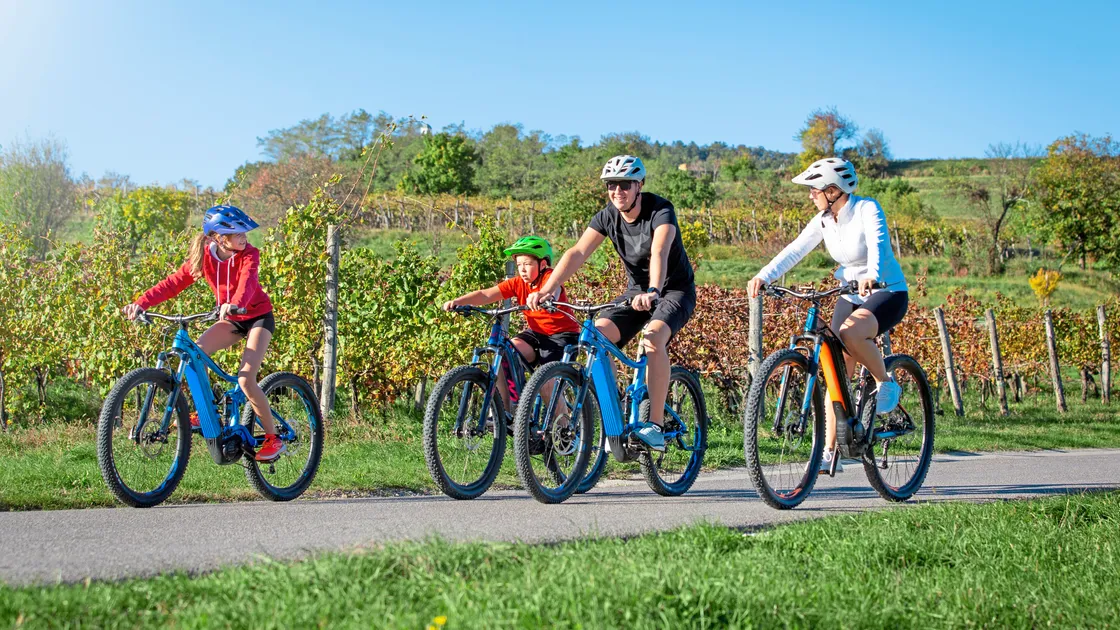
I fully appreciate that safety is paramount, but I would encourage a capability/certification based approach rather than a blanket age limit. For example, my own eight-year-old son has cycled to school daily in all weathers for the past two years. He has developed strong road awareness and skills – arguably more than many secondary age children who have only ever been passengers in cars.
He rides over 20mph on his 24-inch bike assisted by gravity downhill any time he leaves Castel School and rides down the Mont d’Aval to Saumarez Park.
E-bikes suitable for smaller riders do exist, we just haven’t been aware of them because of our outdated, restrictive laws.
A typical 24-inch e-bike weighs only around 17 kg, compared to 13 kg for a standard 24-inch bike.
These bikes do not increase speed; they simply make pedalling up to 15.5 mph more accessible, especially uphill and in the face of the autumnal winds.
In short, the current age restriction appears rooted more in outdated perceptions and fear, than in modern evidence or technology.
It seems perverse that our most vulnerable users we want to remain the least assisted. Changing the laws to be more competence based could dramatically cut traffic around term times as more children take up the opportunity to try e-bikes to make the otherwise unpalatable pedal to school suddenly seem easier and achievable.
Even if there was a stipulation that they could only use e-bikes on the road from eight years old with a certificate of competence and to be escorted by an adult rider for a year. These kids are already riding right now every day on the roads.
Nine-year-olds are riding on their own without adult supervision after their bikeability courses are completed.
I’d just like the ability for them to also have assistance and be properly discussed using facts and evidence from the parents who cycle with them every day and also care about their safety.
In Ireland, for example, they fully legalised e-scooters for road use back in May 2024 and have reported no increase in negative outcomes.
Other jurisdictions have shown that sensible, evidence-based updates can safely expand access while supporting sustainability and mobility goals.
Guernsey has a unique opportunity to lead by example in embracing innovative, efficient, and inclusive transport solutions. We can build a bespoke legal framework for this island to help ourselves.
A comprehensive review of the 2002 law could align our policies with today’s realities and tomorrow’s opportunities.
If you have a spare 16 minutes please watch a video to see what’s even road legal in the UK – the type of thing that could help ease our congestion and parking problems. It’s available here.
Thank you again for your ongoing efforts to make our transport systems safer, fairer, and more sustainable. I hope these thoughts provide some food for consideration in future discussions.




You need to be logged in to comment.