
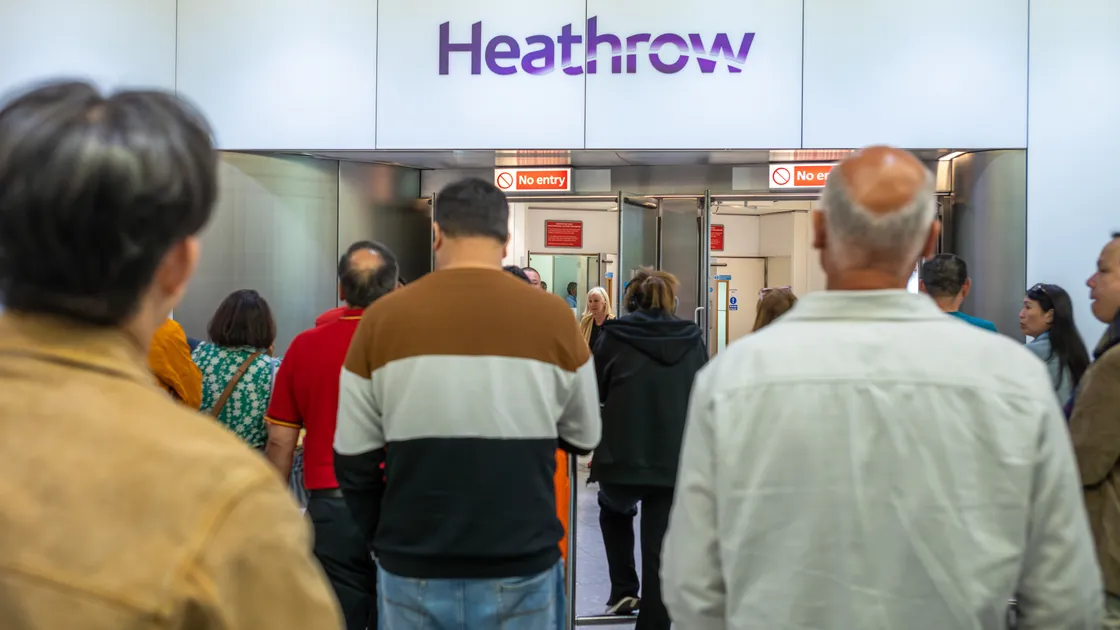
Living on a little rock, it’s no wonder that how we get on and off it is the subject of frequent debate and dominates headlines for weeks on end. For quite a while now, the focus has been on the annus horribilis that was 2024 for Aurigny. However, since then the conversation has turned, not for the first time, to whether we should have an external aircraft operator running a direct Guernsey-Heathrow service.
And the debate has already, and predictably, got heated with a jet blast of opinions from both sides across all media. If there was a subject that was sure to fill my inbox as a deputy it was anything to do with getting up in the air and coming down again, be it the length of the runway, the types of planes we should have, where they should go to and who should operate them. So, I thought it might be worth a moment to fly through some of the pros and cons of having a route to Heathrow run by an external operator, before considering what will be needed to make for a smooth journey in the future.
To infinity and beyond – the case for Heathrow
Connectivity
Heathrow isn’t just another airport, we’re told. It is the UK hub through which the world flows in and out. For Guernsey’s business sector, particularly finance and its associated services such as accountancy and legal, the ability to say there is a direct connection with Heathrow is seen as a distinct plus. Heathrow caters more to the long-haul and premium international travellers, compared to Gatwick that is more focused on European and low-cost carriers.
That means better options for Guernsey’s international business travellers, easier inbound access for investors and clients, and a significant image boost. ‘Fly direct from Heathrow’ simply sounds more global than ‘transfer from Gatwick’.
It’s the economy, stupid
Connectivity equals opportunity. Guernsey’s economy thrives on accessibility – the easier it is to get to and from the island, the more attractive it becomes for businesses, events, and high-value tourism.
The argument goes that more flights mean more visitors, and more spending. For a small jurisdiction, the multiplier effect can be powerful. Every arrival carries not just tourists but potential investors, collaborators, or new residents.
A Heathrow link could therefore act as a growth engine for the wider economy. Certainly, when looking at the state of national finances, and trying to grow our own, being able to have direct access to destinations outside of Europe right now would be an advantage. Provided it’s sustainable of course, and more on that later.
Resilience and diversification
Guernsey’s London connectivity depends heavily on Aurigny and the Gatwick route. Generally, despite the moans and groans – yes and 2024 – it is generally reliable. Bad weather and operational hiccups affect every airline don’t forget. However, it is argued that adding a Heathrow connection introduces greater resilience. It also provides flexibility for different travellers – Gatwick for leisure, Heathrow for business and onward connections. In short, two wings are better than one.
Competition and service improvement
Another argument put forward for bringing in another operator is that it will mean service will improve all round and encourage Aurigny to sharpen its operations, pricing, and punctuality.
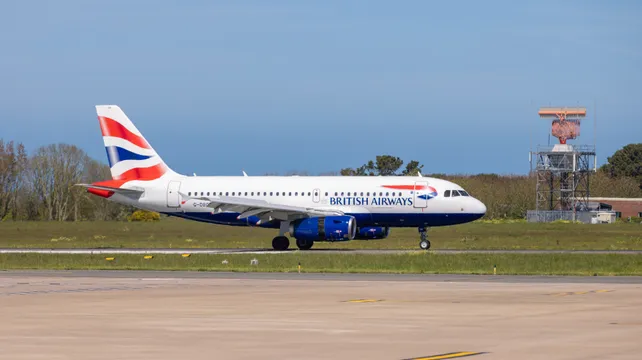
Passengers would obviously benefit from choice, with different flight times, perhaps different aircraft types, even frequent-flyer benefits if a major carrier like British Airways came in.
So, just a few of the positives. What about the negatives?
A flight of fancy – the case against
Sustainability
Aviation is expensive and economies of scale are important. Guernsey is a small route with fewer than 700,000 passengers annually and a population of 64,000. To use one of former Deputy Murray’s favourite terms, it is sub-scale. To attract an outside operator to fly in and out of Heathrow, which is itself expensive, the States may well have to pay for the privilege through subsidies or revenue guarantees. Indeed, it could end up funding two airlines – Aurigny to maintain its routes, and a newcomer to fly to Heathrow. It all depends on passenger numbers of course. Flights will need to be consistently well filled with solid fare yields. That can only happen through either increased passenger numbers overall, stopping other routes such as London City, or a combination of the two.
We can see the issues when looking at other comparable places such as the Isle of Man. An independent review in 2021 found that Heathrow was only viable with high load factors and business traffic, otherwise subsidies would become structurally unsustainable. Interestingly, it paid out £4.5m. in grants, aid or subsidies to airlines last year.
Resilience and diversification
Wait a minute, didn’t I say that was a case for Heathrow? Yes, but those on the other side of the fence believe a Heathrow route could actually result in the opposite scenario.
If, instead of passenger numbers growing, traffic shifts to Heathrow, and Gatwick loads drop such that the Gatwick service becomes unprofitable and the States is unable or unwilling to subsidise it, Aurigny may be forced to reduce frequency or surrender its slots. Don’t forget, those slots are the only guarantee of the island’s access to London.
And if the Heathrow route fails for any reason, such as cost, lack of demand or loss of those slots, Guernsey could find itself without either. Our current air route connectivity may not be perfect, but a bird in the hand is worth two in the bush as the old saying goes. And that is true for big metal ones as well as the feathered variety.
These are not exhaustive arguments for or against. The most vociferous advocates for either option will be able to put forward much more evidence to support their case than I have in the limited space available to me. But the reality of course is that both sides have a case. They just come from a different perspective.
The route could bring real benefits but these are far from certain. The question is, will the benefits outweigh the costs? It’s highly unlikely that such a route could be commericially viable without government intervention. As such, the Policy & Resources Committee, as keeper of the public purse, will be the one making the ultimate decision, however much others, including Economic Development, might want to give it a go. Its members need to weigh up whether it makes sense from a wider strategic perspective and that requires them to have the necessary, accurate and peer-reviewed data and analysis made available to them to make a logical decision. This will include realistic passenger volumes, cost per seat, yield, aircraft type and seat numbers, contingencies in the event the operator pulls out, other alternatives and ultimately what subsidy or support the island can afford, or risk, and for how long.
All that is before deciding how to pay for it. Should someone who can’t afford to travel long haul be expected to subsidise someone who likes to take an annual trip to the other side of the world every year? Government is rapidly running out of money now, even before dipping into its pocket to find the odd few million. However, because of that, do risks need to be taken in an attempt to grow the economy and minimise future tax increases?
I am pretty sure that the members of the Policy & Resources Committee will come from different perspectives on this one. However, a decision will need to be made in the best interests of the island. It may not be easy but, as one of the pioneers of aviation Amelia Earhart once said: ‘The most difficult thing is the decision to act, the rest is merely tenacity.’





You need to be logged in to comment.