

The budget for 2027 which the Policy & Resources Committee will be proposing on Tuesday will offer States members a choice of two expenditure budgets: one a cut of 1% in real terms in government spending and one an increase of 1.3% in real terms. The first is estimated to result in a surplus, before investment income, of about £4m., and the second is estimated to produce a deficit, before investment income, of about £12m.
By recent historical standards, either budget would impose a very tight control over spending. In budgets for 2024 and 2025 we saw net committee expenditure increase by an average of 3% per annum in real terms.
Over the past decade, real incomes have stagnated or fallen, while costs have risen, and the population is suffering. The affordable housing crisis has become a huge part of the problem. Because, despite the fact that government spending has increased year on year, there has been very little investment in our infrastructure and almost no investment in new States housing.
Some critics will say that we cannot afford an increase in government expenditure of even 1.3% in real terms, but I think the issue needs to be set in context. Since the advent of the zero-10 policy in 2008, Guernsey’s economy has grown by about 0.5% per annum on average. If our economy was growing at, say, 1.5% or 2% per annum, an increase in public expenditure of 1.3% would mean that the state was shrinking as a share of total GDP. That would be completely sustainable.
The problem is not so much that our expenditure is growing too fast, based on these alternative budgets, but that our economy is not growing fast enough. We have to increase our rate of growth and ensure that the benefits of the accelerated growth filter through to the ordinary Guernsey man and woman.
Guernsey has not experienced the infrastructure-led growth that we have seen in developing countries, like China, or even the growth that the UK is currently experiencing, based partly on huge infrastructure projects in the railways and in cities like Liverpool, Manchester, Leeds, Birmingham and London.
In Guernsey, The Guernsey Institute campus at Les Ozouets, scheduled for completion in September next year, is the first major public construction project since the Waste Transfer Station in 2018. (The Our Hospital Modernisation project, phase 1, is also nearing completion, but is not a new build).
The States has adopted an ambitious programme of capital investment.
The projects ‘in delivery’ include not only the Transforming Education Programme (including the Les Ozouets campus referred to above), but the Children’s Service Hub (to be developed at Burnt Lane in St Martin’s) and funding affordable housing developments. In total the current capital programme will cost £200m.
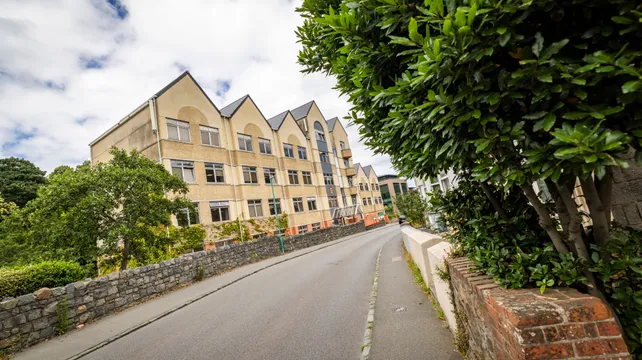
The housing investments include large developments at the former CI Tyres site and at the Mallard. Moving The Guernsey Institute students from Le Coutanchez and Delancey in September will free up two more sites for affordable housing. And the States' purchase of Leale’s Yard and other properties connected to it will enable us to deliver 1,000 new homes on the combined site.
Meanwhile, the private sector has more than 400 units of housing under construction, with further developments at the former St Martin’s Hotel, etc, in the pipeline.
The States investment is possible only because we have taken the tough decisions on stabilising our public finances. This was the first of the ‘super priorities’ we adopted at the start of this term, and we reached a decision last month. The second was ‘clear and commence site development at Leale’s Yard’ which is under way. The third was ‘agree and advance a sustainable health and care system’. The fourth was ‘shape and strengthen the focus on early years and families’. And the fifth was ‘determine and design future harbour requirements’. Work is progressing on all of these.
So, how does the 2027 budget promote economic growth?
Beyond our capital programme, the 2027 budget does three things to help strengthen and diversify our economy:
1. We are setting aside money from our anticipated receipts of tax from large multi-national groups (Pillar Two) to establish an economic growth fund. This will be used to support economic development initiatives, both within and outside the finance industry. The initial funds will comprise £15m. across 2027, 2028 and 2029.
2. We are looking at introducing an ‘entrepreneurs tax cap’. This would target serial entrepreneurs with a successful track record of starting new businesses.
3. We are increasing five-fold the amount by which charitable donations qualify for tax relief. The benefit these can have for Guernsey is illustrated by the recent cases of the development of the Victor Hugo Centre, and the generous funding of
Ladies’ College and Elizabeth College by a private benefactor, which in turn will enable the Education, Sport & Culture Committee to refocus the sums currently spent on grant funding these colleges (£2.2m. per annum) into the state sector, for the benefit of States-school students.
We are also providing support for our hospitality industry by freezing the TRP that they pay and introducing a new ‘tap relief’, which will reduce the duty paid on draught beer, cider and wine. The duty on a pint of normal strength draught beer in the pub will fall by 5.6p.
Taken together, the new capital investment, the restraint of revenue expenditure and the actions to encourage entrepreneurship will help to improve economic growth. Guernsey has sound public finances, very little unemployment and a high GDP per capita.
But we do have some serious problems, and we are determined to fix them.

You need to be logged in to comment.