

Just talk us through the last few years, how did you get into football?
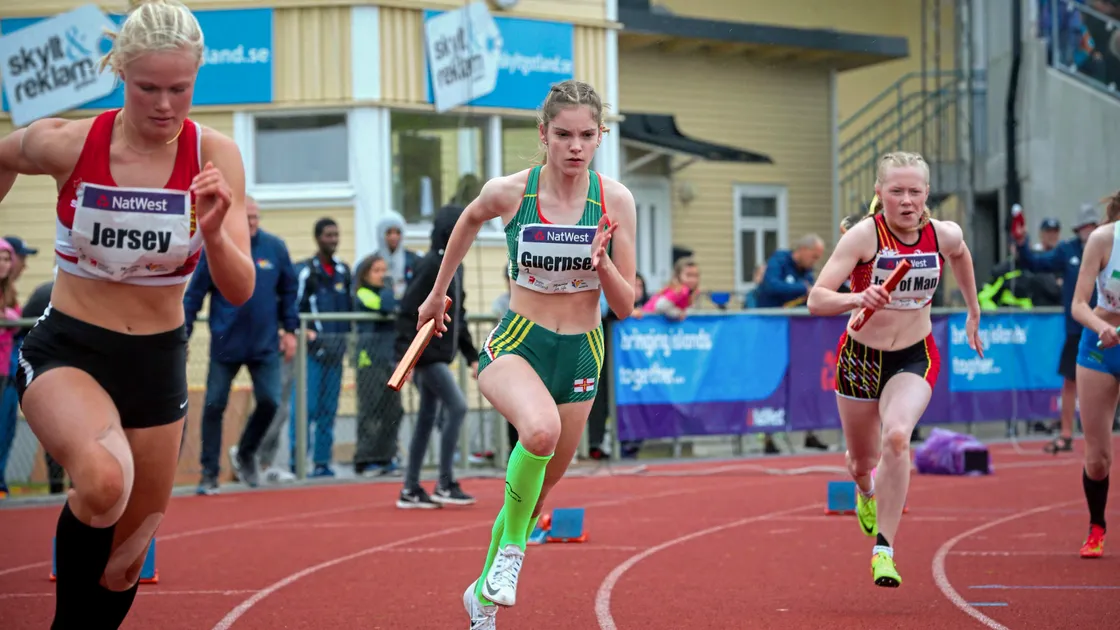
‘Football wasn’t necessarily what I thought I’d go into. Growing up at home, I was heavily involved in athletics and I always knew I wanted to be involved in high level sport. I did a degree in sport and exercise science at Bath University and that opened my eyes up to opportunities working in the professional sport environment.
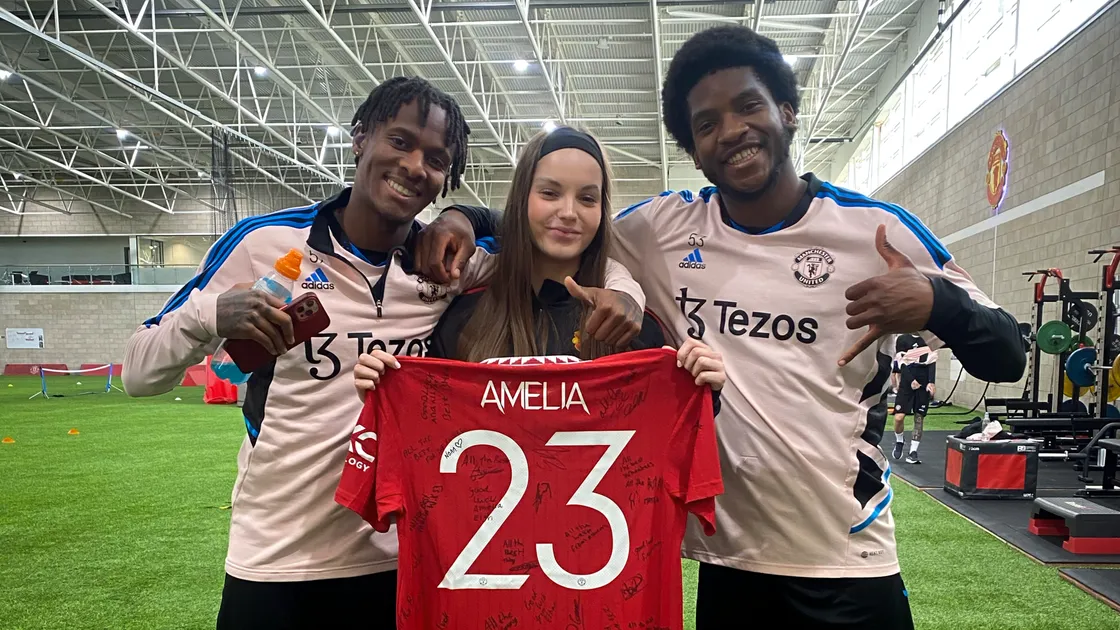
‘In the third year, I had to do a professional placement and saw the Manchester United opportunity come up. I applied for it with such low expectations, just because I thought firstly I’m a girl, I haven’t played football, what do I have to offer? But I got invited up to their Carrington training base off the back of my CV and then got offered the job, which was a massive shock.’
What was that experience at Manchester United like?
‘Well, it’s such a big club, so to get that opportunity was just amazing. I moved up to Manchester when I was 20, lived there for a year, worked full-time in the boys academy, which was ages 14 up to 23. So some of the players were actually older than me, which brought a whole host of challenges.
‘My role there was academy sports scientist. I had an amazing support system and mentors, just the most incredible experience. And while I was there, I also went to the women’s team for two months because my supervisor wanted me to have a bit of a different experience, and that was the season that Maya Le Tissier signed, which was so nice for me, because we know each other from Guernsey. She used to dabble in bit of sprinting back in the day. For me to be able to go into that environment, which is very daunting, with some big names, big set-up and to have a friendly face I could chat to was nice for me.
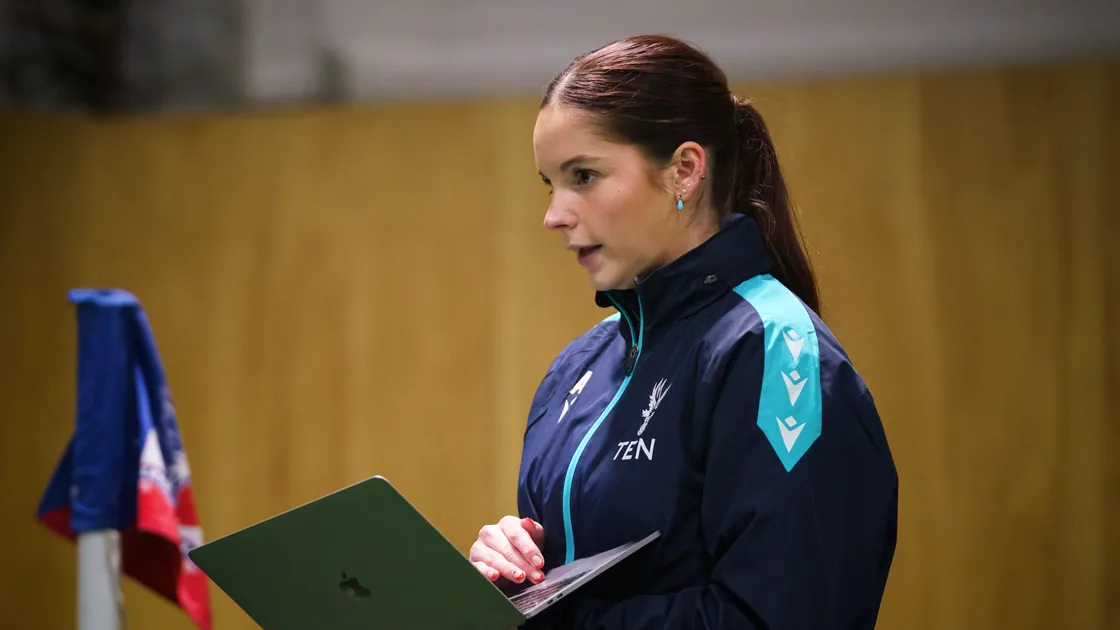
‘Then when I graduated, I took a role at Crystal Palace in the women’s academy, which was my first insight into youth female football, and I just loved it. I found it so rewarding, so fulfilling. I did that while studying for my masters and then at the end of last season, I thought I need to take the next step, progress into more leadership. That’s when I took this role at Saints.’
That’s quite a journey in a short space of time...
‘Yeah, I’ve been off island now for five years and this is my third pro club. If you told me at 18, 19 when I was going off to uni that I’d be 23 and here I would never have believed it. Football moves fast.’
Tell us more about the role you’re in now and what your focus is?
‘The role at Southampton is within the PGA – Professional Game Academy – which is a newly-established system by the FA to professionalise youth women’s football. It’s essentially a full-time women’s environment around school. So they’re trying to replicate what they’ve done in the boys’ academy now for many years.
‘I’m the under-21 athletic performance coach, which covers all aspects of gym-based work, on-pitch physical work, helping out with the medical team for rehab, bits of nutrition, all kinds of the data stuff and then a lot of the match day prep. So it’s very varied, no two days are the same.’
Do you see yourself very much focusing on the women’s game now?
‘I feel like I am quite appealing as an employee for the female game just because I am still quite young and I have experiences being a youth female athlete. So I think I bring an empathetic understanding of the challenges, the expectations, and the pressures that come with being a youth female athlete. I think right now that’s where I see myself growing the most and where I can have the most impact.’
What have you taken from your time as a young athlete in Guernsey into your career now?
‘The main lesson I took from being an athlete that I see now in the girls I work with is the amount of sacrifice. There’s a lot of sacrifice when you are pursuing sport at a high level from a young age, whether that’s academically or in your personal life and your social life. And I think even now, working in football, I have to make sacrifices as a practitioner as well, because you don’t have time off. It’s long weekends, unsociable hours.
‘But when I did athletics, I loved it. I didn’t mind making those sacrifices. And I still feel the same about that now. I love what I do. I love my job. Therefore, I’m willing to make those sacrifices.
‘But I think for me being almost like a role model, approachable member of staff that players can go to, I think that’s really important. And especially in the youth female football space, it’s really special.
'I wish when I was younger, I maybe had a female role model or someone that I thought I could go to.
'Obviously I have my parents, who are amazing support, but I think it’s nice to have someone in the environment embedded as a member of staff.’
Have you seen even a massive change around women’s football from when you started at uni and doing placements to now?
‘Yeah, there’s been a whole host of improvements in the investment that’s gone into women’s football. I think there’s still, in my opinion, quite a long way to go, just because I’ve had experiences in a boys’ academy – at arguably, in my opinion, the best club in the world.
‘The differences between women’s clubs are quite substantial too. At Saints, they have a really good, really well-established programme.
‘The first team were in the WSL2 or Women’s Championship, but the investment and the time and the planning that’s gone into that set-up is really good. Whereas I think some other clubs maybe are slightly behind, but I think that’s only going to get better as women’s football continues to grow. The standard of young players coming through is only going to get better and better because they’re going to start from a younger age because they’ve seen the success at the Euros. In 10 years’ time, it will be in an even better place than what it is now, for sure.’
We talk a lot about young athletes getting opportunities off island and people becoming pros as competitors, but do you think there’s enough awareness about the opportunities for working in sport in these kind of roles?
‘I’d love to think that there are people in Guernsey who would be interested in following the same path. I guess it’s really challenging being based at home because it is a big leap. If you want to pursue it, it is a risk. But yeah, if there are any young people in Guernsey, I’d love to be able to speak to them and encourage that. Or even if they are a player and a couple of years down the line, they decide that, you know, they don’t want to play anymore. There are opportunities for young people.
‘When I was at Palace, there were parents who I spoke to, who said to me, “you know, you’ve made us realise that even if the girls don’t want to play in the future, there’s opportunities for them to come into this”. Female coaches are very underrepresented, and it is the same in the physical development space. So for me, that’s really important. And I hope that there are people who may hear about what I’ve managed to achieve in quite a short timeframe and would want to do the same.’
Speaking about your family and Crystal Palace, your dad’s a Palace fan isn’t he? Was he pretty pleased then when you went to work there?
‘Yeah, he was and I was very lucky, I took him to the FA Cup semi-final and final last year which was a very special moment for me in my personal life and my job, to give my dad, a lifelong Palace fan, that experience. Football can be a very special sport.’
And you’re just settling into this new role. But is it possible to cast your mind ahead a few years? What’s the dream position?
‘I’d love to move into a head of performance role for a women’s football team, overseeing the physical development strategy. I’m really into research as well. I’m in the process of finishing my masters. I’ve got my dissertation due in three weeks, so that’s been another battle, but I love researching and I think there’s a massive gap in the research field for female players, there’s basically nothing out there at all.
‘So for me, I’d love to go into a role where I’d be heading up performance department at a women’s football club with the ability to research, to contribute to that knowledge gap as well, because that’s something that I think is really important.
‘I guess the take home message from me is that to pursue this career, it’s not easy. People think it’s a luxury lifestyle or glamorous lifestyle. Maybe it is for the players. I don’t know. But on the other side, standing off the pitch, it’s a lot of dedication, a lot of hard work, a lot of sacrifice personally.
‘But if you’re willing to commit and you really want to be successful then I’m confident that anyone would be able to.’

You need to be logged in to comment.