
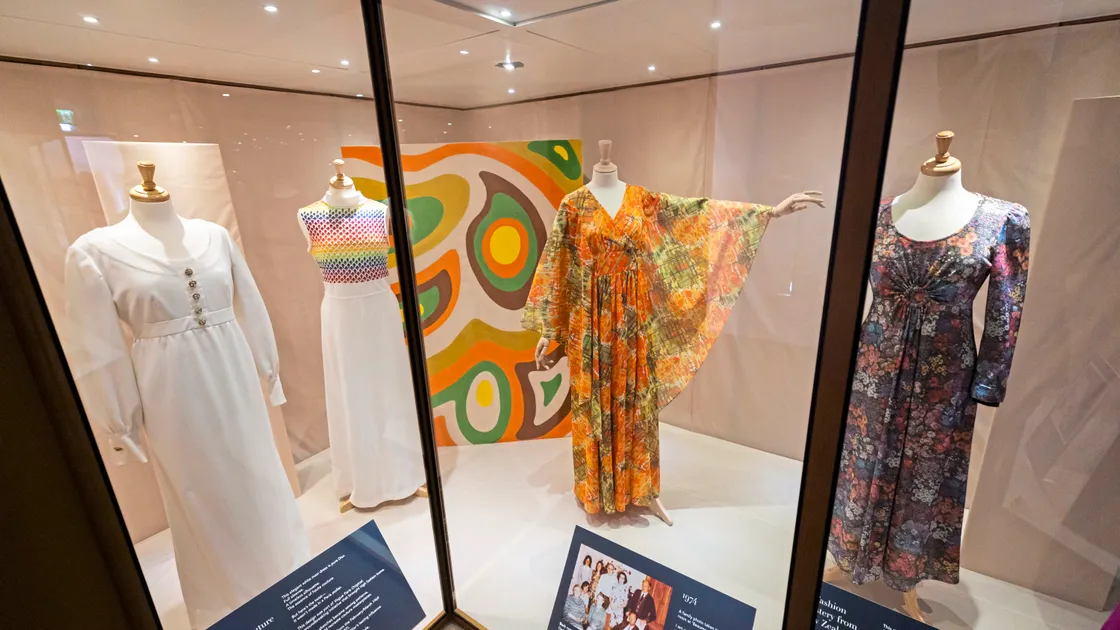
Walking through the From Cobblestones to Catwalks: 1970s High Street and High Fashion exhibition at the National Trust of Guernsey Folk & Costume Museum, I was struck by how cyclical fashion truly is.
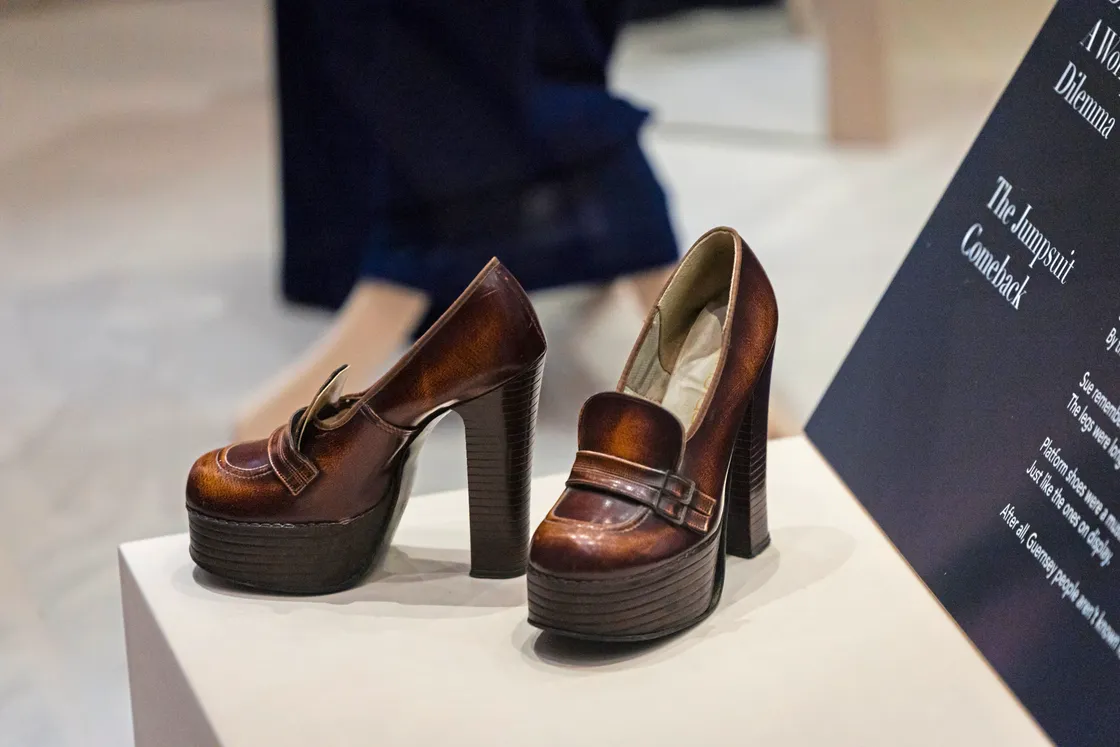
The exhibition, which opened earlier this week, showcases an extraordinary collection of 1970s clothing discovered by local woman Sue Coyle while clearing out her mother’s attic. Among the impeccably preserved garments of teenage Sue, one piece stood out to me: a long, tailored jumpsuit that demanded to be worn with platform heels – yes, even through Guernsey’s cobbled streets, Sue recalled, when I managed to catch a minute with her. It felt as modern as anything I could pick up in a boutique today, a testament to the era’s lasting influence on style.
The 1970s marked a fascinating turning point in women’s fashion. In contrast to the structured, mod silhouettes of the 1960s – when hemlines shot up and mini skirts became acceptable workplace attire – this decade saw a shift towards more fluid, expressive styles. The mini didn’t disappear overnight, but by the mid-1970s, the pendulum had swung back towards midi and maxi lengths.
Interestingly, economists have long observed the ‘hemline index’, the theory that skirt lengths correlate with economic trends – shorter skirts in boom times, longer skirts in downturns. With the decade’s recession and economic instability, it’s no surprise that floor-grazing hems made a comeback.
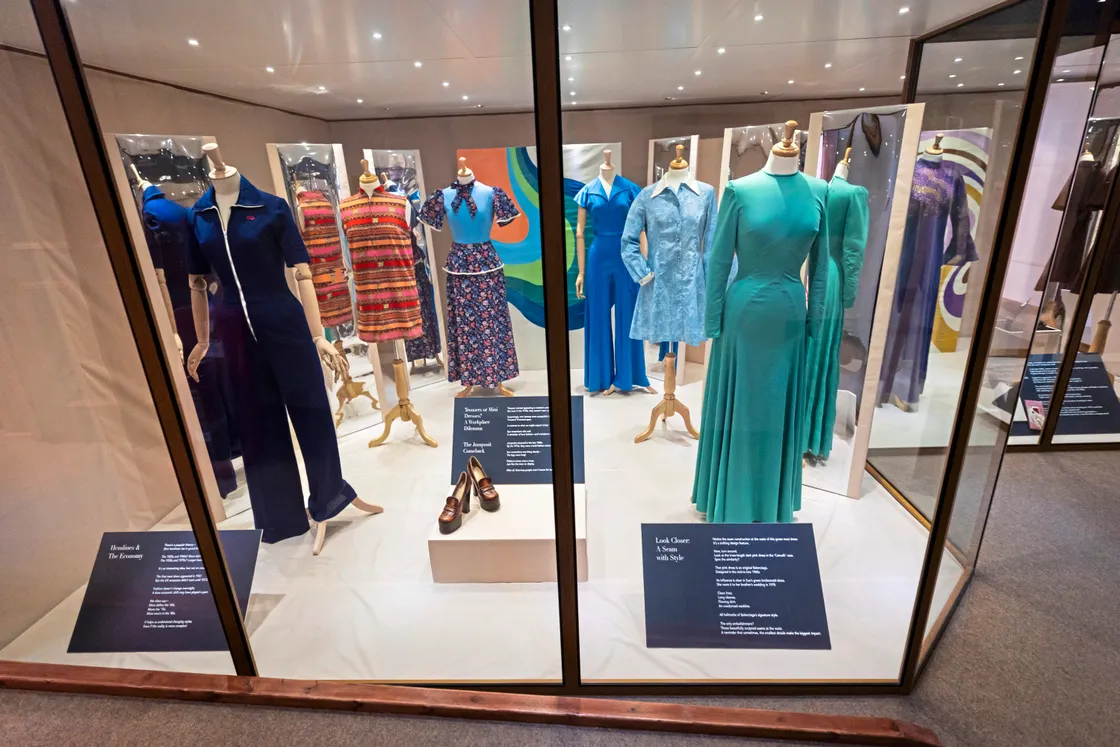
However, the most radical shift in women’s fashion wasn’t just about length, it was about trousers.
While mini skirts had been daring but ultimately accepted in the workplace by the late ’60s, trousers were still a controversial choice for professional women. Despite their practicality and growing popularity, they weren’t widely embraced as office-appropriate attire until later in the decade.
The struggle for sartorial equality reflected the broader feminist movement of the time. Women were entering the workforce in greater numbers, fighting for equal pay, and demanding control over their own bodies and finances. Fashion became a visual marker of this progress, with designers such as Yves Saint Laurent pushing the boundaries by creating sharply tailored trouser suits for women that became so popular going into the 1980s.
The rise of the jumpsuit – like the one in Sue Coyle’s collection – perfectly encapsulated this shift: powerful, comfortable, and undeniably stylish.
Beyond the politics of workwear, 1970s fashion also reflected an era of countercultural movements, disco fever, and bohemian influences. The hippie aesthetic of the late ’60s bled into the early ’70s, with flowing maxi dresses, folk embroidery, and an earthy colour palette dominating wardrobes.
By the mid-to-late ’70s, disco had taken over, and fashion became bolder, shinier, and more hedonistic sequins, lame and, of course, platform heels. These trends weren’t just about aesthetics; they mirrored a cultural landscape where self-expression, liberation and rebellion were at the forefront.
What struck me most about Sue Coyle’s collection wasn’t just the silhouettes or the nostalgia – it was the sheer quality of the garments. Even at a high-street level, ’70s clothes were well-made, designed to last beyond a single season. It’s a stark contrast to the throwaway culture of fast fashion today. Brands such as Shein churn out cheap, unflattering, poorly-made garments that barely survive a few washes before falling apart. This relentless cycle of over-consumption is devastating to the environment, and perhaps it’s time we take inspiration from the past – not just in aesthetics, but in how we value and treat our clothing.
The pieces in the exhibition have survived half a century and are still wearable and stylish. How many of today’s fast-fashion pieces will last even five years? Investing in well-made garments, choosing quality over quantity, and embracing second-hand and vintage finds might be small but meaningful steps towards a more sustainable fashion future.
Leaving the exhibition, I kept thinking about that jumpsuit – how I would style it today, how effortless and timeless it felt. The ’70s weren’t just about disco glamour or boho chic – they were about a fundamental shift in how women dressed, moved, and lived. And maybe, just maybe, they still have a few lessons left to teach us.
The exhibition is now open, so why not check it out for yourself? The Guernsey Folk & Costume Museum is open seven days a week, 10am-5pm.







You need to be logged in to comment.