

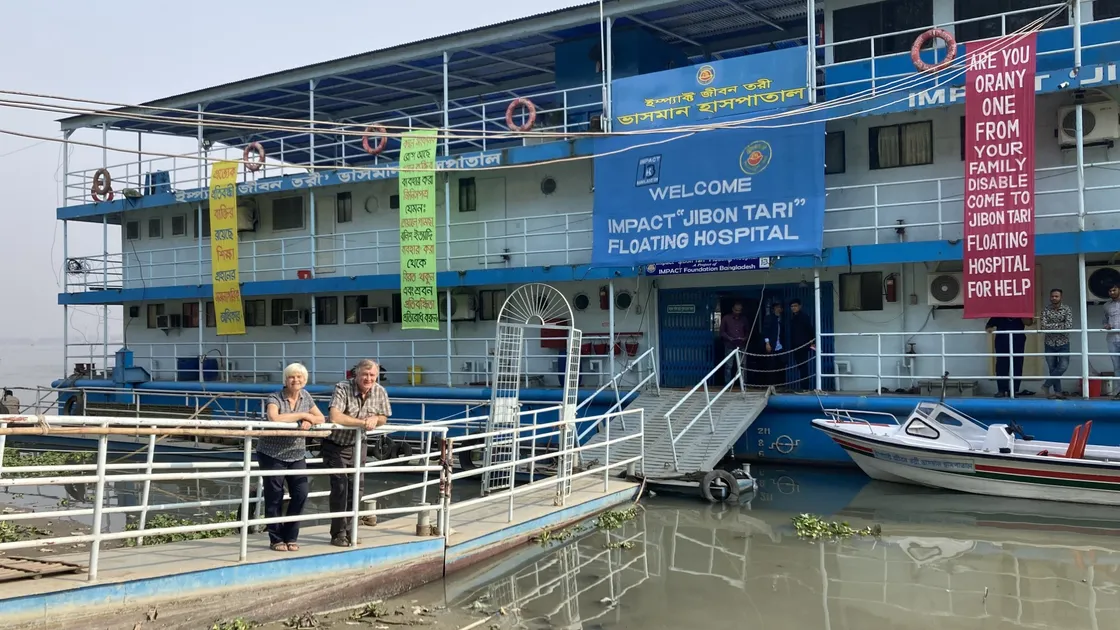
Dr Nick Paluch, chairman of the local charity Guernsey Aid which sponsors development projects in the poorest nations of the world, has recently returned from a self-funded trip to Asia where he spent a month visiting projects and meeting up with some of the charity’s in-country partners.
The trip started in Bangladesh where, as guests of the Impact Foundation Bangladesh, Dr Nick and his wife Claudine stayed on board the Jibon Tari Floating Hospital – the Ship of Life – anchored on the Shitalakshya River in Kaliganj, a couple of hours drive from the capital city Dhaka.
The floating hospital provides free screening and, when needed, surgery, particularly cataract operations, to people in isolated riverside communities who wouldn’t otherwise have access to or be able to afford treatment.
‘Guernsey Aid has supported their work on several occasions in the past, but it was my first visit. We were able to see first hand the programme in action and the life-changing difference it is making to people,’ he said. ‘It’s an amazing facility, they float up the river, anchor at a suitable site, a reasonably big village or even a small town, and then they do screening clinics. If they find people with cataracts, they operate on them. They stay put for a few months, and then they up anchor and go to a different spot on that river, or even a different river, it’s a perfect way of taking a mini-hospital to the people.’
Guernsey Aid relies on private donations and events to fund its projects and the hospital happened to also have received funding from the Guernsey Overseas Aid & Development Commission for a three-year eye care project which includes screening camps for 3,000 local schoolchildren and a more widespread community outreach programme.
‘The hospital happened to have been supported by both us and the commission, and with my former commissioner hat on, I was able to have a look at the project as well,’ he said. ‘These are communities that haven’t really been screened for routine stuff and the big thing is cataracts. They’re finding people in the community suffering with cataracts, which are very easily treatable, so they do it there and then.’
Although the hospital specialises in eye care and ear, nose and throat work, Dr Nick said they will also turn their hand to whatever was needed.
‘If they have to operate on something else they do, they do club feet, they do a bit of orthopaedic work, and they are basically a little hospital there for people to use while they're anchored in their village.’
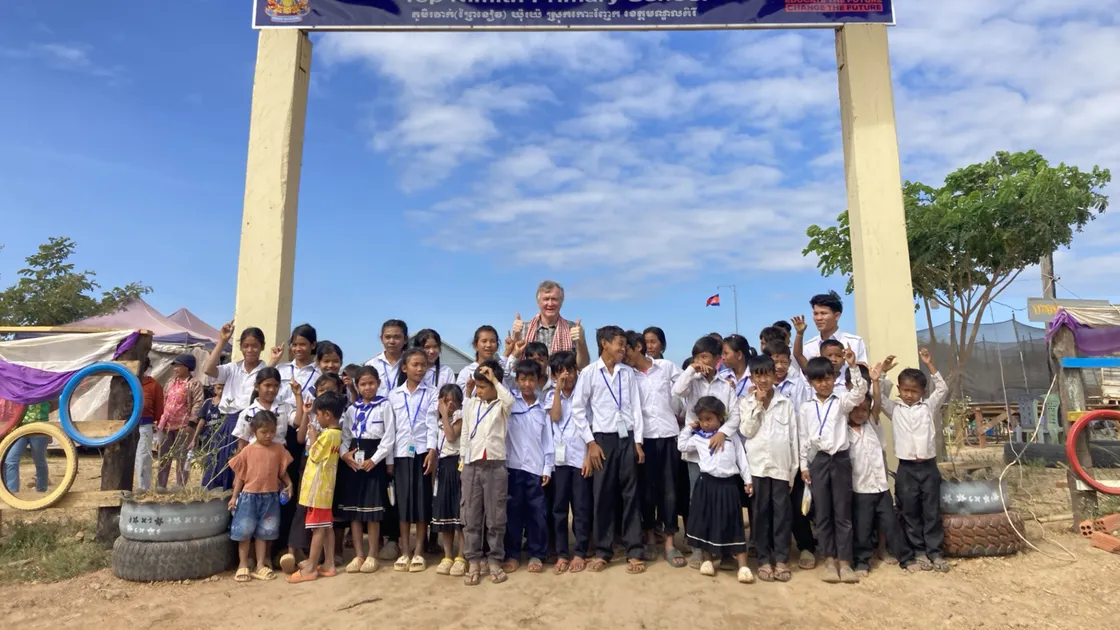
From Bangladesh, Dr Nick travelled on to Cambodia to see the opening of a brand-new primary school entirely funded by Guernsey Aid and built in conjunction with the charity United World Schools Cambodia.
The school in the village of Tep Nimith in the remote north-eastern province of Mondulkiri was the second the charity has funded in this part of the country and it will provide up to 100 children with education who previously had no access at all.
‘I’d met with the community leaders in Tep Nimith on a previous visit to Cambodia and been impressed by their ambition and their determination to build a school for their children and thereby provide them with a better future,’ he said. ‘So it was very satisfying and very humbling to be present and to join in the excitement on the day that the new school opened.’
He added that the advantage of working with United World Schools was that it secured future funding.
‘With our help, they build a school and then they commit to supervising it for the first three years, but before it’s even built, there’s an agreement with government that they will provide the teachers, and then the government will take over the school and transition into the government system in about two or three years’ time,’ he said. ‘So there’s always a long-term plan.’
While in Cambodia, Dr Nick also visited two schools in the south-western province of Koh Kong where Guernsey Aid had funded boreholes and upgrades to the sanitation and hygiene facilities.
This was an extension of a previous project that had provided a similar upgrade at 15 schools in Ratanakiri Province in the north of the country.
‘But the surprise I got when I went to these two schools was that it was a much bigger system than I was expecting,’ he said. ‘I thought it would be one water tank, and it would just do the 100 children who went to school, but it was such a good system, they had three big tanks, and it was providing clean water for the whole village, which was just an added bonus. It meant that the school has the potential to raise some funds by charging for this fresh water to the rest of the village.’
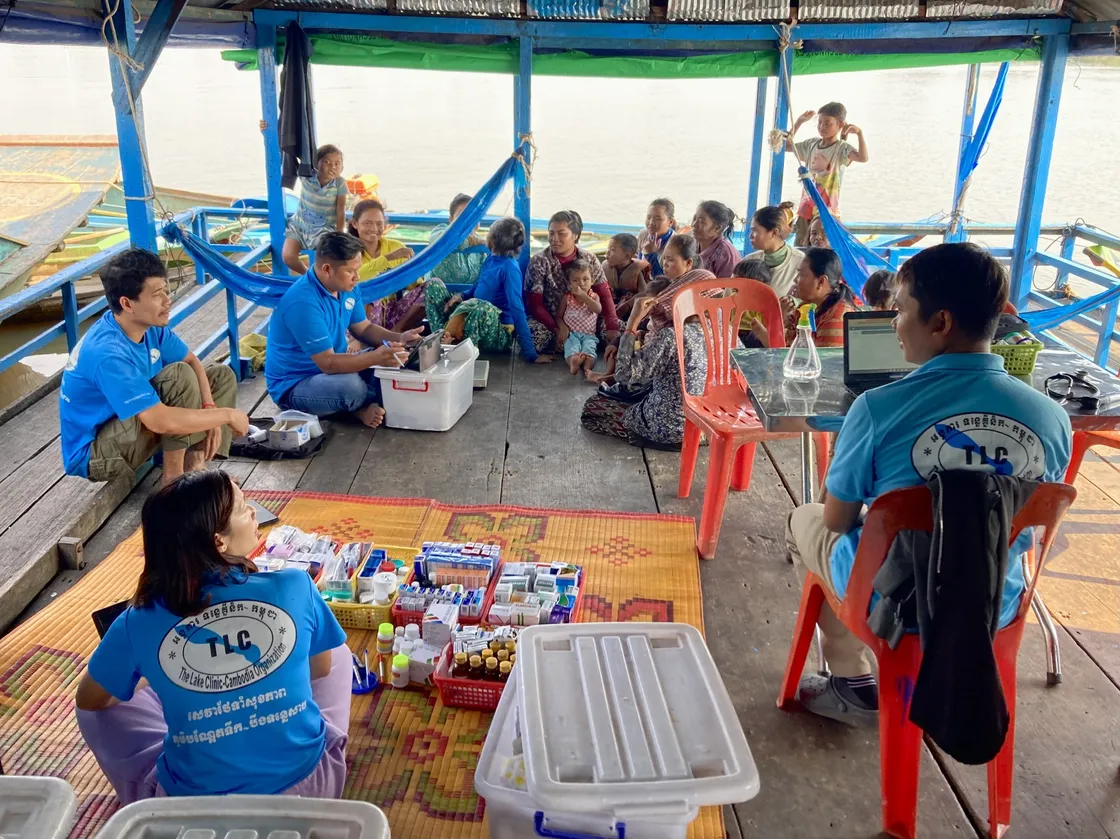
For the final leg of his trip, Dr Nick spent a week afloat on the Tonle Sap lake in the centre of Cambodia, volunteering with The Lake Clinic, which provides a primary care service to the isolated floating villages who would otherwise have no access to healthcare at all.
Guernsey Aid has supported the clinic on many occasions in the past and in particular it has provided funds for bio-sand water filters to be supplied to families where the children otherwise drink the polluted lake water and suffer gastroenteritis and malnutrition as a result.
‘About eight years ago my wife and I spent a whole month working with the clinic and this was the ninth time I’ve volunteered out on the lake with the clinic team,’ he said. ‘You spend the whole week on the lake, going from one village to another, either sleeping on the boat or on a floating platform. You’re literally out there, living in the village, seeing the people, and then moving on to the next village. Now that I’ve retired, I mentor the local doctors and discuss cases with them. Although it’s hard work, it’s always an extremely rewarding experience.’
Guernsey Aid is now turning to raise funds for a new project. A brand-new school for up to 800 children in an impoverished and inaccessible corner of southwest Madagascar.
‘This is again in partnership with United World Schools and it will be the third school we’ve built with them. So it’s a new country for us but it is someone United World Schools have worked before,’ he said. ‘If anyone wants to contribute we, as always, appreciate any donations.’
Donations can be made via their website.


You need to be logged in to comment.