

From his earliest years it had been Nick Lowe’s dream to be a fighter pilot.
From the age of seven years old, when he was a pupil at La Houguette Primary School, Nick had a love of flying and knew what it was that he wanted to do when he was older.
‘I think I was probably seven years old when I decided I wanted to be a fighter pilot in the Royal Air Force, and that love of flying stays with me today and that is part of the reason, but it’s not the whole reason,’ he said.
‘The other reason was at a young age – and particularly through secondary school, I got a sense of wanting to serve, and to serve the country through the military, and through the RAF was the obvious way to do that. So there was this sense of service that sort of evolved through my teenage years and stays with me today. Those are the two compelling factors, but there was something that it wouldn’t have been possible without, and that was the support of my family. I was a boy from Perelle who wanted to be a fighter pilot. This isn’t normal, this is unusual, and my mum, and my dad in particular, were brilliant.
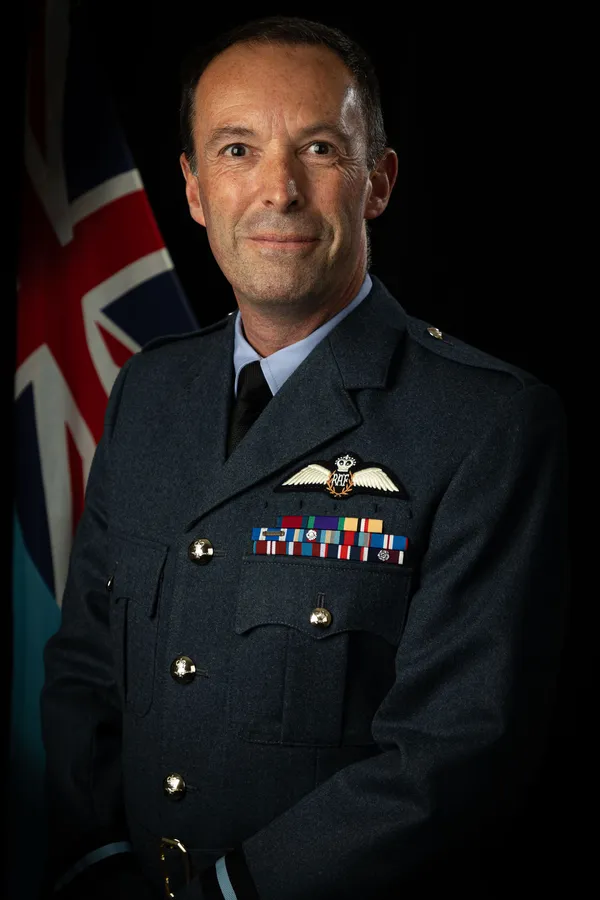
‘I must have terrified them because I had no plan B – I was very single-minded. I was going to be a fighter pilot in the Royal Air Force and they supported me amazingly, as did my teachers and friends and broader family, but I owe a lot of thanks to my late mum and dad.’
During his school days Nick was inspired by Air Chief Marshal Sir Peter Le Cheminant, the then Lieutenant-Governor of Guernsey. He was the first person Nick had met who had served in the RAF.
‘He came to visit the school at La Houguette, I remember his visit and I remember him talking about aviation and the Royal Air Force and so that in some way, I think, sowed a seed in my mind,’ he said.
‘Many years later, before he passed away, I was able to come back to Guernsey and visit him because he and I realised we had something slightly unusual in common.
'We had both engaged armoured vehicles that were aggressively trying to threaten a local population, and so two people from a little island called Guernsey, 70 years apart, had done something very similar in pretty much the same part of the world. That was probably part of that drive to want to be a fighter pilot.’
That interaction with Air Chief Marshal Sir Peter Le Cheminant was one of the few opportunities Nick had locally in his younger days to find out more about pursuing a career in the RAF.
‘There weren’t air cadets when I was going through school. There was a Combined Cadet Force at Elizabeth College, which is still going strong, but I wanted to do something around aeroplanes and I realised there was an Air Scout troop. I joined that and had a great time as an Air Scout, but there was no way to take that further, so with some very close school friends and some great support from some of the leaders, we created a Venture Air Scout section so that we could carry on learning about aircraft, enjoy Scouting and the fellowship that comes from that, into our sixth form years,’ he said.
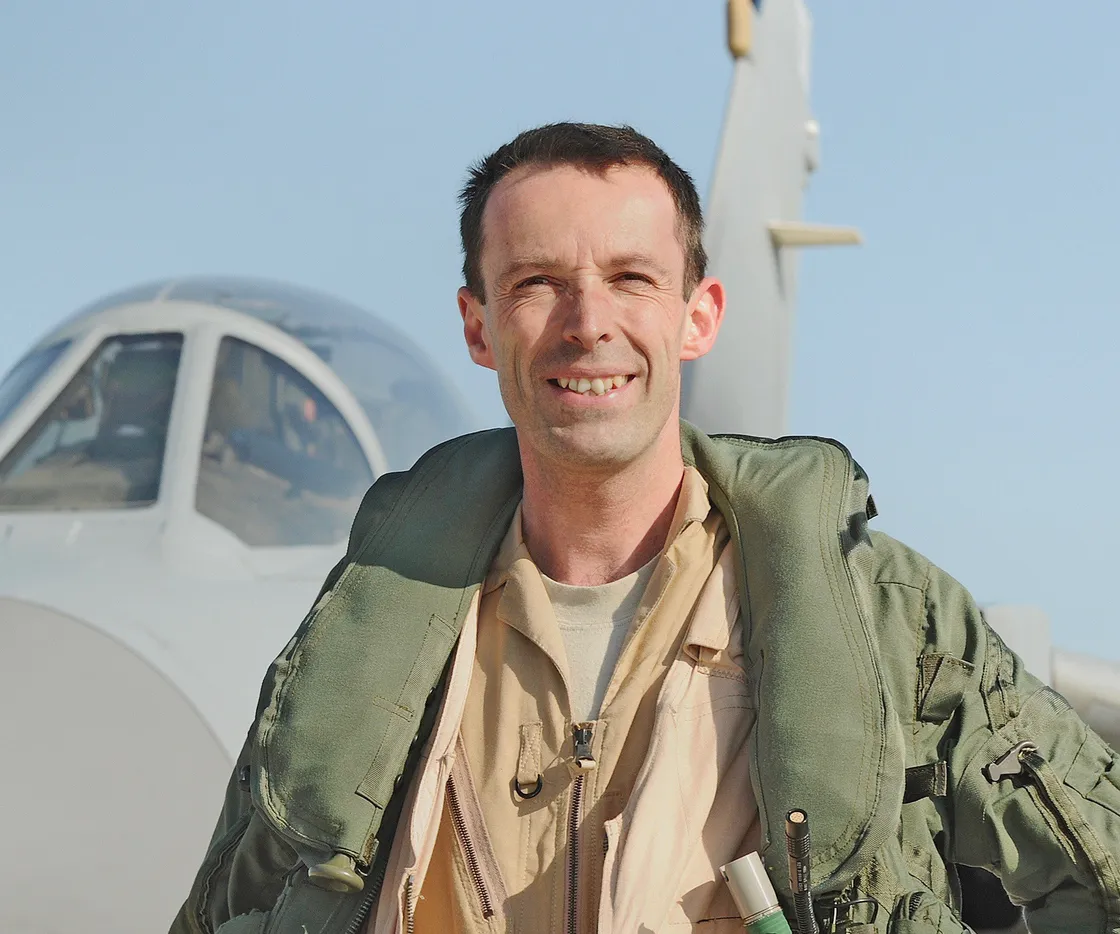
‘That gave me some experiences with the RAF as well, the chance to fly in a Hercules and to be winched up into a helicopter. All of these for me just really fulfilled that excitement that I had for learning about flying and that made a really big difference.’
Apart from those opportunities, being from Guernsey posed its challenges.
‘I think the biggest challenge was in the days when you still had a ticket to get on an airplane. I remember holding a ticket that was a single ticket, a ticket to the mainland, not coming back.
'I can remember as a teenager thinking, “Wow, that’s a big move,” and at the time, my commitment to the RAF was going to be for 12 years. I was 18, just turning 19 years old, and a commitment for 12 years seemed like a very long time at that point,’ said Nick.
‘There are other things that I thought would be challenges that probably weren’t as much of a challenge as I would have anticipated. I was very lucky. The first thing I was lucky with was that as I finished my GCSEs, I applied for a scholarship to the Royal Air Force, which I was successful in achieving. That scholarship allowed me to learn to fly while I was doing my A-levels at the Grammar School. The RAF sent me to a flying club in the UK, which was great because I got to learn to fly, but it was also great because I got to live in the UK for a month and start to understand a little bit about the UK, because otherwise my life was very much an island life.’
During his career Nick has had many different jobs within the RAF and while it would be hard to pick highlights, one thing he will always remember was his first exposure to combat.
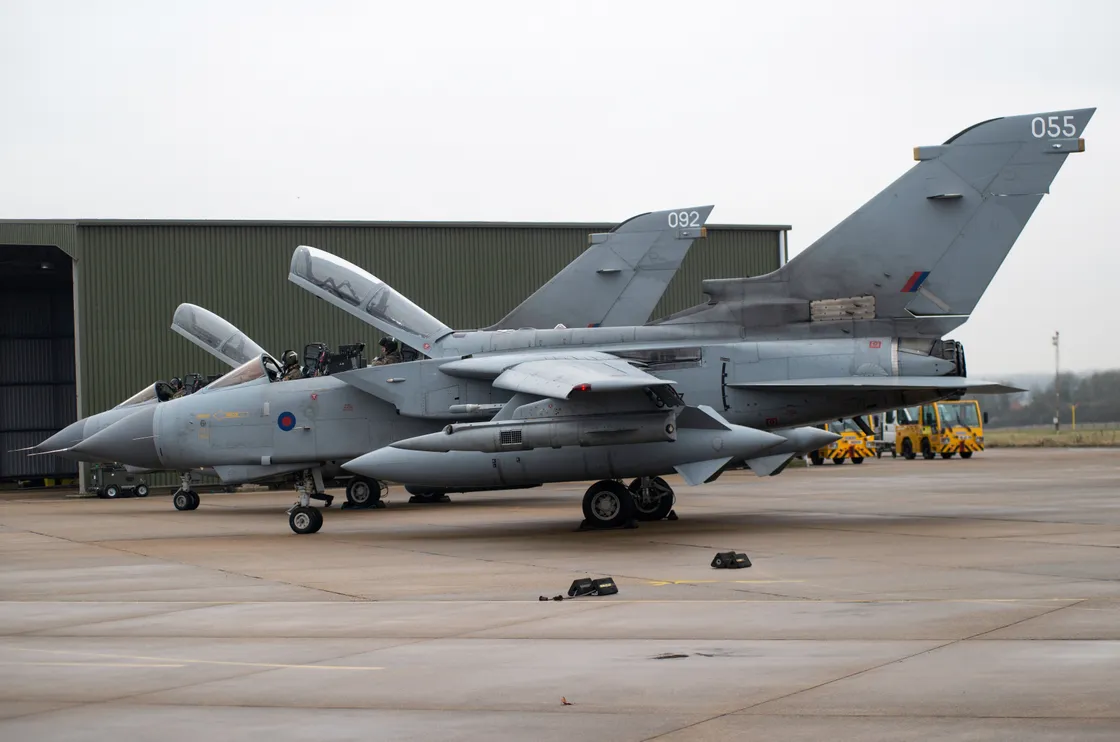
‘I won’t go into the details, but I remember that day very clearly. Our responsibility was protecting the Kurdish people from Saddam Hussein, who had an aggressive onslaught against them,’ he said.
‘It really shapes the rest of your career, because that’s the job that any service person says they’re going to do. You’re going to stand up for what is right. You’re going to defend those that otherwise might be defenceless. You’re going to fight for the person that you stand alongside, fly alongside, sail alongside, and for me it really reinforced the importance of professionalism, the importance of determination, and the importance of a moral compass, of having a clear view of right from wrong, and that has held me in great stead in the years that have followed.
‘I’ve had one career, but I’ve had 19 very different jobs so far in that career, and I’m sure the next one will be different again. It’s really hard to bring out some of the most exciting points – there have been so many – but some that I would bring out would be leading No. II (Army Co-operation) Squadron [the most senior squadron of the RAF], which was the Tornado Squadron that I commanded at RAF Marham. That was a huge high point and a really memorable posting because the squadron was amazing. We spent the vast majority of our time on combat operations for two years.
‘Another one I would probably touch on, would be as the station commander of Royal Air Force Valley. My role was to look after the station, all the people, and to run UK fighter pilot training, which was one of the roles of the station. That in itself was a tremendous privilege, but it was also lovely being on an island and I remember the welcome I had from the islanders of Anglesey.’
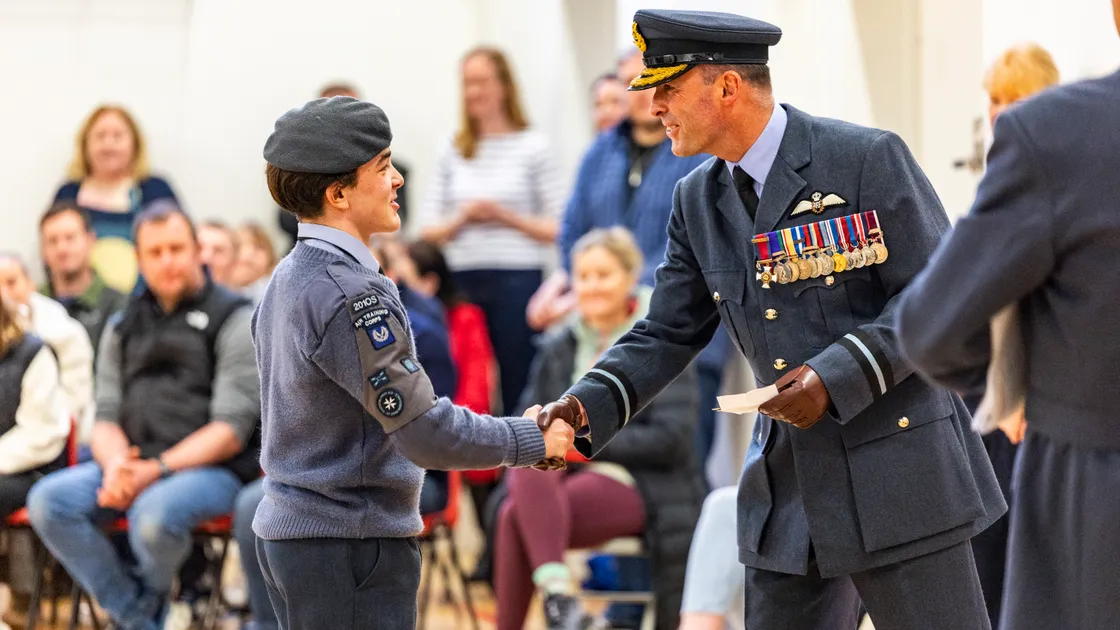
At the beginning of February Nick attended an air cadets parade in Guernsey where he offered them some advice: ‘Seize your dreams. Never give up and enjoy going after it and enjoy every day – and I think that would be my generic advice as well,’ he said.
‘I’ve been very fortunate. I’ve already had a career that has been tremendously varied, that has taken me all over the world, and that’s a very exciting prospect, and that is exactly what I was hoping for as a teenager, saying, “Yes, I want to be a fighter pilot”.
‘There are so many jobs in the Royal Air Force, not just pilots, for those interested and excited by the idea of service.
'When I joined as a young pilot, I remember being reminded that there were 40 people who were critical for keeping that pilot in the air, and that ethos of teamwork continues today.’




You need to be logged in to comment.