The event was organised by Guernsey resident Naoko Mauger, a qualified shodo (Japanese calligraphy) master and founder of Gyokubai Studio, who invited Mayuno Shimada, an associate professor of Urasenke, one of the largest and most influential schools of traditional Japanese tea ceremony, to the island to share her love of the ceremony. Mayuno’s family runs a Japanese tea garden and tea school called Yusuiken in Nagasaki.
Usually performed in a tea house, or chashitsu, Mayuno demonstrated the ceremony at Guernsey Museum’s Brian White Gallery, which is currently exhibiting Lost in Nature, which invites visitors to immerse themselves in the natural world through the transportive power of art.
‘Naoko has worked with the museum before,’ explained access and learning manager Miffy Lane. ‘She was involved in the exhibition To Japan and Back Again in 2019 and she has held calligraphy classes for us.
‘The philosophy behind the tea ceremony is all about wellbeing and promotes peace and harmony, so it was the perfect event to hold in the Lost in Nature exhibition.’
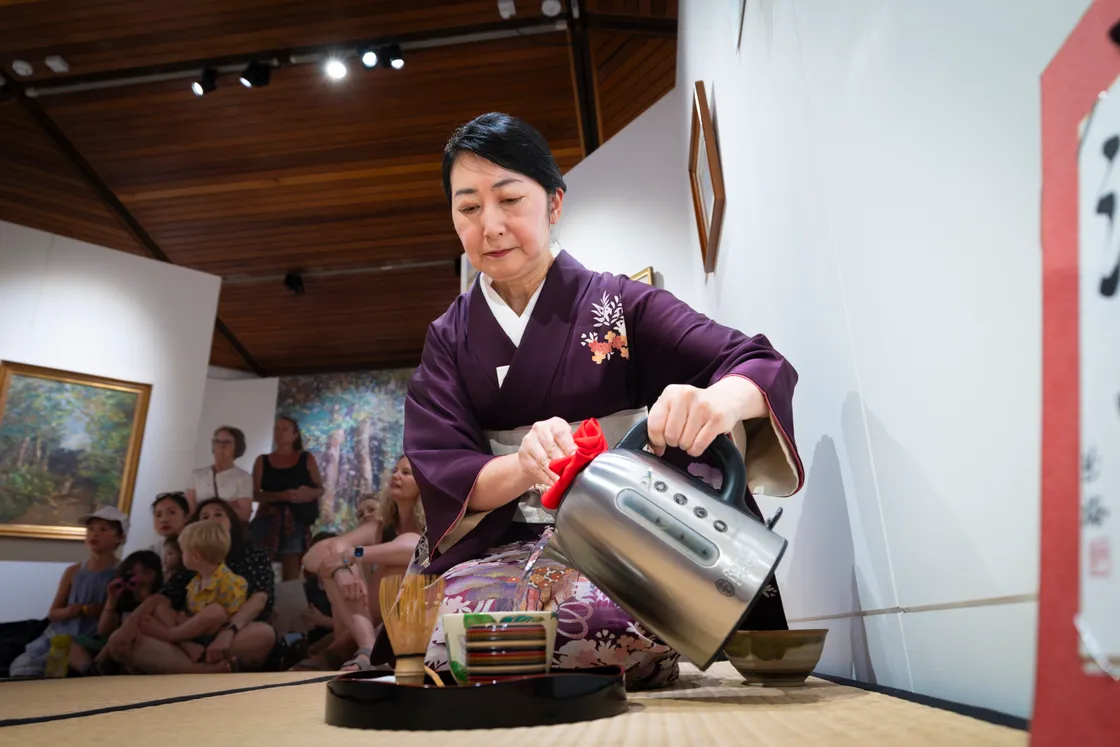
The centre of the gallery was turned into a tea house and both Naoko and Mayuno wore traditional kimonos. Around 20 visitors arrived, mainly half-term mothers and their children, and some German tourists.
Naoko commented on the ceremony while Mayuno performed it.
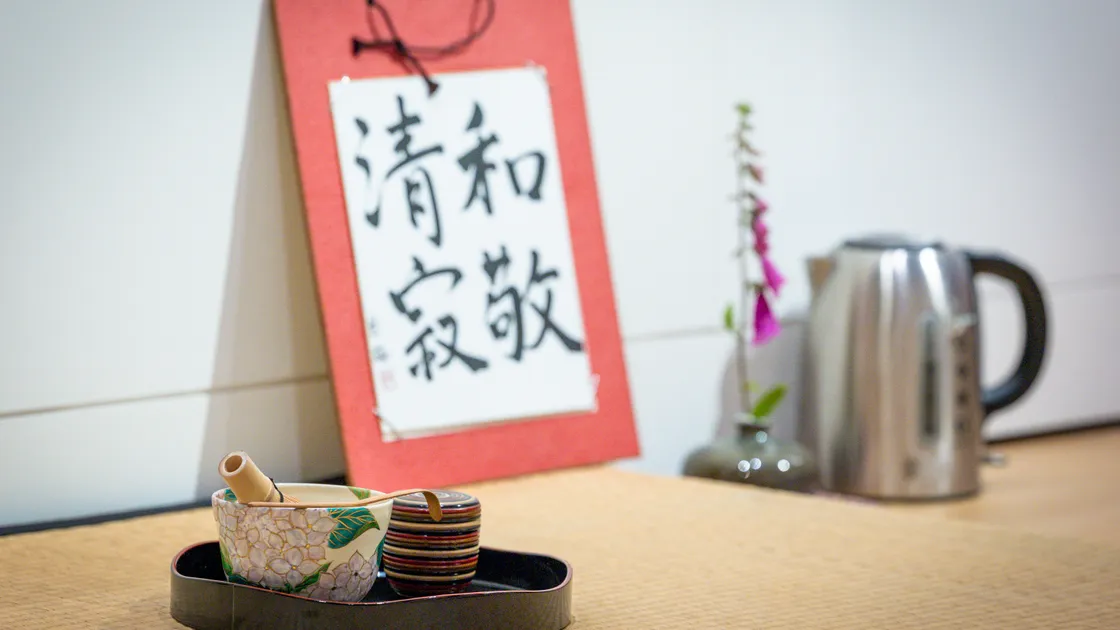
‘There are four elements in the tea ceremony – harmony, respect, purity and calmness,’ began Naoko. The characters for these elements – Wa, Kei, Sei and Jaku – had been written by Naoko on a board.
‘There is also a flower arrangement in a bowl, but it’s not perfect. One of the philosophies of chado is the appreciation of the beauty of imperfection and the flowers are never arranged perfectly.’
Naoko then introduced our host.
‘Mayuno is a sensei, which in Japanese means teacher. In fact Mayuno is my teacher.
‘Mayuno did a tea ceremony this year at the Chelsea Flower Show as part of Kazuyuki Ishihara’s team. Kazuyuki Ishihara is a well-known Japanese gardener and he has won Gold Award in the show for the last 15 years. Kazuyuki is Mayuno’s neighbour in Nagasaki.
‘She is also currently teaching the tea ceremony at the Nagasaki University School of Medicine and she is also an experienced Japanese language teacher with a master’s degree for education. She has taught in universities in South Korean and Taiwan.
Naoko told us that chado normally lasts for four hours.
There were two guests – one of which was Miffy. They knelt and made a triangle with their hands which they laid on the floor and then bowed into their hands as a greeting.
The tea is drank from bowls, not cups.
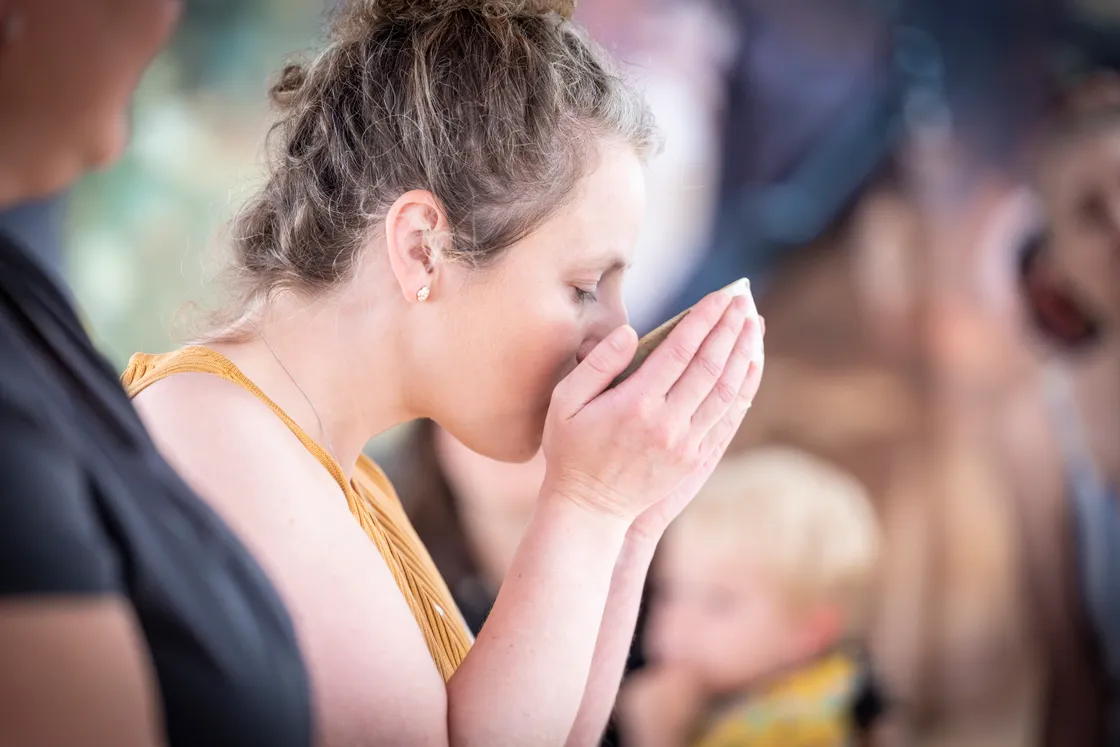
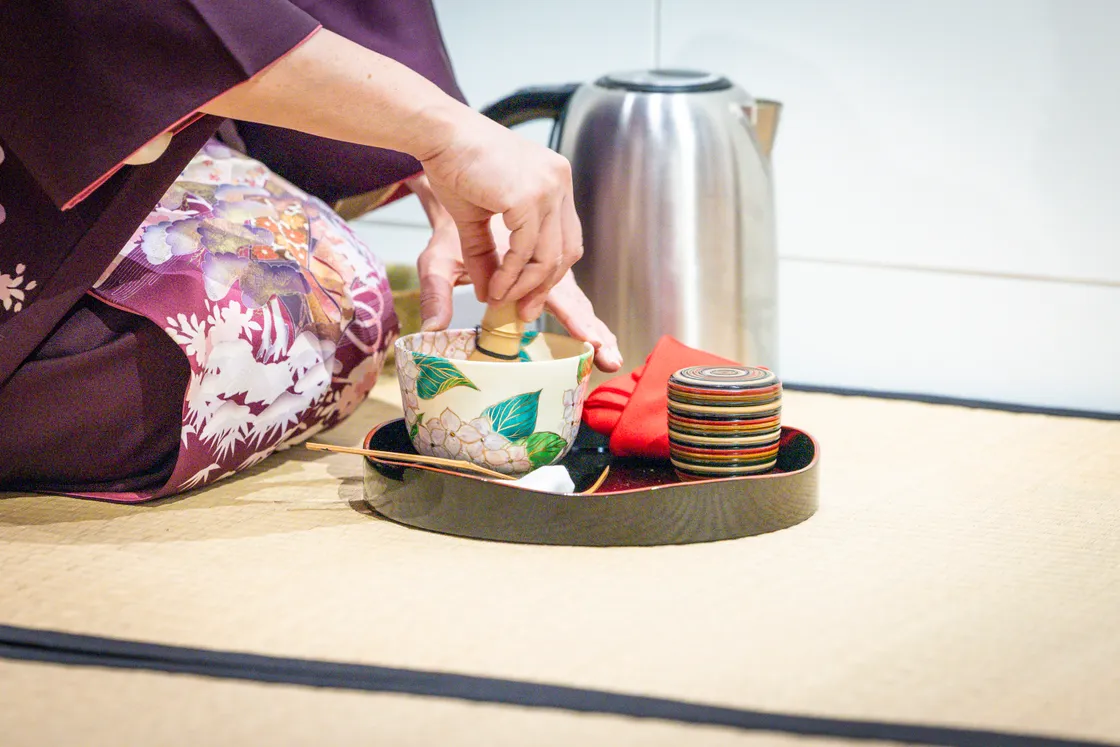
‘On the tea bowl there is a painting of a hydrangea, which is the flower of summer. Mayuno is wearing the same kimono she wore for the Chelsea Flower Show.
‘The bowl is cleaned before serving. This also keeps the bowl warm. The matcha powder is then put in the bowl. The ceremony has a 500-year history. The water is then poured into the bowl.’
Naoko then joked: ‘As you can see, this is not a traditional kettle. They are made of wood.’
In chado, all five senses are used.
‘We see, we hear, we smell, we taste and we touch.’
The tea is stirred with a bamboo whisk (called a chasen).
Mayuno offered the tea to the guests, showing the best part of the bowl to show respect. The guest then turns the bowl around two times in their hands and then drink.
The tea is served with sweets, or wagashi, which are shaped according to the season. For this one a flower, a leaf and a ripple of water.
‘You have to finish all of the tea and show that you’re finished by turning the bowl upside down. This is because every bowl is a work of art and on the bottom there’s the signature of the artist who made it. This is so that the guests can have a conversation about the artist.’
Naoko then told us about the samurai.
‘Chado was surprisingly popular during the Sengoku Jidai, Japan’s civil war period from the 15th to the 17th century. During this time, powerful samurai gathered together and even if they were enemies or from rival families, they would sit together in the tearoom, showing full respect, attention and hospitality to one another.
‘In the midst of such chaotic times, the tea ceremony created a temporary moment of peace and human connection.’
After the ceremony Mayuno made some tea for all of the visitors to enjoy, together with wagashi.
I spoke briefly with Mayuno (who admitted that her English wasn’t very good) and Naoko translated.
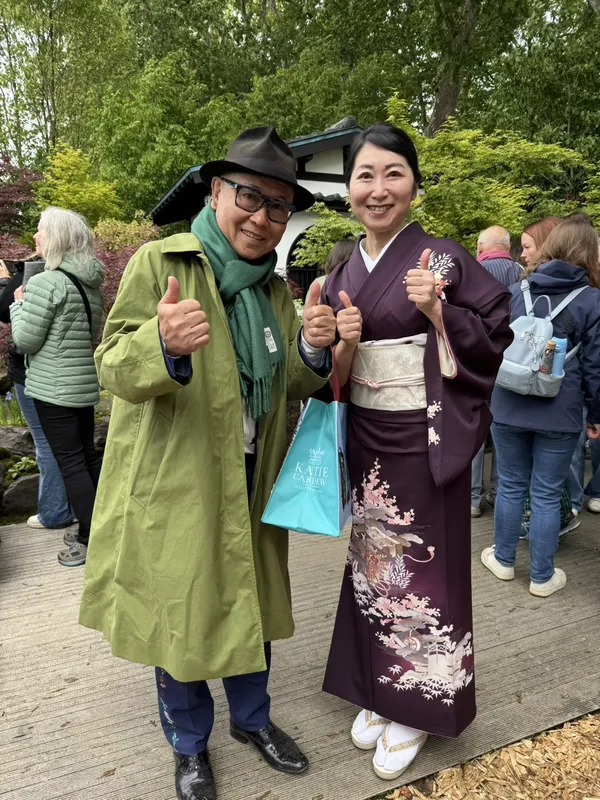
Mayuno grew up in Nagasaki and the tea ceremony has become her lifelong passion – her ikigai – meaning a purpose in life. She graduated from the Urasenke tradition of Japanese tea ceremony, one of the three main lineages of tea in Japan.
‘The original tea school in Nagasaki has been going for 16 generations,’ she said. ‘My grandmother, then my mother and then myself all graduated.'
Nagasaki is known as one of the cities where the atomic bomb was dropped during the Second World War, alongside Hiroshima. Through this tragic history, both Nagasaki and Hiroshima have become important symbols of peace in Japan. Despite the immense loss they experienced, the two cities have recovered and continue to share the importance of peace, harmony, and human connection with the world.
‘Kazuyuki Ishihara is my neighbour in Nagasaki and where we live is very close to where the atom bomb was dropped,’ said Mayuno. ‘So harmony is important to us.
‘In the 17th century, Christianity was brought to Japan and some Japanese were baptised. The government was scared of the power of Christians, so many people hid their Christianity. There is a Martin Scorsese film about it called Silence. Kazuyuki’s family were Christians.
‘In the tea ceremony we seek peacefulness through a bowl of tea.’
After visiting Guernsey, Mayuno will be heading to Spain to visit a friend.
‘He is originally from Argentina and he is a very qualified teacher. He is a guitarist and an artist and he teaches chado.’
To complete the experience Naoko, Mayuno and Miffy took the visitors into Candie Gardens where a picnic took place, with Naoko reading stories about bamboo and cherry blossom.
This was a brilliant initiative from Naoko, who continues to create innovative events to introduce Japanese culture to Guernsey, and a wonderful event for Guernsey Museums to accommodate in a gallery.
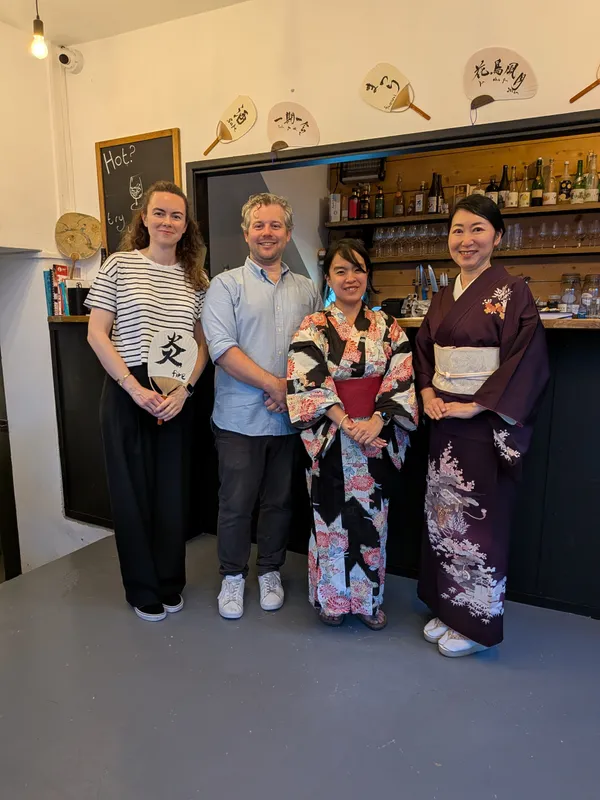
That evening Naoko and Mayuno held a calligraphy workshop and tea ceremony at Tokkuri at Trinity Square.
To find out more about Naoko’s work, visit www.gyokubai.co.uk or on Instagram Gyokubai_ Studio.