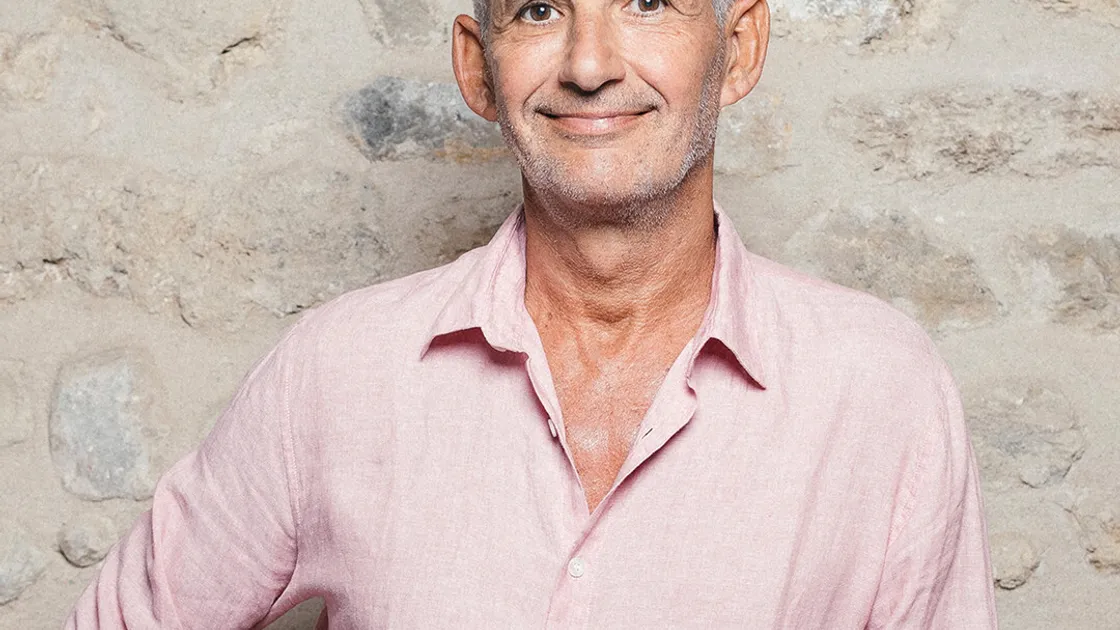
Sparked by a mini-stroke 15 years ago, Tim Spector’s decision to follow his gut and prove that food can be medicine, has lead to a life of pioneering research, and sharing his best tips for transformative results.
Tim became the trailblazer of microbiome research, and has written a series of bestselling books on gut health and food environment. With many strings to his bow, he is a professor of epidemiology at King’s College London, and the scientific co-founder of the nutrition science company – ZOE – which produced the Covid app used by many islanders during the pandemic.
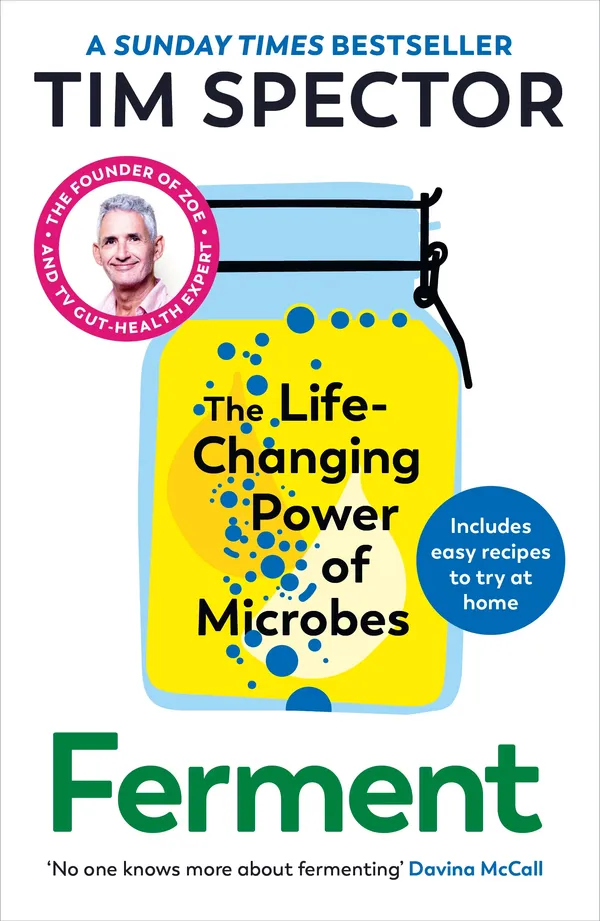
Guernsey welcomed Tim’s discoveries and dietary advice with enthusiasm – selling-out his headline event at this year’s literary festival. Sponsored by BWCI, he came to share his knowledge and to discuss his new book – Ferment – with broadcaster, Sophie Raworth.
‘We can all improve our overall health by really focusing on the new science that’s telling us what to eat, and disregarding all the old advice that’s rubbish, but that the NHS guidelines, and the big food companies still want us to think,’ he said.
The acclaimed author of The Diet Myth, Spoon Fed, Food For Life and The Food For Life Cookbook, has enjoyed sharing his latest pursuit – the science of fermentation.
‘My story goes back to 2011, when I had a mini-stroke in my eye,’ he said.
‘That got me thinking about my own health and mortality. At the same time, I made some discoveries in my scientific job about the microbiome – showing that identical twins have very different gut microbes. That’s when I decided to spend the rest of my career concentrating on gut health. And fermentation is one key part of it.’
His latest book, Ferment, is a guide to introducing fermented foods into an everyday diet for optimised health.
With practical tips and recipes, Tim reveals how humble ingredients can evolve into nutritious foods, through the slow and sustainable process. It converts components like sugars and starch into alcohol or acids, preserving the food. Tim explains how such foods are rich in probiotics – boosting gut health, immunity and overall mood – while also benefiting the planet.
The ancient practice, which has long been utilised in East Asian cultures, reduces food waste, lowers energy usage and supports sustainable agriculture.
‘The book focuses on the new science behind fermentation and the old traditions of fermentation, putting them together,’ he said.
‘We now know, only in the last three years, that they really do work, and we’ve got a mechanism for why they’re healthy for us.’
Studies show that fermented foods act like anti-inflammatories for the body – like steroids – and can reduce blood inflammation by about 25%. Tim did a big study with ZOE on this. Over 50% of those who consumed three portions of fermented foods a day for two weeks noticed a significant improvement in their mood, energy and hunger.
‘Small and regular is what you need,’ he said.
‘Keep training your immune system with it. And always have the full-fat, natural version – not the low-fat rubbish. It’s a really important that we bring these products back into our diets. It was probably there about 60 years ago – it definitely was there before fridges, when people needed to preserve their produce.’
Fermented products like kombucha, miso, kimchi, and kefir are now – somewhat, instantly – familiar in Western society. The popular items are not uncommon to find in homes across the UK and the Bailiwick, sold at almost all local supermarkets, convenience stores, and always popping-up on new menus at restaurants and cafes.
Tim said that fermentation is ‘having its moment’.
‘All these strange foods, which five years ago would’ve seemed very odd, now people can pronounce,’ he said.
‘One thing about the British food environment – though pretty terrible – it does have the ability to change rapidly. I think the message is starting to get through that food is medicine. And we need to relearn that.’
He discredits the NHS’ approach to a healthy diet. He said its ‘five-a-day’ concept is poorly planned – lending to restrictive diets, and gaps in variety, filled with high-sugar fruits.
‘Those five can be the same every single day of your life,’ he said.
‘Just eating lots of bananas doesn’t make you healthy, nor does drinking fruit juice every day. Yet the government rules make you think that’s OK. It actually wouldn’t encourage you to eat fermented foods because they have saturated fat and salt in them, which it has deemed unhealthy. According to them, you should avoid full-fat yoghurt, which includes kefir. You should avoid miso, kimchi and sauerkraut. Yet all the evidence shows that they’re super healthy for you. I think only 1% of the population have followed that NHS advice anyway, so it hasn’t really struck a chord.’
Tim instead advocates for ‘30-a-week’ – with a focus on plant-based foods, and ‘eating the rainbow’. He said all guidelines ought to be backed with clear explanation, too – rather than the government’s ‘just do it’ approach.
‘If you explain why you need that diversity of food to feed a diversity of species of microbe, and that every different species you’ve got gives you more chemicals – more ways to help your immune system – it starts to make sense,’ he said.
‘You can cultivate a richer gut microbiome. And that means more healthy years.’