

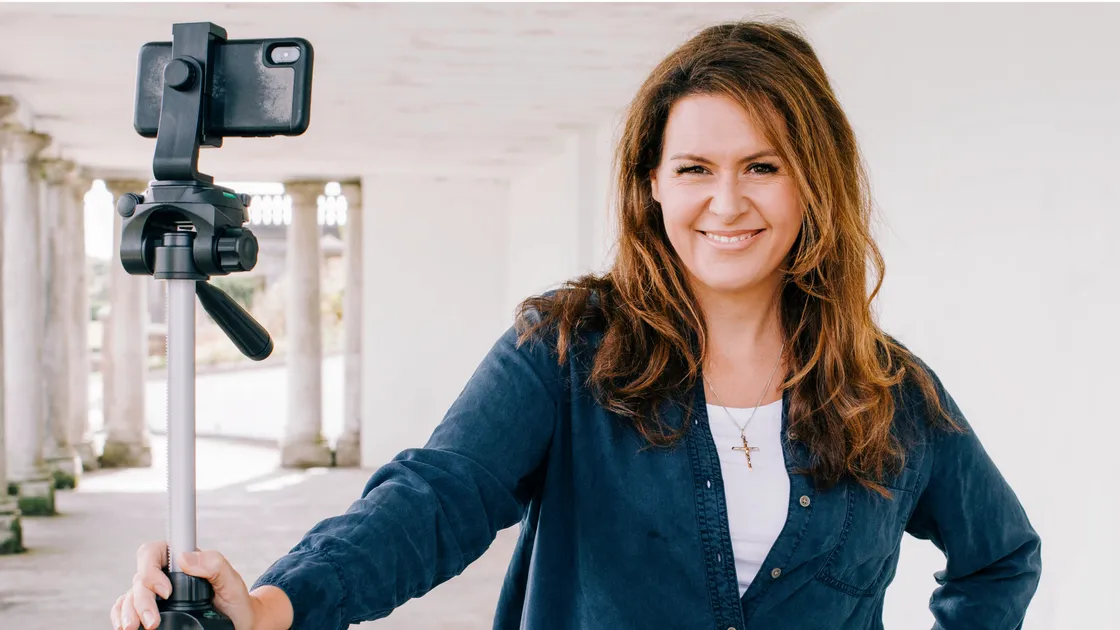
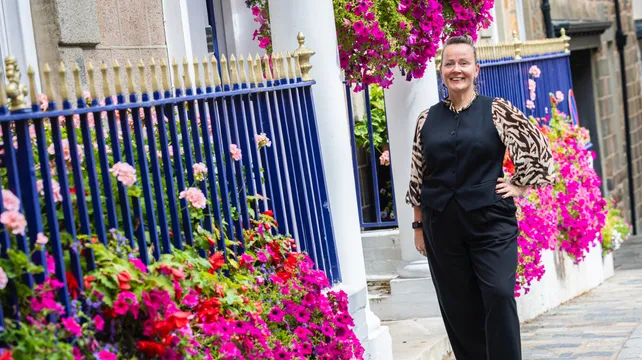
Former BBC and ITV journalist Anna Brees was so excited to land a job at the Guernsey Press at the turn of the millennium that she ‘literally screamed’.
Having grown up in Newent, a small market town in the Forest of Dean, and educated at what she describes as a ‘bog standard comprehensive’ where she wore a ‘bottle green uniform’, followed by gaining a degree in anthropology and theology at the University of Wales, she ended up in Guernsey in 1998. Her parents had moved to the island after her father was offered a job as a teacher at St Peter Port School.
Not yet sure what she wanted to do with her life, Anna first found herself working as a credit executive at NM Rothschild, but quickly realised it was not her calling.
‘We did something called gearing, which was making very rich people even richer,’ she said.
‘It wasn’t for me. I found it utterly pointless. I wanted an exciting and challenging job where I met interesting people, learnt every day and could make a difference to people’s lives.’
At age 23, she decided to risk a radical change of direction – ‘even if that meant poor job security and low pay’. She had previously done some work experience at the Citizen newspaper in Gloucester, where her uncle, Tony Marcovecchio, was a sub-editor, and her former boyfriend and now long-standing friend, Phil Norris, worked as a reporter. She showed her cuttings to the Guernsey Press editor at the time, Richard Digard, and was surprised and delighted to be offered a job.
‘I am very grateful to him for giving me a break. I remember him being very warm, friendly and actually interested in what I had to say. I wasn’t qualified as a journalist, so it was an incredible opportunity. I remember being so happy, I literally screamed when I heard I got the job,’ she said.
‘My pay was £16k a year – a drop in what I was earning at the bank, but I didn’t care one bit. I saw it as a super-cool job.’
She also has fond memories of working with current Guernsey Press editor James Falla, who was the news editor at the time.
‘I found him warm, talented and he really took the time to look at my copy and tell me exactly where I was going wrong,’ she said.
‘Even though I wasn’t a trained journalist, I had a lot of support and training while at the GP. I would write my articles and they would come back with big red circles around all of my mistakes. And I made slow progress. I am slightly dyslexic. I didn’t feel I picked it up as quickly as the others. I was shy and probably didn’t talk that much to fellow colleagues. I am a lot more confident now.’
Anna decided that she might be better suited to working in TV and radio and left the island to pursue a BJTC at Highbury College in Portsmouth.
‘I was struggling with writing, and I kept making small mistakes, but I have to say I often look back and wonder if I made the right choice. I felt more at home in the newspaper world. There are a lot of egos in TV.’
She said she still felt like a newspaper journalist at heart in that she found investigative work more rewarding. But working in TV did have its perks and in the early days of ITV Central she felt quite famous.
‘Going back to Newent, my Mum’s friends all used to ask about me. I was even asked to open the famous Newent Onion Fayre one year. I would get fan mail and send out signed photos of myself. It’s funny looking back. I guess it was a bit more glamorous in TV. At
ITV in Birmingham we would get invited to restaurant and nightclub openings. I was asked to host a fashion show.
‘I have lots of memories of my time in TV. Lots of very interesting things happened. Working at ITV Central in Abingdon and in Gloucester was the best job in the world. I made some wonderful friends and it was a really good laugh. It was so upsetting when they closed that station. But I ended up getting one of the top presenting jobs at a bigger station, so I guess it didn’t harm my career.’
Anna’s old boss at ITV Central in Birmingham, Dan Barton, saw her stand in for the main presenter one evening in Oxford and was impressed enough that she became the stand-in for the main 6pm show at ITV Central, sitting next to Bob Warman, as well as doing the late news.
‘I liked Dan at ITV Central – he was like Richard at the GP. They seemed reasonable and fair and able to make tough decisions without p*****g people off,’ she said.
However, after becoming a parent, her priorities inevitably shifted and her career changed direction again. When she was pregnant with her second child in 2012, she rejected an offer of a full-time job at BBC X-Ray in Cardiff in favour of a more family-friendly administrative role with the National Union of Journalists Training Wales, where she stayed for five years.
She then set up her own media training business, Brees Media, sharing her TV skills with communications, marketing and PR professionals.
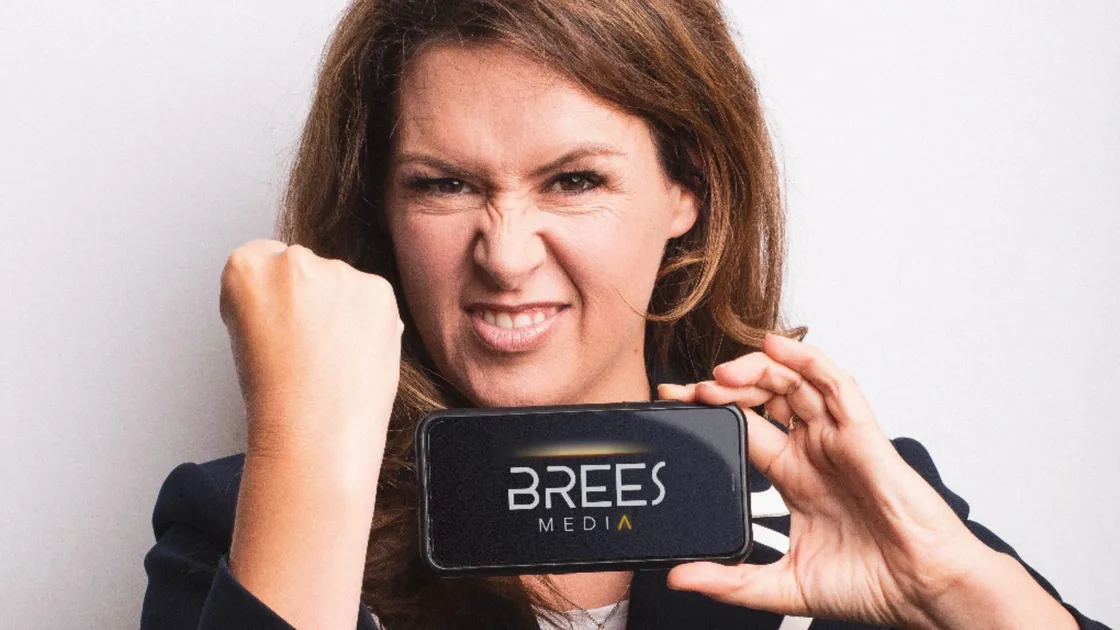
‘Creating professional content at speed for on-the-day broadcast was really unusual back in 2017, so it really stood out,’ she said.
‘It is less so now, as everyone is filming and editing with their mobiles. Working with large organisations as a freelance trainer and consultant was very well paid, I’d earn about five times more doing that than a freelance day shift as a reporter. And it was really good fun.’
She also created her own ‘hyper-local’ news channels, Penarth SMTV and Barry SMTV, filming interesting local stories as a way to practise and improve, as well as to show her corporate clients what worked and what didn’t.
‘It was ground-breaking. TikTok only came out internationally in September 2017. I started my channel in December 2017. I really should have gone to investors to grow it.’
One of the biggest benefits of being her own boss was that she could spend more time with her children as she could pick and choose when to work, but that all changed when the pandemic struck.
In fact, it was Covid that lured her back to journalism, primarily because she was unhappy with the way the pandemic was being portrayed in the mainstream media.
‘The BBC were dreadful during Covid and I really mean that. They scared people, they didn’t provide balanced reporting. I think the world went mad back then, to be honest, and I was one of the few people who didn’t.
‘It is quite difficult to talk about it now as it was very upsetting. So many journalists, experienced journalists, were very upset by what they were being asked to do.
‘I saw a crisis – a bit like doctors and nurses coming out of retirement to help in the hospitals during Covid. I felt I needed to come away from the corporate comms training to help with a similar crisis in the media.’
She said she made friends with a lot of like-minded people, including high-profile celebrities, during that period, some of whom even donated money to help her continue her journalism. But once the pandemic was over, she was happy to return to her Brees Media work.
Despite it bringing her to public prominence recently, she dismisses the idea that the concerns she raised with the BBC last year about radio DJ Scott Mills played any part in his eventual sacking.
‘Someone told me info about Mills – I passed it on to the BBC and they didn’t reply to me. That was it really,’ she said.
She believes the future of journalism lies in hyper-local, good quality, independent reporting from people who have a passion for making a difference in the world.
‘We need more paywall journalism, where people say I am going to pay for this because it is good – it is uncovering corruption, doing investigations,’ she said.
‘Those types of stories take a long time and come with risk for the publisher. They won’t take on that risk unless they get paid.’
Having enjoyed a busy and varied career, she is now considering taking her foot off the throttle slightly.
‘I am nearly 50 so to be honest I am a little worn out. I know they retire early in the police or the armed forces, and after the career I have had I am thinking of winding it down now.
‘It has been the most unbelievable career for me, and at times exceptionally hard and challenging, but I think I look back now with hope and humour.’

You need to be logged in to comment.