July
This was the month during which officials from Jersey paid a visit to see how Guernsey was coping – not with a view to helping out, but with one eye on their own dwindling water supply, which was healthier than Guernsey’s but being more rapidly depleted due to a lack of restrictions on water usage.
The month began with States Water Board president Roger Berry revealing that plans were in place to drill States-owned boreholes fully eight times the diameter of domestic ones.
The following day we reported statistics showing that water usage had risen by 500,000 gallons a day due to hot and sunny weather, while stream and well yields had reduced.
With water meters having been installed across St Peter Port and St Andrew’s, most dwellings and businesses had stuck to their ration, but Guernsey nevertheless saw the first instances of customers being cut off for overuse.
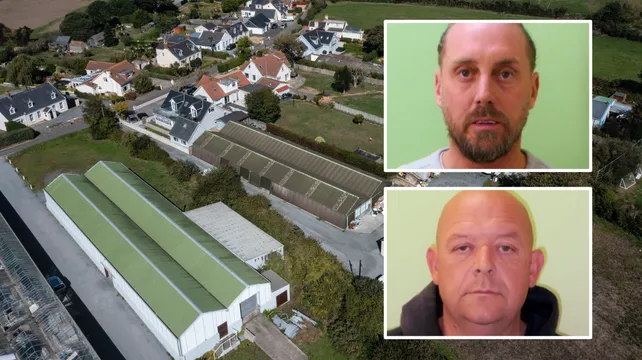
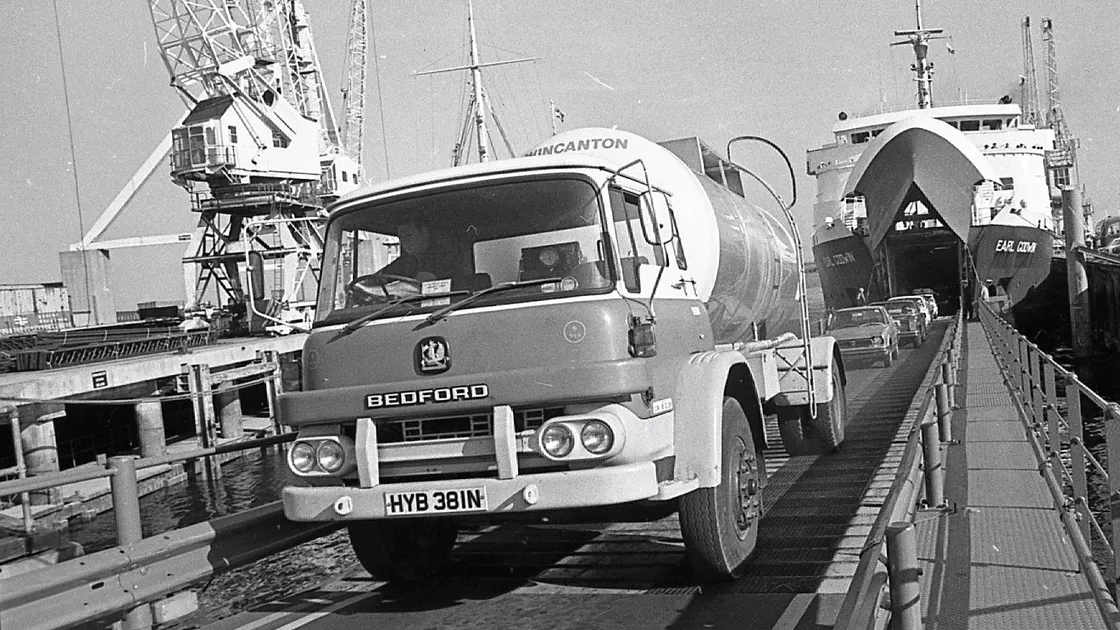
The Fermain Hotel was to have its supply blocked from 6pm on 3 July until 8am the following day, and this would be repeated every day until the excess usage had been made up for. Proprietor John Solloway believed there was ‘something amiss’ with the meter, which he said kept on recording water usage even when the stopcock was turned off. He also cited, as justification, a 282% increase in restaurant bookings, a busier bar due to introducing live music, and not being able to ‘stand over people while they are taking a bath’.
However, he was soon able to get below his 11 cubic metres per day limit and was reconnected just a week later.
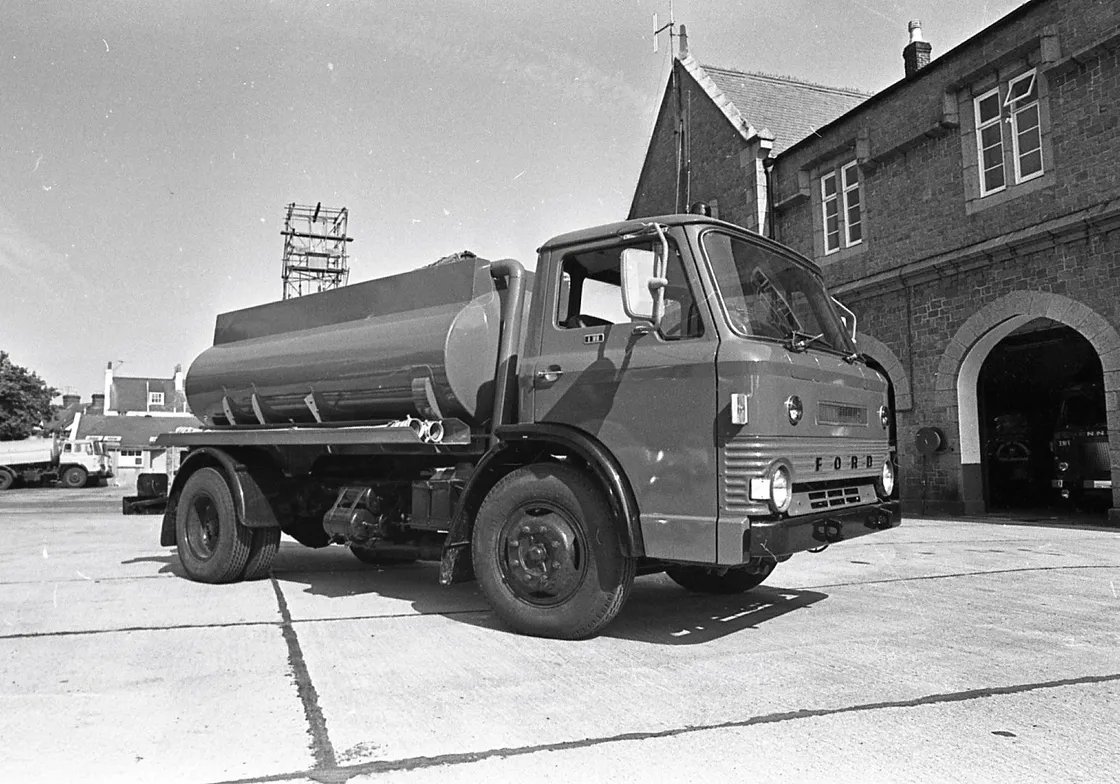
A standpipe was also to be installed outside the Fort George home of the first private residence where the water ration had been significantly exceeded.
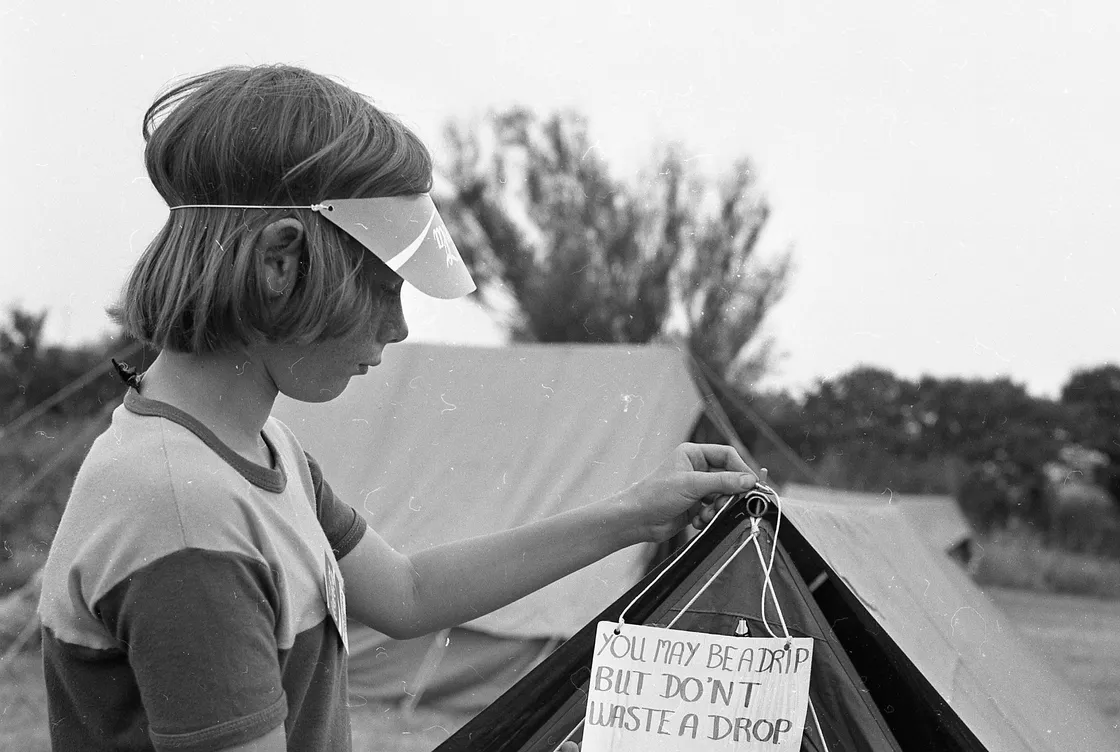
We carried a picture of Philip Owens ladling a bucket of water out of his swimming pool, which he intended to boil to remove the chlorine, because he refused to use said standpipe. He was critical of SWB’s method of determining rations by calculating 50% of a three-year average of past use, as this rewarded those who had previously been wasteful, and he claimed his meter was counting litres rather than cubic meters. A few days later, we carried a picture of him indulging in a spot of water divining, as he attempted to discover the source of a leak in the supply pipe. Reporter Richard Digard also had a go, saying the rods ‘writhed and crossed’ in his hands. But when the SWB tested the pipe under pressure and found it was sound, Mr Owens finally apologised. He would have to get himself back into credit with his water rations in order to be reconnected, having been proved to have been using 220 gallons a day.
In two cases of vineries being under suspicion of overuse, it transpired they had added further spans without informing the SWB, and their rations were duly increased. However, 15 private residencies were under investigation and 10 consumers were destined to be cut off during the month.
By 7 July, the Dairy had stopped selling butter and cream, as there was only just enough milk to satisfy liquid milk demand. Heat issues at the Dairy also led to complaints of milk going sour not long after delivery and farmers were complaining that they couldn’t keep to their water rations, because cows were needing to drink more water due to the very dry conditions of the fields. Hay and concentrates were helping to keep the milk yield up but provided no moisture, and as the month wore on, the threat of the unthinkable emerged – we might have to import milk from England.
This particular predicament came to a head at the close of the month, as it became clear that Guernsey customers would rather go without than tolerate the ‘white water’.
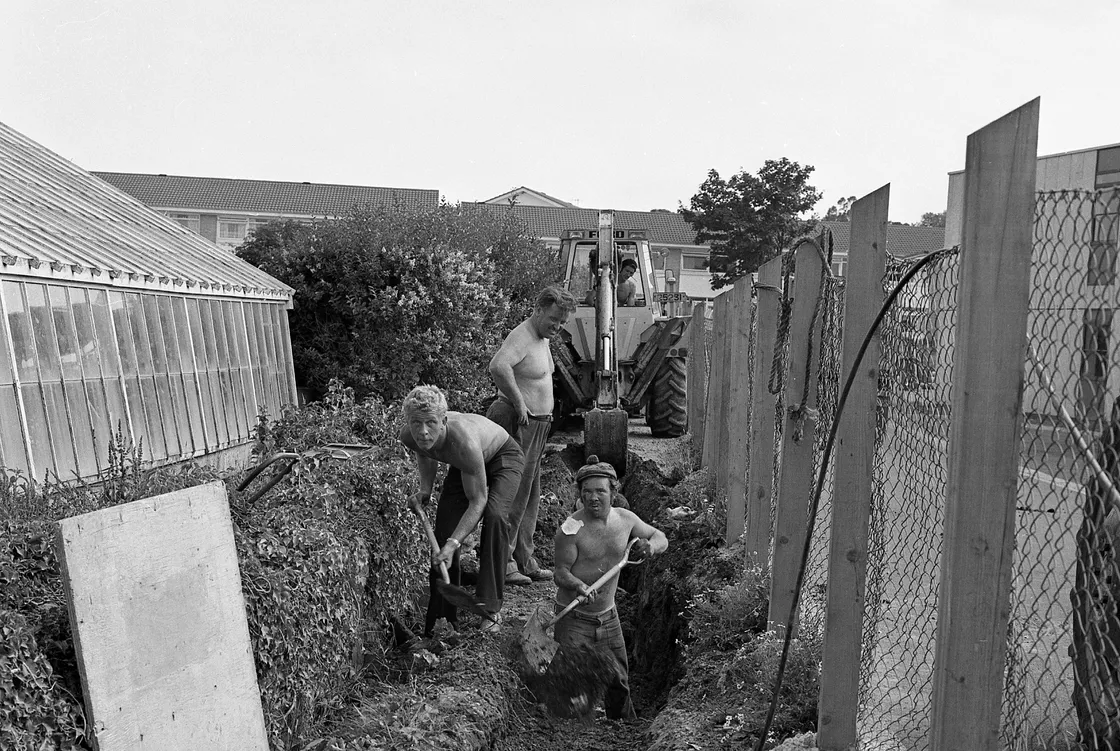
PLEASE buy English milk! ran our front- page headline on 31 July, beneath a picture of a milk tanker coming off the Earl Godwin in St Peter Port. This followed reports from retailers that customers were putting out signs declaring they would not accept any more English milk.
‘For goodness sake let people be reasonable and accept the English milk!’ said Milk Retailers Association president Mr T Carlyle.
‘Our task is difficult enough without making it harder.’
He said retailers were being given 50% Guernsey and 50% English milk on certain days, so that the States Dairy didn’t have to ‘borrow milk just arrived from local farms to meet the current demand’.
Over in Alderney, water board chairman Mr J Winckworth revealed that just by reducing the overnight pressure, the island had saved 14,000 gallons, indicating that islanders were using hoses and sprinklers during the night. Infrastructure that had been designed to pump 50,000 gallons a day was having to pump four times that amount, and even some recently excavated boreholes had run dry, including one drilled by the Army. Consequently, the island was taking about two-thirds of its supply from the reservoir, as against the usual 15%.
‘It is likely to be February before the reservoir starts to fill again because the ground is so dry,’ he said.
Asked why he didn’t shut off supply to sprinkler users, Mr Winckworth said he would, ‘if only people would tell me who the offenders were’.
Back in Guernsey, the Northern Bowling Association was forced to abandon its league programme for the season, as groundsman Wilfred Neville advised that the green at Delancey Park was likely to be ruined by any further use. With the new facility at Beau Sejour not yet ready, all the island championship matches would be held at Vale Rec’s Corbet Field.
Soon after, Delancey Park was also abandoned for the remainder of the season as a venue for cricket.
In our letters pages, we heard from Nina Worley of Colborne Road, who wrote in to urge the States to ban the taking of baths. She hadn’t had one since the water shortage began and estimated they used up ‘at least six or eight times the amount of a basinful of water with which anybody can keep clean’.
A rare piece of good news arrived on 12 July, when the North Show was confirmed to be going ahead later in the year, including the Battle of Flowers – albeit with floats now required to use only 40% natural blooms for their decorations. The West Show had already said it would be going ahead, subject to a final committee meeting, and even the previously cancelled South Show would still manage to hold some events – including the tug-o’-war – at Mr Browning’s fields at Les Eperons in St Andrew’s.
The same day brought even better tidings, with almost a quarter of an inch of rain falling, followed by 0.29 of an inch the next day.
This, while hardly a deluge, was more than had fallen during the whole of April. Unfortunately, the other 29 days of the month together yielded just 0.17 of an inch.
In subsequent editions, farmers declared these two wet days had been enough to save their potatoes, but cabbages and cauliflowers grown from seed had withered in the sun and any local demand would have to be met through importation.
Water divining came back into the spotlight again in an article by Linda Le Vasseur. She asserted that ‘the Aboriginal tribes of Australia have so developed this skill that it has become like a sixth sense to them and they do not even need to use implements to ascertain the whereabouts of the water’.
She spoke to Edmund ‘Eddie’ Plevin, who had inherited the ability to divine water from his father and shared the gift with his brother and sister. He preferred using willow to the more traditional hazel and said he seemed to be able to find water anywhere except, ironically, on his own property.
The dry conditions led to further warnings about fire risk, along with a remarkably polite suggestion from fire chiefs.
‘The Fire Brigade is certain that most hedge fires are being caused by lighted cigarettes being thrown from the windows of cars. The Brigade asks motorists to stop this habit.’
On 22 July, we reported that five acres of undergrowth around the cliffs at Petit Bot had been torched when a visiting French student dropped a lit match after lighting a cigarette. He tried and failed to stamp out the flames, and the Fire Brigade later almost brought the resulting blaze under control but then ran out of water. By the time they returned from Moulin Huet with more, the fire had spread. At one point, there were no fire trucks left in town, and firefighters had to stay on the scene in case of further outbreaks because water could not be spared to damp down the scorched undergrowth.
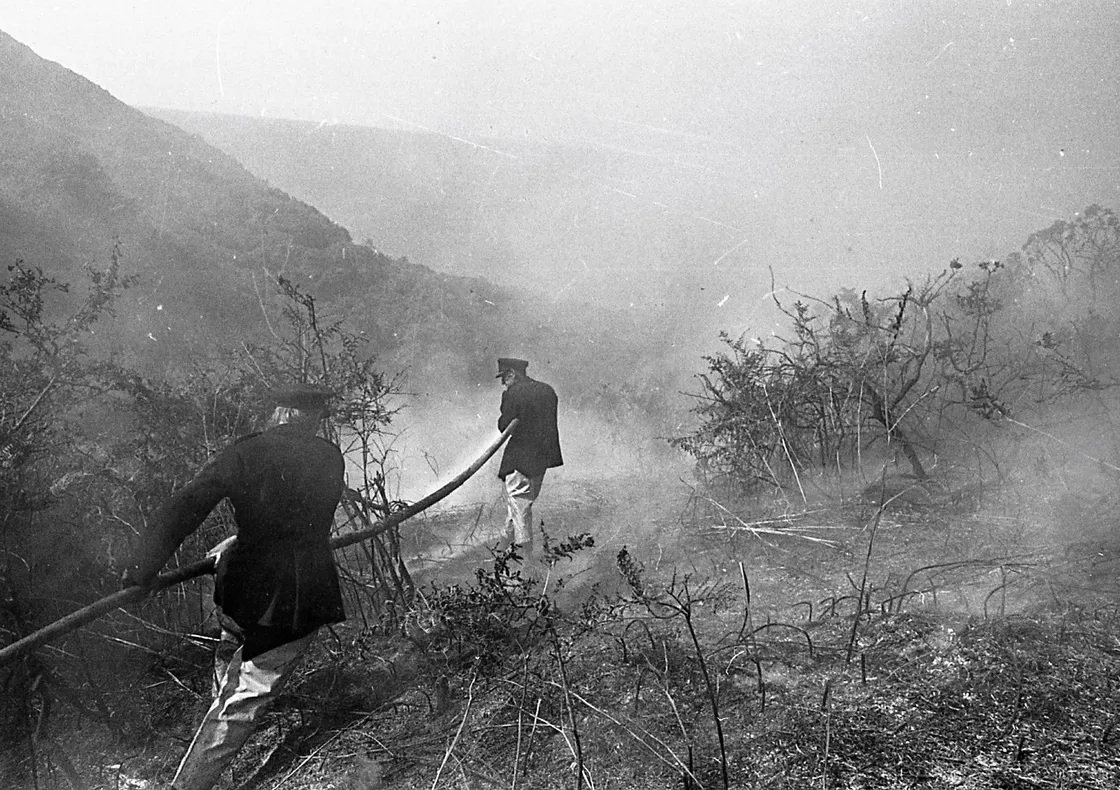
With gorse burned away, there were warnings that boulders might fall from the cliffs to the bay below, and the cliff path had to be closed to the public in certain places.
Towards the end of the month, growers were informed that their rations would be reduced in August, while hoteliers would see theirs go up. This would reflect the trends of demand in each industry in previous years, as the growing season petered out and the tourism season headed towards its peak. Already, the Tourist Committee was reporting that it was struggling to find accommodation for those holiday-makers arriving from the UK or France without having made bookings.
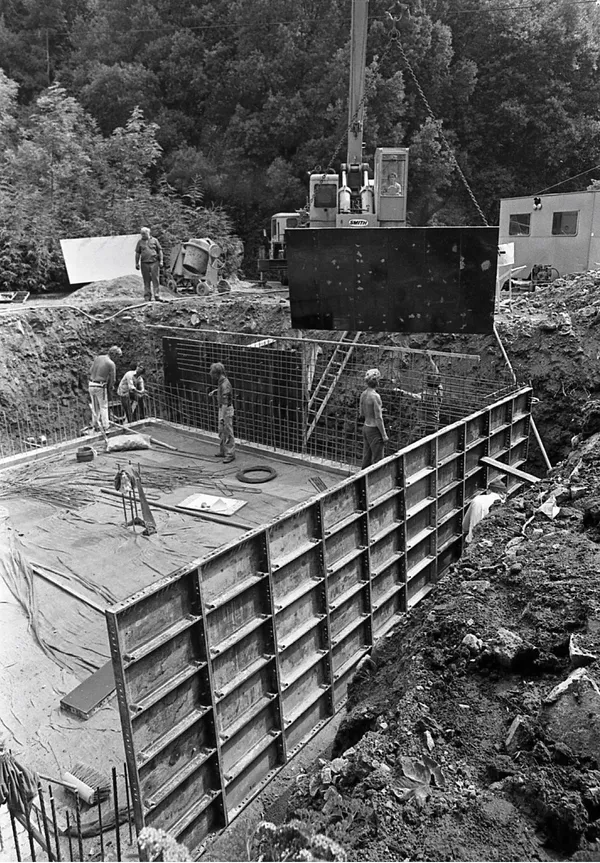
The long-awaited report commissioned by the SWB from Messrs T & T Hawksley was finally handed over and concluded that Longue Hougue could be turned into a main reservoir. The proposal would be taken to the States for debate at their meeting in September, despite concerns from nearby residents and those worried about the proximity of St Sampson’s Church cemetery. Some graves were on the quarry side of the safety fence.
In our final edition of July, Deputy Berry again described islanders’ efforts to conserve water as ‘fantastic’, with a year-on-year reduction in water usage of 50%. He said it would mean supplies could be stretched out until October if necessary, but he warned that rationing could well remain in place throughout the winter if no significant rainfall arrived. He was also keen to scotch rumours that people who used significantly less than their ration would have that ration cut.
Guernsey ended July with 21% less water in storage than it had had at the beginning of the month.
Monthly water statistics
April
100 million gallons used, 50 collected, 343 remaining in storage.
May
96 million gallons used, 50 collected, 297 remaining in storage.
June
79 million gallons used, 60 collected, 278 remaining in storage.
July
79 million gallons used, 22 collected, 221 remaining in storage (89 at St Saviour’s Reservoir, 132 in the northern quarries).